Und dann auf "Zum Home-Bildschirm [+]".

Stöbern
genialokal zum Startbildschirm hinzufügen
Installieren Sie die genialokal App auf Ihrem Startbildschirm für einen schnellen Zugriff und eine komfortable Nutzung.
Installieren Sie die genialokal App auf Ihrem Startbildschirm für einen schnellen Zugriff und eine komfortable Nutzung.
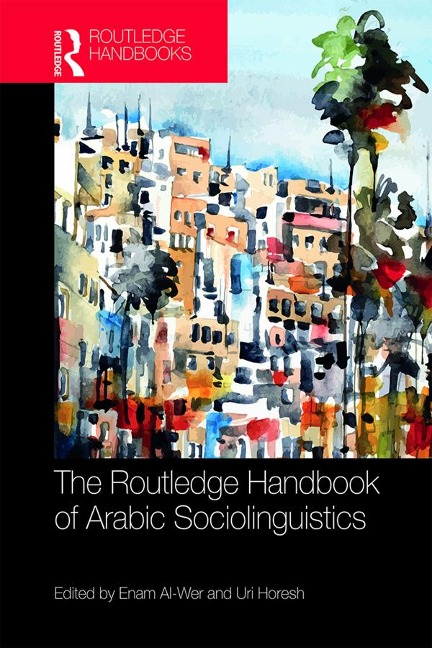
The Routledge Handbook of Arabic Sociolinguistics comprises 22 chapters encompassing various aspects in the study of Arabic dialects within their sociolinguistic context. This is a novel volume, which not only includes the traditional topics in variationist sociolinguistics, but also links the sociolinguistic enterprise to the history of Arabic and to applications of sociolinguistics beyond the theoretical treatment of variation. Newly formed trends, with an eye to future research, form the backbone of this volume. With contributions from an international pool of researchers, this volume will be of interest to scholars and students of Arabic sociolinguistics, as well as to linguists interested in a concise, rounded view of the field.
Enam Al-Wer is Professor of Linguistics at the University of Essex. Uri Horesh is a British Academy Postdoctoral Fellow in Linguistics at the University of Essex.
1. Arabic sociolinguistics: principles and epistemology Part 1: Historical aspects 2. The Classification of Arabic and sociolinguistic variation in the pre-Islamic period 3. Variation in Old Arabic Part 2: Dimensions of variation 4. Regional Variation 5. Confessional Varieties 6. Style and sociolinguistics 7. Traditional dialects 8. Dialect contact and urban dialects 9. Peripheral varieties 10. Arabic-based pidgins and creoles Part 3: Levels of analysis 11. Phonological and morphological variation 12. Prosodic variation 13. Syntactic Variation Part 4: Aspects of sociolinguistics in the Maghreb 14. Variation and koinéization in the Maghreb 15. Morphosyntactic variation: focus on Maltese and other western varieties 16. Diglossia and the normalization of the vernacular: focus on Tunisia Part 5: Language and ideology 17. Form and ideology revisited 18. Ideologies in the manifestations in language contact situations: the case of Arabic-Hebrew in Palestine Part 6: Applied sociolinguistics 19. Sociolinguistics and the Teaching of Arabic as a Foreign Language 20. From an MSA-only to a fully integrated Arabic foreign language curriculum 21. Diglossia and language development 22. Language Analysis for Determination of Origin (LADO) in Arabic-dominant settings.
Dieses eBook wird im PDF-Format geliefert und ist mit einem Adobe Kopierschutz (DRM) versehen. Sie können dieses eBook mit allen Geräten lesen, die das PDF-Format und den Adobe Kopierschutz (DRM) unterstützen.
Zum Beispiel mit den folgenden Geräten:
• tolino Reader
Laden Sie das eBook direkt über den Reader-Shop auf dem tolino herunter oder übertragen Sie das eBook auf Ihren tolino mit einer kostenlosen Software wie beispielsweise Adobe Digital Editions.
• Sony Reader & andere eBook Reader
Laden Sie das eBook direkt über den Reader-Shop herunter oder übertragen Sie das eBook mit der kostenlosen Software Sony READER FOR PC/Mac oder Adobe Digital Editions auf ein Standard-Lesegeräte mit epub- und Adobe DRM-Unterstützung.
• Tablets & Smartphones
Möchten Sie dieses eBook auf Ihrem Smartphone oder Tablet lesen, finden Sie hier unsere kostenlose Lese-App für iPhone/iPad und Android Smartphone/Tablets.
• PC & Mac
Lesen Sie das eBook direkt nach dem Herunterladen mit einer kostenlosen Lesesoftware, beispielsweise Adobe Digital Editions, Sony READER FOR PC/Mac oder direkt über Ihre eBook-Bibliothek in Ihrem Konto unter „Meine eBooks“ - „online lesen“.
Schalten Sie das eBook mit Ihrer persönlichen Adobe ID auf bis zu sechs Geräten gleichzeitig frei.
Bitte beachten Sie, dass die Kindle-Geräte das Format nicht unterstützen und dieses eBook somit nicht auf Kindle-Geräten lesbar ist.