Und dann auf "Zum Home-Bildschirm [+]".

Stöbern
genialokal zum Startbildschirm hinzufügen
Installieren Sie die genialokal App auf Ihrem Startbildschirm für einen schnellen Zugriff und eine komfortable Nutzung.
Installieren Sie die genialokal App auf Ihrem Startbildschirm für einen schnellen Zugriff und eine komfortable Nutzung.
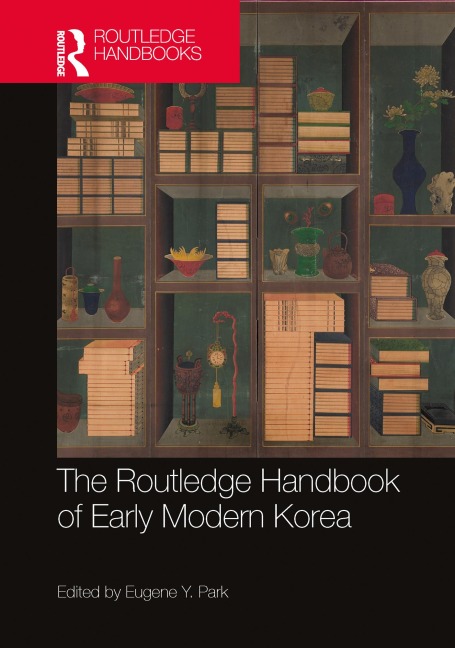
Korea is a historical region of prominence in the global political economy. Still, a comprehensive overview of its early modern era has yet to receive a book-length treatment in English. Comprising topical chapters written by 22 experts from 11 countries, The Routledge Handbook of Early Modern Korea presents an interdisciplinary survey of Korea's politics, society, economy, and culture from the founding of the Choson state (1392-1897) to 1873 when its political leadership began preparing for treaty relations with Imperial Japan, the United States, and other Western nations. Choson mirrors shared historical patterns among literate sedentary societies of early modern Afro-Eurasia. Various long-term developments that shaped early modern Korea include the completion of centralized bureaucratic governance as codified in the State Administrative Code (Kyongguk taejon); the appearance of regular rural marketplaces facilitating transactions in an increasingly liberalized economy; continuity of an aristocracy (yangban) from the medieval period (Koryo: 918-1392); a decreasing correspondence between ascriptive status and socioeconomic class; and the state and the elite's growing interest in encyclopedic knowledge and its dissemination while their monopoly on knowledge production weakened. This handbook provides historical context for readers wishing to know more than just the "Korea" that evokes K-pop or North Korea's nuclear weapons, while Hyundai, Samsung, and other South Korean brands have gained visibility in everyday life. Interested English-speaking scholars, educators, students, and the general public without access to the large body of Korean-language works on Choson will find this book a valuable critical introduction to early modern Korea.
Eugene Y. Park is a professor in the Department of History at the University of Nevada, Reno. Author of seven books, including Korea: A History (2022), his scholarship focuses on East Asia, especially Korean politics and society from the fifteenth to the early twentieth century. Maintaining a comparative perspective and interested in periodizing global history, Park also enjoys readings and conversations in evolutionary biology, deep history, and population genetics. His current research topics include ancient animal symbolism and historical human-feline interactions. In 2016, Park co-chaired the organizing committee of the Eighth Biennial World Congress of Korean Studies.
Part I: Choson in Time and Space Chapter 1 Korea and Early Modernity Sixiang Wang Chapter 2 Foreign Relations Kirk W. Larsen Chapter 3 Korea as "Little China" (Sojunghwa) Nataliya A. Chesnokova Chapter 4 Korea in Japan Rebekah Clements Part II / The State, Power, and Resource Chapter 5 Politics Christopher Lovins Chapter 6 The Military Felix Siegmund Chapter 7 Discontent Andrew David Jackson Chapter 8 Economy Young-jun Cho Part III: Society and Identity Chapter 9 Status and Class Eugene Y. Park Chapter 10 Foreigners and the Descendants Adam Bohnet Chapter 11 Gender Marion Eggert Part IV: Philosophy and Religion Chapter 12 Confucianism Isabelle Sancho Chapter 13 Buddhism Juhn Y. Ahn Chapter 14 Popular Religion Boudewijn Walraven Chapter 15 Catholicism Franklin D. Rausch Part V: Language, Learning, and Knowledge Chapter 16 Language Ross King Chapter 17 Education Diana Yuksel Chapter 18 Science and Technology Don Baker Part VI: Creative Genres Chapter 19 Literature Gregory N. Evon Chapter 20 Visual Arts Yoonjung Seo Chapter 21 Performing Arts CedarBough T. Saeji Epilogue: Korea since 1873 Mark E. Caprio
Dieses eBook wird im PDF-Format geliefert und ist mit einem Adobe Kopierschutz (DRM) versehen. Sie können dieses eBook mit allen Geräten lesen, die das PDF-Format und den Adobe Kopierschutz (DRM) unterstützen.
Zum Beispiel mit den folgenden Geräten:
• tolino Reader
Laden Sie das eBook direkt über den Reader-Shop auf dem tolino herunter oder übertragen Sie das eBook auf Ihren tolino mit einer kostenlosen Software wie beispielsweise Adobe Digital Editions.
• Sony Reader & andere eBook Reader
Laden Sie das eBook direkt über den Reader-Shop herunter oder übertragen Sie das eBook mit der kostenlosen Software Sony READER FOR PC/Mac oder Adobe Digital Editions auf ein Standard-Lesegeräte mit epub- und Adobe DRM-Unterstützung.
• Tablets & Smartphones
Möchten Sie dieses eBook auf Ihrem Smartphone oder Tablet lesen, finden Sie hier unsere kostenlose Lese-App für iPhone/iPad und Android Smartphone/Tablets.
• PC & Mac
Lesen Sie das eBook direkt nach dem Herunterladen mit einer kostenlosen Lesesoftware, beispielsweise Adobe Digital Editions, Sony READER FOR PC/Mac oder direkt über Ihre eBook-Bibliothek in Ihrem Konto unter „Meine eBooks“ - „online lesen“.
Schalten Sie das eBook mit Ihrer persönlichen Adobe ID auf bis zu sechs Geräten gleichzeitig frei.
Bitte beachten Sie, dass die Kindle-Geräte das Format nicht unterstützen und dieses eBook somit nicht auf Kindle-Geräten lesbar ist.