Und dann auf "Zum Home-Bildschirm [+]".

Stöbern
genialokal zum Startbildschirm hinzufügen
Installieren Sie die genialokal App auf Ihrem Startbildschirm für einen schnellen Zugriff und eine komfortable Nutzung.
Installieren Sie die genialokal App auf Ihrem Startbildschirm für einen schnellen Zugriff und eine komfortable Nutzung.
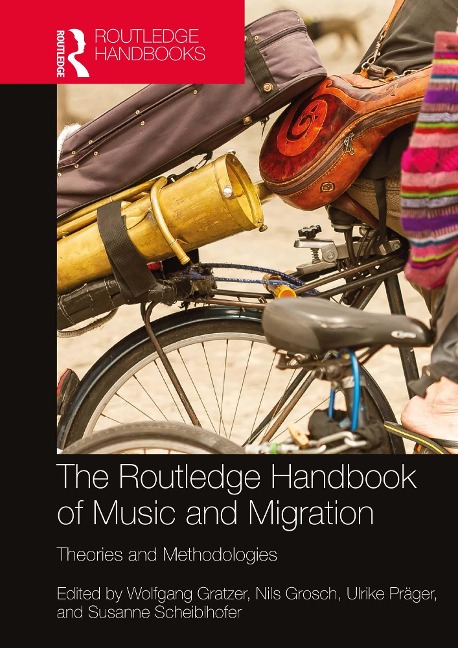
The Routledge Handbook of Music and Migration: Theories and Methodologies is a progressive, transdisciplinary paradigm-shifting core text for music and migration studies. Conceptualized as a comprehensive methodological and theoretical guide, it foregrounds the mobile potentials of music and presents key arguments about why musical expressions matter in the discussion of migration politics. 24 international specialists in music and migration set methodological and theoretical standards for transdisciplinary collaborations in the field of migration studies, discussing 41 keywords, such as mobility, community, research ethics, human rights, and critical whiteness in the context of music and migration. The authors then apply these terms to 16 chapters, which deal with ethnomusicological, musicological, sociological, anthropological, geographical, pedagogical, political, economic, and media-related methodologies and theories which reflect and contest current discourses of migration. In their interdisciplinary focus, these chapters advance interrelations between music and migration as enabling factors for socio-cultural studies. Furthermore, the authors tackle crucial questions of agency, equality, and equity as well as the responsibilities and expectations of writers and artists when researching migration phenomena as innate human experience. As a result, this handbook provides scholars and students alike with relevant and applicable methodological and theoretical tools in addition to an extensive literature and research review for further research.
Wolfgang Gratzer is an Austrian musicologist and Professor of Musicology at the University Mozarteum Salzburg, Austria. Nils Grosch is Professor of Musicology and Head of the Department of Art, Music, and Dance Studies and the Research Center for Musical Theater at the University of Salzburg, Austria. Ulrike Präger is Assistant Professor of Music at the University of Louisville, US. Susanne Scheiblhofer is a researcher and instructor at the University of Salzburg, Austria.
1. Introduction 2. Key Terms 3. THEORETICAL AND METHODOLOGICAL APPROACHES TO MUSIC AND MIGRATION 3.1 Enacting and Embodying Mobile Voices: "Musicking as a Tool for (Ethnographic) Migration Research 3.2 Multi-Perspective Research in Musical Migration Contexts 3.3 Musicological Research with Refugees: Theoretical and Ethical Considerations 3.4 Musical Ethnography: Researching and Representing Migration, Expressive Culture, and Politics of Belonging 3.5 Polyphonic History: On Histoire Croisée as a Method of Musicological Exile and Migration Research 4. MOBILITY IMPULSES AND KINETIC MOMENTUMS 4.1 Music and Cultural Mobility 4.2 Music and Urban Migration: The City, Mobile Ethnography and Affective Citizenship 4.3 Between "Return Mobilities" and the Hope for an End to Exile: Musicology and Remigration Research 5. AFTER MIGRATION: INTERACTION, INCLUSION, AND PARTICIPATION 5.1 Music Making by Migrants from the Perspective of Sociological Integration Studies 5.2 Displaced Humanity on the Move: Rights, Needs, and Future Directions for Music 5.3 Musical Activities in the Acculturation Processes of Children and Adolescents with Migration Experiences 6. POSTCOLONIAL AND TRANSCULTURAL PERSPECTIVES ON MUSIC AND MIGRATION 6.1 Perpetual Transformation: Translating Music into New Spaces 6.2 Media, Migration, and Music: Methodological and Theoretical Perspectives 6.3 Writing for Change: Critical Perspectives in Artistic and Scholarly Practices as Calls to Action 6.4 Music - Gender - Migration: Topics, Research Fields, and Methods 6.5 Music and Entrepreneurship: Perspectives from Migrant Business Research
Dieses eBook wird im PDF-Format geliefert und ist mit einem Adobe Kopierschutz (DRM) versehen. Sie können dieses eBook mit allen Geräten lesen, die das PDF-Format und den Adobe Kopierschutz (DRM) unterstützen.
Zum Beispiel mit den folgenden Geräten:
• tolino Reader
Laden Sie das eBook direkt über den Reader-Shop auf dem tolino herunter oder übertragen Sie das eBook auf Ihren tolino mit einer kostenlosen Software wie beispielsweise Adobe Digital Editions.
• Sony Reader & andere eBook Reader
Laden Sie das eBook direkt über den Reader-Shop herunter oder übertragen Sie das eBook mit der kostenlosen Software Sony READER FOR PC/Mac oder Adobe Digital Editions auf ein Standard-Lesegeräte mit epub- und Adobe DRM-Unterstützung.
• Tablets & Smartphones
Möchten Sie dieses eBook auf Ihrem Smartphone oder Tablet lesen, finden Sie hier unsere kostenlose Lese-App für iPhone/iPad und Android Smartphone/Tablets.
• PC & Mac
Lesen Sie das eBook direkt nach dem Herunterladen mit einer kostenlosen Lesesoftware, beispielsweise Adobe Digital Editions, Sony READER FOR PC/Mac oder direkt über Ihre eBook-Bibliothek in Ihrem Konto unter „Meine eBooks“ - „online lesen“.
Schalten Sie das eBook mit Ihrer persönlichen Adobe ID auf bis zu sechs Geräten gleichzeitig frei.
Bitte beachten Sie, dass die Kindle-Geräte das Format nicht unterstützen und dieses eBook somit nicht auf Kindle-Geräten lesbar ist.