Und dann auf "Zum Home-Bildschirm [+]".

Stöbern
genialokal zum Startbildschirm hinzufügen
Installieren Sie die genialokal App auf Ihrem Startbildschirm für einen schnellen Zugriff und eine komfortable Nutzung.
Installieren Sie die genialokal App auf Ihrem Startbildschirm für einen schnellen Zugriff und eine komfortable Nutzung.
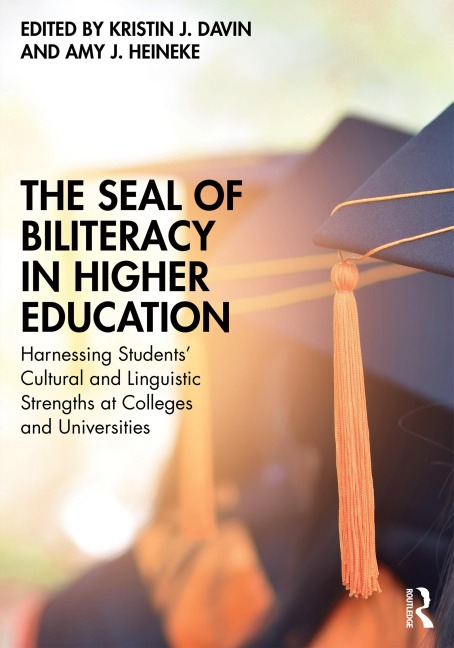
This book brings together the work of those implementing, using, or researching the Seal of Biliteracy (SoBL) in higher education contexts. Book chapters detail how various institutions of higher education (IHEs) are leveraging their state's SoBL policy and/or the Global SoBL to promote biliteracy within and across communities. In all 50 United States, high school graduates can earn a state SoBL, which is noted on the high school transcript to certify the ability to read, write, speak, and listen in more than one language. An increasing number of IHEs recognize the SoBL, and evidence suggests that such policies can serve as a recruitment tool, boost enrollment in modern language departments, and facilitate placement into modern language coursework. This book provides examples of how IHEs can implement the state SoBL, the Global SoBL, or their own recognition to recognize students' multilingualism, boost enrollment, enhance practice, and nurture biliteracy in their communities. The research-based examples in each chapter provide robust examples of how IHEs can leverage the SoBL to increase equity and access to higher education for multilingual students. This book targets educators, leaders, policymakers, and researchers interested in collaborating to enhance multilingualism in their communities. Whether working in K-12 schools or IHEs, readers can learn about potential avenues to expand pipelines, partnerships, and possibilities for learners to earn and benefit from a SoBL.
Kristin J. Davin is a Professor of Education at the University of North Carolina at Charlotte, where she directs the foreign language teacher education program. Amy J. Heineke is a Professor of Education at Loyola University Chicago, where she prepares teachers and leaders for work with multilingual learners.
Contents List of contributors Part I: Introduction 1. Origins and purposes of the Seal of Biliteracy Kristin J. Davin 2. Global Seal of Biliteracy programs in higher education and adult education settings Nick Gossett Part II: Recognizing Students' Biliteracy in Higher Education 3. A creative and collaborative approach to introducing the Seal of Biliteracy in higher education: Case study and survey findings in Washington state Michele Anciaux Aoki, Russell Hugo, and Bridget Yaden 4. Integrating the State Seal of Biliteracy into post-secondary studies in Oregon: A practical model Cecelia Monto 5. University Seal of Biliteracy and Cultural Competence at a Hispanic Serving Institution: Deepening cultural and linguistic capital Cristina Alfaro and Reka C. Barton 6. The B3 Scholar Seal: Designing and implementing an alternative to the SoBL at a Hispanic-serving institution in south Texas Katherine Christoffersen and Dania López García Part III: Awarding College Credit for Biliteracy Attainment 7. Seals of Biliteracy: Initial rewards for freshmen and attractive bonuses for seniors Grant D. Moss and James A. Gambrell 8. Reducing opportunity gaps and promoting enrollment through credit by examination for the Seal of Biliteracy Jesse Gleason, Sobeira Latorre, and Resha Cardone Part IV: Recruiting Biliterate Individuals into Higher Education 9. Exploring the recruitment potential of the Seal of Biliteracy for higher education: Results of a pilot initiative Janet Eckerson and Christopher Jacobs 10. Pipelines to practice: Utilizing the Seal of Biliteracy in teacher education Amy J. Heineke, Sarah L. Cohen, Eric Steinmiller, and Ji Won Lee Part V: Conclusions and Future Directions 11. Tending the garden and growing the trees of bilingualism: Opportunities, challenges, and needs in higher education Andrew Fiegen, Kendall King, and Ayumi Stockman Index
Dieses eBook wird im PDF-Format geliefert und ist mit einem Adobe Kopierschutz (DRM) versehen. Sie können dieses eBook mit allen Geräten lesen, die das PDF-Format und den Adobe Kopierschutz (DRM) unterstützen.
Zum Beispiel mit den folgenden Geräten:
• tolino Reader
Laden Sie das eBook direkt über den Reader-Shop auf dem tolino herunter oder übertragen Sie das eBook auf Ihren tolino mit einer kostenlosen Software wie beispielsweise Adobe Digital Editions.
• Sony Reader & andere eBook Reader
Laden Sie das eBook direkt über den Reader-Shop herunter oder übertragen Sie das eBook mit der kostenlosen Software Sony READER FOR PC/Mac oder Adobe Digital Editions auf ein Standard-Lesegeräte mit epub- und Adobe DRM-Unterstützung.
• Tablets & Smartphones
Möchten Sie dieses eBook auf Ihrem Smartphone oder Tablet lesen, finden Sie hier unsere kostenlose Lese-App für iPhone/iPad und Android Smartphone/Tablets.
• PC & Mac
Lesen Sie das eBook direkt nach dem Herunterladen mit einer kostenlosen Lesesoftware, beispielsweise Adobe Digital Editions, Sony READER FOR PC/Mac oder direkt über Ihre eBook-Bibliothek in Ihrem Konto unter „Meine eBooks“ - „online lesen“.
Schalten Sie das eBook mit Ihrer persönlichen Adobe ID auf bis zu sechs Geräten gleichzeitig frei.
Bitte beachten Sie, dass die Kindle-Geräte das Format nicht unterstützen und dieses eBook somit nicht auf Kindle-Geräten lesbar ist.