Und dann auf "Zum Home-Bildschirm [+]".

Stöbern
genialokal zum Startbildschirm hinzufügen
Installieren Sie die genialokal App auf Ihrem Startbildschirm für einen schnellen Zugriff und eine komfortable Nutzung.
Installieren Sie die genialokal App auf Ihrem Startbildschirm für einen schnellen Zugriff und eine komfortable Nutzung.
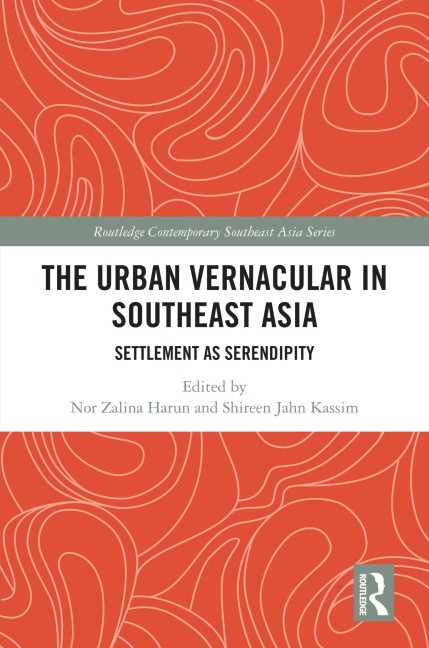
This book constructs a number of discourses, dialectics and analyses across the disciplines of urban form, architecture and urban experience, thus incorporating both conservation and design issues. It bridges the gap between practice and theory by reconstructing the role of the "village" or "vernacular" in the discourses and trends of the twenty-first century post-Covid19 environment. Bringing together for the first time the confluences of theory and practice in the "urban vernacular" and the "urban village," the contributors use vernacular concepts and settings as a common framework serving as cultural bridges, connecting traditional forms, ecologies and habitats to new global ideas, industrial economies and access to developing urban sustainability, design, planning and services in Asia's rising megacities. The book begins with concerns of urban layout and morphology, aiming to establish discourse, shared principles and terminology around conventional ideas of the "village" or traditional settlements' apparently organic and disordered nature. It then moves into architectural dimensions, capturing formal cases of how the "vernacular" or traditional "indigenous" local concepts have inspired new ideas in award-winning architecture and hence the importance of re-examining the vernacular in light of the ongoing need to produce a more sustainable and place-conscious fit in modern architecture and urban planning. The book will be of interest to researchers in the fields of architecture, urban planning and design, urban geography, design studies, landscape architecture, history of architecture/urbanism and Asian Studies, in particular those concerning Southeast Asia.
Nor Zalina Harun is Associate Professor and Senior Research Fellow at the Institute of the Malay World and Civilization, Universiti Kebangsaan Malaysia. She previously served as a faculty member at the Kulliyyah of Architecture and Environmental Design, International Islamic University Malaysia, where she contributed to the field of urban conservation and cultural landscape. Shireen Jahn Kassim is currently Director and Senior Advisor (Sustainability and Heritage) at EAG Consulting, Malaysia. She was previously Associate Professor at the International Islamic University Malaysia.
Preface; Chapter 1. The Urban Vernacular of Southeast Asia: Reviewing Morphological And Typological Dimensions Part 1 Chapter 2. Characterising the Vernacular Settlement of The Urban Fringe: The Case of the Nusantara; Chapter 3. The River-Based Settlement Forms: The Palembang Urban Morphology; Chapter 4. An Urban-Aquatic Vernacularism Of Banjarmasin - The 'Lanting' Settlement Forms; Chapter 5. Urban Villages As Serindipity In The City: The Case Of Indonesia And Malaysiai; Chapter 6. Morphological Serendipity Of The Urban Village In The Hanoi Fringe; Chapter 7. The Public Realm Of The Malay- Nusantara: Typological Variations Of Urban Space And Diasporic Streetscapes; Chapter 8. Vernacular Urbanism And Walkability In The Tropics: From Village To The Urban Core Part 2 Chapter 9. Revisiting The Tropical Verandah City: A Treatise Of Urban Design As A Continuum Of Serindipity; Chapter 10. Streets In The Hanoi Ancient Quarter: A Serendipitous Sense Of Place With Social Capital; Chapter 11. The Organic Assemblage Of The Market: Rooting Commerce In Vernacular Form; Chapter 12. Cynosures Of Creativity: Crossroads Of Urban Regeneration And Artistic Hubs - A Review; Chapter 13. Serendipity In a Southeast Asian Cultural Encounter- Perspectives On GWKL; Chapter 14. The Urban Vernacular as Serendipity In Practice: Participatory Placemaking In Bangkok Part 3 Chapter 15. The Archetypal Language Of The Urban Hybrid : The Case Of The Malay-Nusantara And The Philippines; Chapter 16. Vernacularism Vs Urbanism: Inscribing Memory In The Mimesis Of Architecture; Chapter 17. Oscillations Of The Critical Vernacular: Intentions And Inflections Of The Bioclimatic Forms Of Ken Yeang; Chapter 18. From Pendopo To Putrajaya: An 'Urban' Metamorphosis Of A Vernacular Mosque Archetype; Index
Dieses eBook wird im PDF-Format geliefert und ist mit einem Adobe Kopierschutz (DRM) versehen. Sie können dieses eBook mit allen Geräten lesen, die das PDF-Format und den Adobe Kopierschutz (DRM) unterstützen.
Zum Beispiel mit den folgenden Geräten:
• tolino Reader
Laden Sie das eBook direkt über den Reader-Shop auf dem tolino herunter oder übertragen Sie das eBook auf Ihren tolino mit einer kostenlosen Software wie beispielsweise Adobe Digital Editions.
• Sony Reader & andere eBook Reader
Laden Sie das eBook direkt über den Reader-Shop herunter oder übertragen Sie das eBook mit der kostenlosen Software Sony READER FOR PC/Mac oder Adobe Digital Editions auf ein Standard-Lesegeräte mit epub- und Adobe DRM-Unterstützung.
• Tablets & Smartphones
Möchten Sie dieses eBook auf Ihrem Smartphone oder Tablet lesen, finden Sie hier unsere kostenlose Lese-App für iPhone/iPad und Android Smartphone/Tablets.
• PC & Mac
Lesen Sie das eBook direkt nach dem Herunterladen mit einer kostenlosen Lesesoftware, beispielsweise Adobe Digital Editions, Sony READER FOR PC/Mac oder direkt über Ihre eBook-Bibliothek in Ihrem Konto unter „Meine eBooks“ - „online lesen“.
Schalten Sie das eBook mit Ihrer persönlichen Adobe ID auf bis zu sechs Geräten gleichzeitig frei.
Bitte beachten Sie, dass die Kindle-Geräte das Format nicht unterstützen und dieses eBook somit nicht auf Kindle-Geräten lesbar ist.