Und dann auf "Zum Home-Bildschirm [+]".

Stöbern
genialokal zum Startbildschirm hinzufügen
Installieren Sie die genialokal App auf Ihrem Startbildschirm für einen schnellen Zugriff und eine komfortable Nutzung.
Installieren Sie die genialokal App auf Ihrem Startbildschirm für einen schnellen Zugriff und eine komfortable Nutzung.
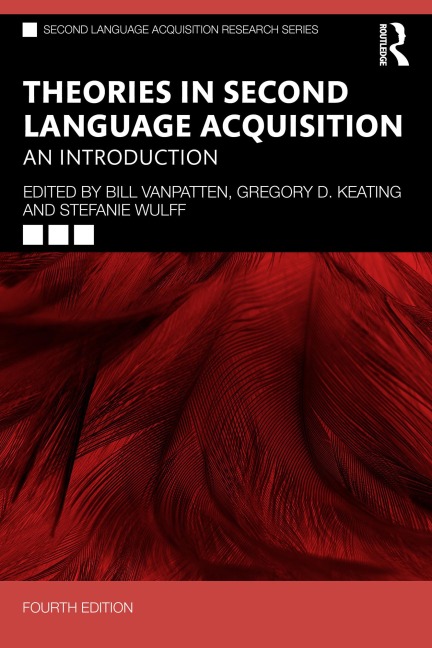
This fourth edition of the best-selling Theories in Second Language Acquisition surveys the major theories and frameworks currently used in second language acquisition (SLA) research, serving as an ideal introductory text for graduate students in SLA and language teaching. Designed to provide a consistent and coherent presentation for those seeking a basic understanding of the theories and frameworks that underlie contemporary SLA research, each chapter focuses on a single theory. Chapters are written by leading scholars in the field and incorporate a basic foundational description of the theory, relevant data or research models used with this theory, common misunderstandings, and a sample study from the field to show the theory in practice. New to this fully revised edition is the incorporation of a new theoretical framework to replace several lesser-used theories. A key work in the study of second language acquisition, this volume will be useful to students of linguistics, language, and language teaching, and to researchers as a guide to theoretical work outside their respective domains.
Bill VanPatten was a professor of Spanish at Michigan State University, where he was also an affiliate faculty in the Program for Cognitive Science. He is currently an independent scholar. Gregory D. Keating is a professor of Linguistics at San Diego State University. He is a former associate editor of Studies in Second Language Acquisition. Stefanie Wulff is an associate professor in the Linguistics Department at the University of Florida. She is co-editor-in-chief of Corpus Linguistics and Linguistic Theory.
Contributors Preface Acknowledgments 1 Introduction: The Nature of Theories Bill VanPatten, Jessica Williams, Gregory D. Keating, and Stefanie Wul- 2 Linguistic Theory, Universal Grammar, and Second Language Acquisition Lydia White 3 Usage-Based Approaches to L2 Acquisition Nick C. Ellis and Stefanie Wul- 4 Input Processing in Adult L2 Acquisition Bill VanPatten 5 Processability Theory Manfred Pienemann and Anke Lenzing 6 The Declarative/Procedural Model: A Neurobiologically Motivated Theory of First and Second Language Michael T. Ullman 7 Skill Acquisition Theory Robert DeKeyser and Yuichi Suzuki 8 Input, Interaction, and Output in L2 Acquisition Susan M. Gass, Alison Mackey, and Meg Montee 9 Complex Dynamic Systems Theory Diane Larsen-Freeman and Phil Hiver 10 The Modular Cognition Framework Michael Sharwood Smith and John Truscott 11 Theories, Frameworks, and Models: Implications for Language Teaching? Bill VanPatten Glossary Index
Dieses eBook wird im PDF-Format geliefert und ist mit einem Adobe Kopierschutz (DRM) versehen. Sie können dieses eBook mit allen Geräten lesen, die das PDF-Format und den Adobe Kopierschutz (DRM) unterstützen.
Zum Beispiel mit den folgenden Geräten:
• tolino Reader
Laden Sie das eBook direkt über den Reader-Shop auf dem tolino herunter oder übertragen Sie das eBook auf Ihren tolino mit einer kostenlosen Software wie beispielsweise Adobe Digital Editions.
• Sony Reader & andere eBook Reader
Laden Sie das eBook direkt über den Reader-Shop herunter oder übertragen Sie das eBook mit der kostenlosen Software Sony READER FOR PC/Mac oder Adobe Digital Editions auf ein Standard-Lesegeräte mit epub- und Adobe DRM-Unterstützung.
• Tablets & Smartphones
Möchten Sie dieses eBook auf Ihrem Smartphone oder Tablet lesen, finden Sie hier unsere kostenlose Lese-App für iPhone/iPad und Android Smartphone/Tablets.
• PC & Mac
Lesen Sie das eBook direkt nach dem Herunterladen mit einer kostenlosen Lesesoftware, beispielsweise Adobe Digital Editions, Sony READER FOR PC/Mac oder direkt über Ihre eBook-Bibliothek in Ihrem Konto unter „Meine eBooks“ - „online lesen“.
Schalten Sie das eBook mit Ihrer persönlichen Adobe ID auf bis zu sechs Geräten gleichzeitig frei.
Bitte beachten Sie, dass die Kindle-Geräte das Format nicht unterstützen und dieses eBook somit nicht auf Kindle-Geräten lesbar ist.