Und dann auf "Zum Home-Bildschirm [+]".

Stöbern
genialokal zum Startbildschirm hinzufügen
Installieren Sie die genialokal App auf Ihrem Startbildschirm für einen schnellen Zugriff und eine komfortable Nutzung.
Installieren Sie die genialokal App auf Ihrem Startbildschirm für einen schnellen Zugriff und eine komfortable Nutzung.
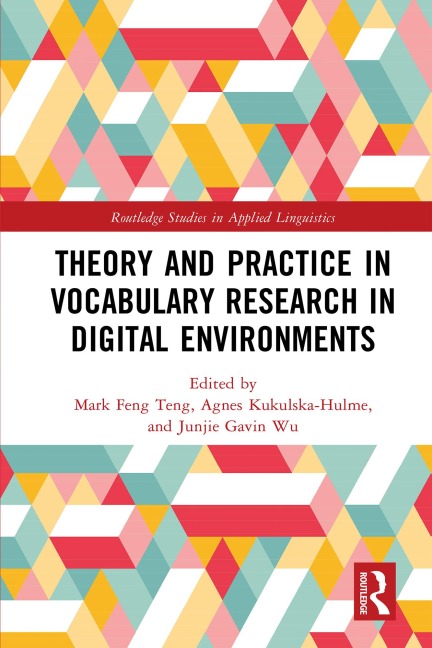
This collection is a comprehensive resource on the state of second language vocabulary learning today, building on earlier studies to spotlight the diversity of issues and foci in the field toward encouraging further advancements in both research and practice. The volume foregrounds the importance of vocabulary learning in language teaching and learning and in effective written and verbal communication, charting the range of approaches and theories used to address the unique challenges of vocabulary instruction. While there exists a well-established body of vocabulary research, this book takes those lines of inquiry in new directions by exploring how technology has shifted the focus from teacher-led delivery to more activity-driven experiences. Chapters from prominent researchers and rising scholars feature studies on emergent approaches in virtual environments such as interactive whiteboards, CMC, virtual world learning, and mobile-assisted language learning. In offering a holistic portrait of technology-enhanced vocabulary learning the volume makes the case for the power of technological tools in fostering optimal environments for encouraging vocabulary acquisition and in turn, the potential opportunities for future research and pedagogical applications. This book will be of interest to students and scholars in second language acquisition, language education, TESOL, and applied linguistics.
Mark Feng Teng is an Associate Professor in Applied Linguistics at Macao Polytechnic University, China. Agnes Kukulska-Hulme is a Professor of Learning Technology and Communication in the Institute of Educational Technology at the Open University, UK. Junjie Gavin Wu is a Lecturer and a Ph.D. Supervisor at Macao Polytechnic University, China.
Contents List of figures List of contributors Acknowledgements Preface 1. Introduction to Theory and Practice in Vocabulary Research in Digital Environments Mark Feng Teng and Junjie Gavin Wu Part I Theories and synthesis 2. Intentional vocabulary learning through captioned viewing: Comparing Vanderplank's 'cognitive-affective model' with Gesa and Miralpeix Robert Vanderplank and Mark Feng Teng. 3. Mapping the digital game-based vocabulary learning landscape: A comprehensive bibliometric exploration Zhaoyang Xiong, Junjie Gavin Wu,,and Di Zou 4. Development of gloss studies in vocabulary learning research Makoto Yoshii Part II Pedagogical practices 5. A corpus-based study of learners' language learning trajectories with captioned viewing: Implications for vocabulary learning practices Mark Feng Teng and Jesse W. C. Yip 6. L2 vocabulary learning with an AI chatbot: From linguistic, affective, and cognitive perspectives Sangmin-Michelle Lee 7. Training to use machine translation for vocabulary learning Yijen Wang and Glenn Stockwell 8. Korean EFL learners' vocabulary development through asynchronous CMC and synchronous CMC in content courses Sung-Yeon Kim 9. The anatomy of word lists in New Word Level Checker: Description and comparison Atsushi Mizumoto 10. Mobile-assisted vocabulary learning in an EAP context Jeong-Bae Son and Sang-Soon Park 11. Vocabulary learning with Netflix: Exploring intraformal learning practices through the lens of Complex Dynamic Systems Theory Antonie Alm and Yuki Watanabe 12. Using TikTok for vocabulary learning: Multimodal implications Yeong-Ju Lee 13. Conclusion: The next generation of studies in multimodal, multilingual, and multi-agent vocabulary learning Agnes Kukulska-Hulme Index
Dieses eBook wird im PDF-Format geliefert und ist mit einem Adobe Kopierschutz (DRM) versehen. Sie können dieses eBook mit allen Geräten lesen, die das PDF-Format und den Adobe Kopierschutz (DRM) unterstützen.
Zum Beispiel mit den folgenden Geräten:
• tolino Reader
Laden Sie das eBook direkt über den Reader-Shop auf dem tolino herunter oder übertragen Sie das eBook auf Ihren tolino mit einer kostenlosen Software wie beispielsweise Adobe Digital Editions.
• Sony Reader & andere eBook Reader
Laden Sie das eBook direkt über den Reader-Shop herunter oder übertragen Sie das eBook mit der kostenlosen Software Sony READER FOR PC/Mac oder Adobe Digital Editions auf ein Standard-Lesegeräte mit epub- und Adobe DRM-Unterstützung.
• Tablets & Smartphones
Möchten Sie dieses eBook auf Ihrem Smartphone oder Tablet lesen, finden Sie hier unsere kostenlose Lese-App für iPhone/iPad und Android Smartphone/Tablets.
• PC & Mac
Lesen Sie das eBook direkt nach dem Herunterladen mit einer kostenlosen Lesesoftware, beispielsweise Adobe Digital Editions, Sony READER FOR PC/Mac oder direkt über Ihre eBook-Bibliothek in Ihrem Konto unter „Meine eBooks“ - „online lesen“.
Schalten Sie das eBook mit Ihrer persönlichen Adobe ID auf bis zu sechs Geräten gleichzeitig frei.
Bitte beachten Sie, dass die Kindle-Geräte das Format nicht unterstützen und dieses eBook somit nicht auf Kindle-Geräten lesbar ist.