Und dann auf "Zum Home-Bildschirm [+]".

Stöbern
genialokal zum Startbildschirm hinzufügen
Installieren Sie die genialokal App auf Ihrem Startbildschirm für einen schnellen Zugriff und eine komfortable Nutzung.
Installieren Sie die genialokal App auf Ihrem Startbildschirm für einen schnellen Zugriff und eine komfortable Nutzung.
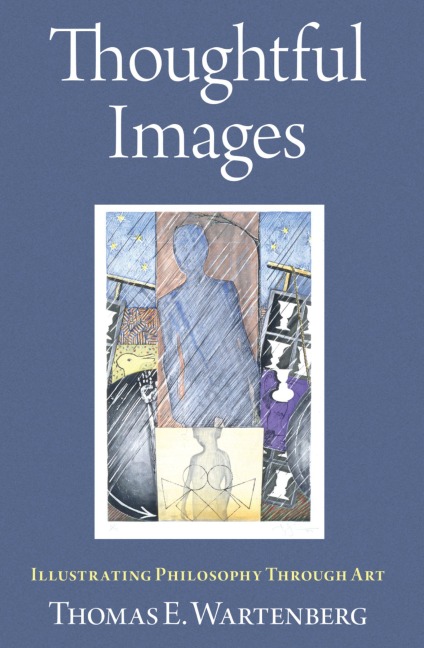
Thoughtful Images demonstrates that there is a rich tradition of illustrations of philosophy that originated in Ancient Greece, spread throughout Europe, thrived in twentieth century America, and continues to this day. It is the first book to isolate this tradition and to explain its relevance for both philosophy and art. It's not surprising that philosophers and others have not acknowledged the existence of this artistic tradition. Illustration is not generally regarded as a genuine art form on a par with painting and sculpture and many believe that the abstract claims made by philosophers are not amenable to being rendered in visual images. Wartenberg shows that the denigration of illustration as an art form is misguided in a number of ways. The book argues that great works of art such as Titian's Rape of Europa are actually illustrations of literary texts--Ovid's Metamorphoses in Titian's case. This undermines the attempt to diminish the artistic achievement of illustrations by seeing them as an inferior art form to painting. That the abstract claims and theories put forward by philosophers are amenable to illustration is supported by the examples discussed in the balance of the book. These examples include illuminated Medieval manuscripts featuring illustrations of Aristotle's ethical theories; the frontispieces of philosophical works in the 17th and 18th century; Friedrich Nietzsche's, Martin Heidegger's, and Michel Foucault's use of paintings to illustrate their theories; the modernist tradition in which art is seen as a form of philosophy; conceptual artists' creation of works that explicitly include ideas taken from Ludwig Wittgenstein's writings; and works of what the author calls graphic philosophy--comic books that include visual representations of philosophical ideas.
Thomas E. Wartenberg is Professor of Philosophy Emeritus at Mount Holyoke College where he taught since 1984. He is the author or editor of over fifteen books including most recently, Thinking Through Stories: Children, Philosophy, and Picture Books; Mel Bochner: Illustrating Philosophy; and Thinking On Screen: Film as Philosophy.
Chapter 1: Introduction Chapter 2: Theorizing Illustration as an Art Form Chapter 3: Pre-Modern Illustrations of Philosophy Chapter 4: Frontispieces in the 17th and 18th Centuries Chapter 5: Paintings that Illustrate Philosophy Chapter 6: Modernist Art as Philosophy Chapter 7: Art Inspired by Wittgenstein Chapter 8: Mel Bochner Illustrates Wittgenstein Chapter 9: Graphic Philosophy Chapter 10: Conclusion Bibliography Index
Dieses eBook wird im PDF-Format geliefert und ist mit einem Adobe Kopierschutz (DRM) versehen. Sie können dieses eBook mit allen Geräten lesen, die das PDF-Format und den Adobe Kopierschutz (DRM) unterstützen.
Zum Beispiel mit den folgenden Geräten:
• tolino Reader
Laden Sie das eBook direkt über den Reader-Shop auf dem tolino herunter oder übertragen Sie das eBook auf Ihren tolino mit einer kostenlosen Software wie beispielsweise Adobe Digital Editions.
• Sony Reader & andere eBook Reader
Laden Sie das eBook direkt über den Reader-Shop herunter oder übertragen Sie das eBook mit der kostenlosen Software Sony READER FOR PC/Mac oder Adobe Digital Editions auf ein Standard-Lesegeräte mit epub- und Adobe DRM-Unterstützung.
• Tablets & Smartphones
Möchten Sie dieses eBook auf Ihrem Smartphone oder Tablet lesen, finden Sie hier unsere kostenlose Lese-App für iPhone/iPad und Android Smartphone/Tablets.
• PC & Mac
Lesen Sie das eBook direkt nach dem Herunterladen mit einer kostenlosen Lesesoftware, beispielsweise Adobe Digital Editions, Sony READER FOR PC/Mac oder direkt über Ihre eBook-Bibliothek in Ihrem Konto unter „Meine eBooks“ - „online lesen“.
Schalten Sie das eBook mit Ihrer persönlichen Adobe ID auf bis zu sechs Geräten gleichzeitig frei.
Bitte beachten Sie, dass die Kindle-Geräte das Format nicht unterstützen und dieses eBook somit nicht auf Kindle-Geräten lesbar ist.