Und dann auf "Zum Home-Bildschirm [+]".

Stöbern
genialokal zum Startbildschirm hinzufügen
Installieren Sie die genialokal App auf Ihrem Startbildschirm für einen schnellen Zugriff und eine komfortable Nutzung.
Installieren Sie die genialokal App auf Ihrem Startbildschirm für einen schnellen Zugriff und eine komfortable Nutzung.
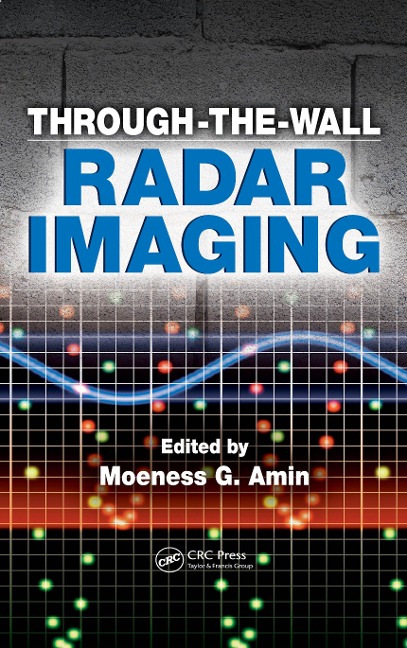
Through-the-wall radar imaging (TWRI) allows police, fire and rescue personnel, first responders, and defense forces to detect, identify, classify, and track the whereabouts of humans and moving objects. Electromagnetic waves are considered the most effective at achieving this objective, yet advances in this multi-faceted and multi-disciplinary technology require taking phenomenological issues into consideration and must be based on a solid understanding of the intricacies of EM wave interactions with interior and exterior objects and structures. Providing a broad overview of the myriad factors involved, namely size, weight, mobility, acquisition time, aperture distribution, power, bandwidth, standoff distance, and, most importantly, reliable performance and delivery of accurate information, Through-the-Wall Radar Imaging examines this technology from the algorithmic, modeling, experimentation, and system design perspectives. It begins with coverage of the electromagnetic properties of walls and building materials, and discusses techniques in the design of antenna elements and array configurations, beamforming concepts and issues, and the use of antenna array with collocated and distributed apertures. Detailed chapters discuss several suitable waveforms inverse scattering approaches and revolve around the relevance of physical-based model approaches in TWRI along with theoretical and experimental research in 3D building tomography using microwave remote sensing, high-frequency asymptotic modeling methods, synthetic aperture radar (SAR) techniques, impulse radars, airborne radar imaging of multi-floor buildings strategies for target detection, and detection of concealed targets. The book concludes with a discussion of how the Doppler principle can be used to measure motion at a very fine level of detail. The book provides a deep understanding of the challenges of TWRI, stressing its multidisciplinary and phenomenological nature. The breadth and depth of topics covered presents a highly detailed treatment of this potentially life-saving technology.
Dr. Moeness Amin is a professor in the Department of Electrical and Computer Engineering and the director of the Center for Advanced Communications for Villanova University. He has over 400 publications in the areas of wireless communications, time-frequency analysis, smart antennas, interference cancellation in broadband communication platforms, direction finding, GPS technologies, over-the-horizon radar, radar imaging, and channel equalizations.
Wall Attenuation and Dispersion. Antenna Elements, Arrays, and Systems for Through-the-Wall Radar Imaging. Beamforming for Through-the-Wall Radar Imaging. Image and Localization of Behind-the-Wall Targets Using Collocated and Distributed Apertures. Conventional and Emerging Waveforms for Detection and Imaging of Targets behind Walls. Inverse Scattering Approaches in Through-the-Wall Imaging. Through-the-Wall Microwave Building Tomography. Analytical Ray Methods for Through-the-Wall Radar Imaging. Synthetic Aperture Radar Techniques for Through-the-Wall Imaging. Impulse SAR and Its Application for Through-the-Wall Detection and Identification of People and Weapons. Through-the-Wall SAR for Characterization of Building Interior Structure Using Attributed Scattering Center Features. Detection Approaches in Through-the-Wall Radar Imaging. Detection of Concealed Targets in Through-the-Wall Imaging. Fast Acquisition and Compressive Sensing Techniques for Through-the-Wall Radar Imaging. Radar Micro-Doppler Signatures for Characterization of Human Motion. Index.
Dieses eBook wird im PDF-Format geliefert und ist mit einem Adobe Kopierschutz (DRM) versehen. Sie können dieses eBook mit allen Geräten lesen, die das PDF-Format und den Adobe Kopierschutz (DRM) unterstützen.
Zum Beispiel mit den folgenden Geräten:
• tolino Reader
Laden Sie das eBook direkt über den Reader-Shop auf dem tolino herunter oder übertragen Sie das eBook auf Ihren tolino mit einer kostenlosen Software wie beispielsweise Adobe Digital Editions.
• Sony Reader & andere eBook Reader
Laden Sie das eBook direkt über den Reader-Shop herunter oder übertragen Sie das eBook mit der kostenlosen Software Sony READER FOR PC/Mac oder Adobe Digital Editions auf ein Standard-Lesegeräte mit epub- und Adobe DRM-Unterstützung.
• Tablets & Smartphones
Möchten Sie dieses eBook auf Ihrem Smartphone oder Tablet lesen, finden Sie hier unsere kostenlose Lese-App für iPhone/iPad und Android Smartphone/Tablets.
• PC & Mac
Lesen Sie das eBook direkt nach dem Herunterladen mit einer kostenlosen Lesesoftware, beispielsweise Adobe Digital Editions, Sony READER FOR PC/Mac oder direkt über Ihre eBook-Bibliothek in Ihrem Konto unter „Meine eBooks“ - „online lesen“.
Schalten Sie das eBook mit Ihrer persönlichen Adobe ID auf bis zu sechs Geräten gleichzeitig frei.
Bitte beachten Sie, dass die Kindle-Geräte das Format nicht unterstützen und dieses eBook somit nicht auf Kindle-Geräten lesbar ist.