Und dann auf "Zum Home-Bildschirm [+]".

Stöbern
genialokal zum Startbildschirm hinzufügen
Installieren Sie die genialokal App auf Ihrem Startbildschirm für einen schnellen Zugriff und eine komfortable Nutzung.
Installieren Sie die genialokal App auf Ihrem Startbildschirm für einen schnellen Zugriff und eine komfortable Nutzung.
Ihr gewünschter Artikel ist in 0 Buchhandlungen vorrätig - wählen Sie hier eine Buchhandlung in Ihrer Nähe aus:

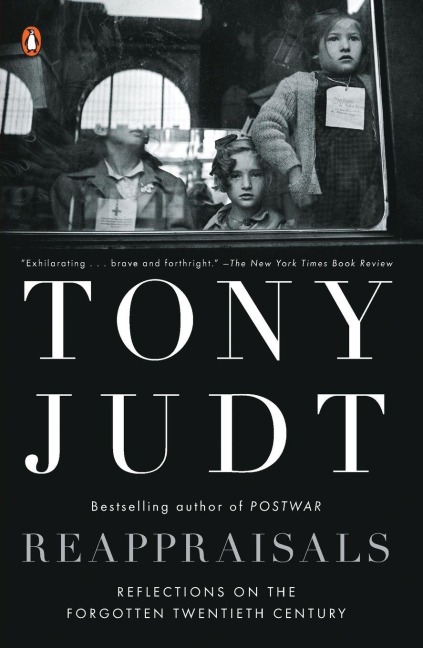

We have entered an age of forgetting. Our world, we insist, is unprecedented, wholly new. The past has nothing to teach us. Drawing provocative connections between a dazzling range of subjects, from Jewish intellectuals and the challenge of evil in the recent European past to the interpretation of the Cold War and the displacement of history by heritage, the late historian Tony Judt takes us beyond what we think we know of the past to explain how we came to know it, showing how much of our history has been sacrificed in the triumph of myth-making over understanding and denial over memory. Reappraisals offers a much-needed road map back to the historical sense we urgently need.
Tony Judt was the Erich Maria Remarque Professor of European Studies at New York University, as well as the founder and director of the Remarque Institute, dedicated to creating an ongoing conversation between Europe and the United States. He was educated at King’s College, Cambridge, and the École Normale Supérieure, Paris, and also taught at Cambridge, Oxford, and Berkeley. Professor Judt was a frequent contributor to The New York Review of Books, The Times Literary Supplement, The New Republic, The New York Times, and many journals across Europe and the United States. He is the author or editor of fifteen books, including Thinking the Twentieth Century, The Memory Chalet, Ill Fares the Land, Reappraisals: Reflections on the Forgotten Twentieth Century, and Postwar: A History of Europe Since 1945, which was one of The New York Times Book Review’s Ten Best Books of 2005, the winner of the Council on Foreign Relations Arthur Ross Book Award, and a finalist for the Pulitzer Prize. He died in August 2010 at the age of sixty-two.
ReappraisalsAcknowledgments Introduction: The World We Have Lost Part One: The Heart of Darkness Chapter I: Arthur Koestler, the Exemplary Intellectual Chapter II: The Elementary Truths of Primo Levi Chapter III: The Jewish Europe of Manes Sperber Chapter IV: Hannah Arendt and Evil Part Two: The Politics of Intellectual Engagement Chapter V: Albert Camus: "The best man in France" Chapter VI: Elucubrations: The "Marxism" of Louis Althusser Chapter VII: Eric Hobsbawm and the Romance of Communism Chapter VIII: Goodbye to All That? Leszek Kotakowski and the Marxist Legacy Chapter IX: A "Pope of Ideas"? John Paul II and the Modern World Chapter X: Edward Said: The Rootless Cosmopolitan Part Three: Lost in Transition: Places and Memories Chapter XI: The Catastrophe: The Fall of France, 1940 Chapter XII: A la recherche du temps perdu: France and Its Pasts Chapter XIII: The Gnome in the Garden: Tony Blair and Britain's "Heritage" Chapter XIV: The Stateless State: Why Belgium Matters Chapter XV: Romania between History and Europe Chapter XVI: Dark Victory: Israel's Six-Day War Chapter XVII: The Country That Wouldn't Grow Up Part Four: The American (Half-) Century Chapter XVIII: An American Tragedy? The Case of Whittaker Chambers Chapter XIX: The Crisis: Kennedy, Khrushchev, and Cuba Chapter XX: The Illusionist: Henry Kissinger and American Foreign Policy Chapter XXI: Whose Story Is It? The Cold War in Retrospect Chapter XXII: The Silence of the Lambs: On the Strange Death of Liberal America Chapter XXIII: The Good Society: Europe vs. America Envoi: The Social Question Redivivus Publication Credits Index