Und dann auf "Zum Home-Bildschirm [+]".

Stöbern
genialokal zum Startbildschirm hinzufügen
Installieren Sie die genialokal App auf Ihrem Startbildschirm für einen schnellen Zugriff und eine komfortable Nutzung.
Installieren Sie die genialokal App auf Ihrem Startbildschirm für einen schnellen Zugriff und eine komfortable Nutzung.
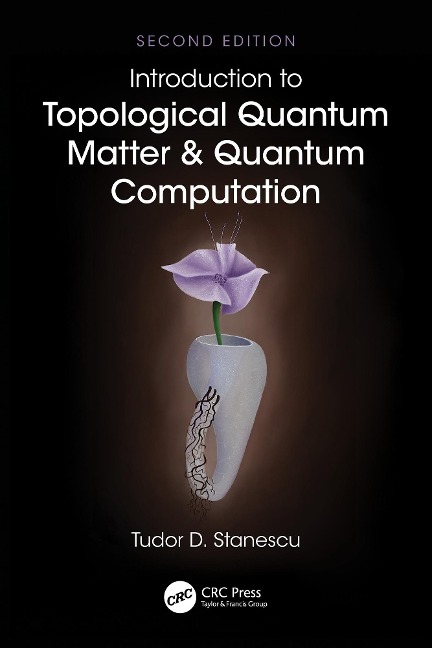
What is "topological" about topological quantum states? How many types of topological quantum phases are there? What is a zero-energy Majorana mode, how can it be realized in a solid-state system, and how can it be used as a platform for topological quantum computation? What is quantum computation and what makes it different from classical computation? Addressing these and other related questions, Introduction to Topological Quantum Matter & Quantum Computation provides an introduction to and a synthesis of a fascinating and rapidly expanding research field emerging at the crossroads of condensed matter physics, mathematics, and computer science. Providing the big picture and emphasizing two major new paradigms in condensed matter physics - quantum topology and quantum information - this book is ideal for graduate students and researchers entering this field, as it allows for the fruitful transfer of ideas amongst different areas, and includes many specific examples to help the reader understand abstract and sometimes challenging concepts. It explores the topological quantum world beyond the well-known topological insulators and superconductors and unveils the deep connections with quantum computation. It addresses key principles behind the classification of topological quantum phases and relevant mathematical concepts and discusses models of interacting and noninteracting topological systems, such as the toric code and the p-wave superconductor. The book also covers the basic properties of anyons, and aspects concerning the realization of topological states in solid state structures and cold atom systems. Topological quantum computation is also presented using a broad perspective, which includes elements of classical and quantum information theory, basic concepts in the theory of computation, such as computational models and computational complexity, examples of quantum algorithms, and key ideas underlying quantum computation with anyons. This new edition has been updated throughout, with exciting new discussions on crystalline topological phases, including higher-order topological insulators; gapless topological phases, including Weyl semimetals; periodically-driven topological insulators; and a discussion of axion electrodynamics in topological materials. Key Features: · Provides an accessible introduction to this exciting, cross-disciplinary area of research. · Fully updated throughout with new content on the latest result from the field. · Authored by an authority on the subject.
Tudor Stanescu is a professor of Condensed Matter Theory at West Virginia University, USA. He received a B.S. in Physics from the University of Bucharest, Romania, in 1994 and a Ph.D. in Theoretical Physics from the University of Illinois at Urbana Champaign in 2002. He was a Postdoctoral Fellow at Rutgers University and at the University of Maryland from 2003 to 2009. He joined the Department of Physics and Astronomy at West Virginia University in Fall 2009. Prof. Stanescu's research interests encompass a variety of topics in theoretical condensed matter physics including topological insulators and superconductors, topological quantum computation, ultra-cold atom systems in optical lattices, and strongly correlated materials, such as, for example, cuprate high-temperature superconductors. His research uses a combination of analytical and numerical tools and focuses on understanding the emergence of exotic states of matter in solid state and cold atom structures, for example, topological superconducting phases that host Majorana zero modes, and on investigating the possibilities of exploiting these states as physical platforms for quantum computation.
Chapter 1: Topology and Quantum Theory. Chapter 2: Symmetry and Topology in Condensed Matter Physics. Chapter 3: Topological Insulators and Superconductors. Chapter 4: Extensions of the Non-Interacting Topological Classification. Chapter 5: Interacting Topological Phases. Chapter 6: Theories of Topological Quantum Matter. Chapter 7: Axion Electrodynamics in Topological Quantum Matter. Chapter 8: Majorana Zero Modes in Solid State Hetrostructures. Chapter 9: Topological Phases in Cold Atom Systems. Chapter 10: Elements of Quantum Information Theory. Chapter 11: Introduction to Quantum Computation. Chapter 12: Anyons and Topological Quantum Computation. Bibliography. Index.
Dieses eBook wird im PDF-Format geliefert und ist mit einem Adobe Kopierschutz (DRM) versehen. Sie können dieses eBook mit allen Geräten lesen, die das PDF-Format und den Adobe Kopierschutz (DRM) unterstützen.
Zum Beispiel mit den folgenden Geräten:
• tolino Reader
Laden Sie das eBook direkt über den Reader-Shop auf dem tolino herunter oder übertragen Sie das eBook auf Ihren tolino mit einer kostenlosen Software wie beispielsweise Adobe Digital Editions.
• Sony Reader & andere eBook Reader
Laden Sie das eBook direkt über den Reader-Shop herunter oder übertragen Sie das eBook mit der kostenlosen Software Sony READER FOR PC/Mac oder Adobe Digital Editions auf ein Standard-Lesegeräte mit epub- und Adobe DRM-Unterstützung.
• Tablets & Smartphones
Möchten Sie dieses eBook auf Ihrem Smartphone oder Tablet lesen, finden Sie hier unsere kostenlose Lese-App für iPhone/iPad und Android Smartphone/Tablets.
• PC & Mac
Lesen Sie das eBook direkt nach dem Herunterladen mit einer kostenlosen Lesesoftware, beispielsweise Adobe Digital Editions, Sony READER FOR PC/Mac oder direkt über Ihre eBook-Bibliothek in Ihrem Konto unter „Meine eBooks“ - „online lesen“.
Schalten Sie das eBook mit Ihrer persönlichen Adobe ID auf bis zu sechs Geräten gleichzeitig frei.
Bitte beachten Sie, dass die Kindle-Geräte das Format nicht unterstützen und dieses eBook somit nicht auf Kindle-Geräten lesbar ist.