Und dann auf "Zum Home-Bildschirm [+]".

Stöbern
genialokal zum Startbildschirm hinzufügen
Installieren Sie die genialokal App auf Ihrem Startbildschirm für einen schnellen Zugriff und eine komfortable Nutzung.
Installieren Sie die genialokal App auf Ihrem Startbildschirm für einen schnellen Zugriff und eine komfortable Nutzung.
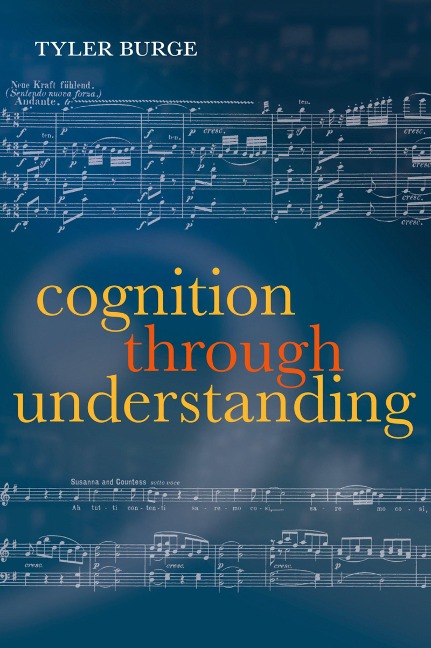
Cognition Through Understanding presents a selection of Tyler Burge's essays that use epistemology to illumine powers of mind. The essays focus on epistemic warrants that differ from those warrants commonly discussed in epistemology--those for ordinary empirical beliefs and for logical and mathematical beliefs. The essays center on four types of cognition warranted through understanding--self-knowledge, interlocution, reasoning, and reflection. Burge argues that by reflecting on warrants for these types of cognition, one better understands cognitive powers that are distinctive of persons, and (on earth) of human beings. The collection presents three previously unpublished independent essays, in addition to substantial, retrospective commentary. The retrospective commentary invites the reader to make connections that were not fully in mind when the essays were written.
Tyler Burge is Distinguished Professor of Philosophy at the University of California, Los Angeles. He is the author of Truth, Thought, Reason: Essays on Frege (OUP, 2005), Foundations of Mind (OUP, 2007), and Origins of Objectivity (OUP, 2010).
- 1: Introduction - I: Self-Knowledge - 2: Individualism and Self-Knowledge - 3: Our Entitlement to Self-Knowledge - 4: Memory and Self-Knowledge - 5: A Century of Deflation and a Moment of Self-Knowledge - 6: Mental Agency in Authoritative Self-Knowledge: Reply to Kobes - 7: Self and Self-Understanding: the Dewey Lectures - Some Origins of Self - 8: Self and Self-Understanding: the Dewey Lectures - Self and Constitutive Norms - 9: Self and Self-Understanding: the Dewey Lectures - Self-Understanding - II: Interlocution - 10: Content Preservation - 11: Postscript: 'Content Preservation' - 12: Interlocution, Perception, and Memory - 13: Computer Proof, Apriori Knowledge, and Other Minds - 14: Comprehension and Interpretation - 15: A Warrant for Belief in Other Minds - III: Reasoning and the Individuality of Persons - 16: Reason and the First Person - 17: Memory and Persons - 18: De Se Preservation and Personal Identity: Reply to Shoemaker - 19: Modest Dualism - 20: Epistemic Warrant: Humans and Computers - IV: Reflection - 21: Reasoning about Reasoning - 22: Thought Experiments and Semantic Competence: Reply to Benejam - 23: Concepts, Conceptions, Reflective Understanding: Reply to Peacocke - 24: Reflection - 25: Living Wages of Sinn - Bibliography - Index
Dieses eBook wird im PDF-Format geliefert und ist mit einem Adobe Kopierschutz (DRM) versehen. Sie können dieses eBook mit allen Geräten lesen, die das PDF-Format und den Adobe Kopierschutz (DRM) unterstützen.
Zum Beispiel mit den folgenden Geräten:
• tolino Reader
Laden Sie das eBook direkt über den Reader-Shop auf dem tolino herunter oder übertragen Sie das eBook auf Ihren tolino mit einer kostenlosen Software wie beispielsweise Adobe Digital Editions.
• Sony Reader & andere eBook Reader
Laden Sie das eBook direkt über den Reader-Shop herunter oder übertragen Sie das eBook mit der kostenlosen Software Sony READER FOR PC/Mac oder Adobe Digital Editions auf ein Standard-Lesegeräte mit epub- und Adobe DRM-Unterstützung.
• Tablets & Smartphones
Möchten Sie dieses eBook auf Ihrem Smartphone oder Tablet lesen, finden Sie hier unsere kostenlose Lese-App für iPhone/iPad und Android Smartphone/Tablets.
• PC & Mac
Lesen Sie das eBook direkt nach dem Herunterladen mit einer kostenlosen Lesesoftware, beispielsweise Adobe Digital Editions, Sony READER FOR PC/Mac oder direkt über Ihre eBook-Bibliothek in Ihrem Konto unter „Meine eBooks“ - „online lesen“.
Schalten Sie das eBook mit Ihrer persönlichen Adobe ID auf bis zu sechs Geräten gleichzeitig frei.
Bitte beachten Sie, dass die Kindle-Geräte das Format nicht unterstützen und dieses eBook somit nicht auf Kindle-Geräten lesbar ist.