Und dann auf "Zum Home-Bildschirm [+]".

Stöbern
genialokal zum Startbildschirm hinzufügen
Installieren Sie die genialokal App auf Ihrem Startbildschirm für einen schnellen Zugriff und eine komfortable Nutzung.
Installieren Sie die genialokal App auf Ihrem Startbildschirm für einen schnellen Zugriff und eine komfortable Nutzung.
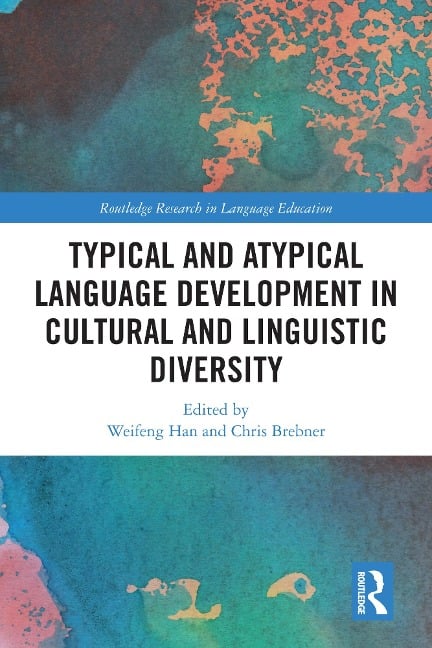
Typical and Atypical Language Development in Cultural and Linguistic Diversity brings together state-of-the-art studies in both typical and atypical language development. Placing the topic in the context of cultural and linguistic diversity (CALD), the book offers readers serious theoretical consideration of the topic and provides implications for multilingual educational and clinical practices. The content covers a wide range of topics related to multilingual language development in CALD: typical and atypical language development in CALD, and the interface between both; the relationship between multilingual competence and academic performance in CALD; providing unbiased speech and language measures in CALD; and heritage and minority languages education in CALD. Each chapter outlines the core theoretical and practical issues and explores both theoretical and pedagogical/clinical implications in the area and possible future developments. This volume is an essential resource for all those who study, research, or are interested in multilingual development, educational linguistics, and clinical linguistics in the CALD context.
Weifeng Han is a Senior Lecturer in Speech Pathology, Institute of Health and Well-being, Federation University, Australia. Chris Brebner is a Professor in Speech Pathology and is Pro-Vice Chancellor (Curriculum Impact) at Flinders University, Australia.
Introduction. 1. Early bilingual acquisition: The effects of home language typology on learning English inflectional morphology. 2. The role of lexical tones in bilingual language processing: evidence from a typing task. 3. Beyond relative clauses: The development of noun-modifying clause constructions in Cantonese. 4. Is object relative clause comprehension particularly sensitive to quantity of language exposure in sequential bilingual children?. 5. Language acquisition at the syntax-semantics interface: Definiteness restrictions in L2 French and L3 English. 6. Acquisition of definiteness marking in L2 Mandarin Chinese by English native speakers: A perspective from syntax-pragmatics interface. 7. A longitudinal exploration of the presence of a bilingual advantage in children. 8. Associations among oral narrative language measures for Indigenous and non-Indigenous Australian children in their first year of school. 9. Grammatical profiles of Mandarin-English bilingual children at risk for developmental language disorder. 10. Bidialectal CALD learners of English: Implications on bilingual language disorders and differential diagnosis. 11. Heritage language status, use and maintenance in culturally and linguistically diverse contexts. 12. The development and pilot of a dynamic assessment of word learning skills. Index
Dieses eBook wird im PDF-Format geliefert und ist mit einem Adobe Kopierschutz (DRM) versehen. Sie können dieses eBook mit allen Geräten lesen, die das PDF-Format und den Adobe Kopierschutz (DRM) unterstützen.
Zum Beispiel mit den folgenden Geräten:
• tolino Reader
Laden Sie das eBook direkt über den Reader-Shop auf dem tolino herunter oder übertragen Sie das eBook auf Ihren tolino mit einer kostenlosen Software wie beispielsweise Adobe Digital Editions.
• Sony Reader & andere eBook Reader
Laden Sie das eBook direkt über den Reader-Shop herunter oder übertragen Sie das eBook mit der kostenlosen Software Sony READER FOR PC/Mac oder Adobe Digital Editions auf ein Standard-Lesegeräte mit epub- und Adobe DRM-Unterstützung.
• Tablets & Smartphones
Möchten Sie dieses eBook auf Ihrem Smartphone oder Tablet lesen, finden Sie hier unsere kostenlose Lese-App für iPhone/iPad und Android Smartphone/Tablets.
• PC & Mac
Lesen Sie das eBook direkt nach dem Herunterladen mit einer kostenlosen Lesesoftware, beispielsweise Adobe Digital Editions, Sony READER FOR PC/Mac oder direkt über Ihre eBook-Bibliothek in Ihrem Konto unter „Meine eBooks“ - „online lesen“.
Schalten Sie das eBook mit Ihrer persönlichen Adobe ID auf bis zu sechs Geräten gleichzeitig frei.
Bitte beachten Sie, dass die Kindle-Geräte das Format nicht unterstützen und dieses eBook somit nicht auf Kindle-Geräten lesbar ist.