Und dann auf "Zum Home-Bildschirm [+]".

Stöbern
genialokal zum Startbildschirm hinzufügen
Installieren Sie die genialokal App auf Ihrem Startbildschirm für einen schnellen Zugriff und eine komfortable Nutzung.
Installieren Sie die genialokal App auf Ihrem Startbildschirm für einen schnellen Zugriff und eine komfortable Nutzung.
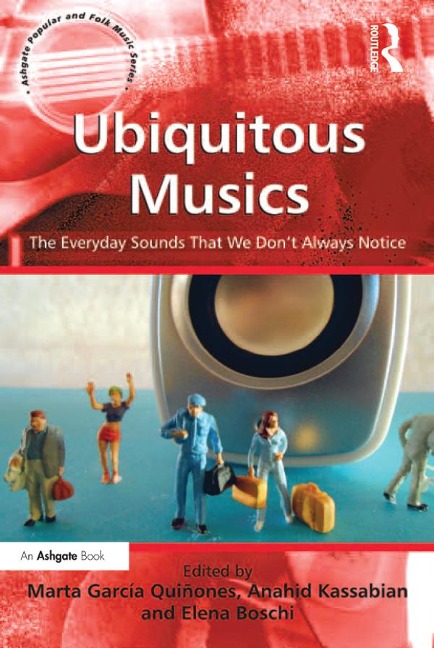
Ubiquitous Musics offers a multidisciplinary approach to the pervasive presence of music in everyday life. The essays address a variety of situations in which music is present alongside other activities and does not demand focused attention from (sometimes involuntary) listeners. The contributors present different theoretical perspectives on the increasing ubiquity of music and its implications for the experience of listening. The collection consists of nine essays divided into three sections: Histories, Technologies, and Spaces. The first section addresses the historical origins of functional music and the debates on how reproduced music, including a wide range of styles and genres, spread so quickly across so many environments. The second section focuses on more contemporary sound technologies, including mobile phones in India, the role of visible playback technology in film, and listening to portable digital players. The final section reflects on settings such as malls, stores, gyms, offices and cars in which ubiquitous musics are often present, but rarely thought about. This last section - and ultimately the whole collection - seeks to foster a wider understanding of listening practices by lending a fresh, critical ear.
Marta GarcÃa Quiñones is a PhD candidate at the University of Barcelona, where she is preparing a thesis on music listening. In 2008 she edited the collection La música que no se escucha. Aprocimaxiones a la escucha ambiental. She is also a member of the international research network 'Sound in Media Culture: Aspects of a Cultural History of Sound' (2010-2013), funded by the German Research Foundation. Anahid Kassabian is the author of Ubiquitous Listening: Affect, Attention, and Distributed Subjectivity (2013) and Hearing Film (2001). Anahid is a past editor of Stanford Humanities Review and of Journal of Popular Music Studies, as well as a co-founding editor of Music, Sound, and the Moving Image and a past chair of the International Association for the Study of Popular Music (IASPM). She serves on the Board of Directors of Aunt Lute Books, a feminist multicultural publisher, and the Board of Trustees of the Liverpool Arabic Arts Festival, the oldest and largest festival of its kind in the UK. Elena Boschi is a Postdoctoral Teaching Fellow in Visual Communication at Liverpool Hope University. She completed her PhD on popular songs and cultural identities in contemporary Italian, Spanish and British cinema at the Institute of Popular Music (University of Liverpool) in 2011. She has published on songs in Radiofreccia (Luciano Ligabue, 1998), musical simulacra in Barrio (Fernando Léon de Aranoa, 1998) and the audiovisual style in the films of Wes Anderson (with Tim McNelis). Elena is also Translations Editor for the journal Music, Sound, and the Moving Image, and has published a translation of Ennio Morricone's essay 'A Composer Behind the Film Camera'.
Contents: Foreword; Introduction: a day in the life of a ubiquitous musics listener, Elena Boschi, Anahid Kassabian and Marta GarcÃa Quiñones; Part I Histories: Caliban's ear: a short history of ambient music, Lawrence Kramer; Early mood music: Edison's phonography, American modernity and the instrumentalization of listening, Tony Grajeda; Radio symphonies: the BBC, everyday listening and the popular classics debate during the people's war, Christina Baade. Part II Technologies: Sound, perception and mobile phones in India, Amit S. Rai; Seen and heard: visible playback technology in film, Tim McNelis and Elena Boschi; Body and context in mobile listening to digital players, Marta Garcia Quiñones. Part III Spaces: The non-aggressive music deterrent, Jonathan Sterne; An anthropology of soundtracks in gym centres, Serena Facci; Taboo listening (or, what kind of attention?), Franco Fabbri; Bibliography; Index.
Dieses eBook wird im PDF-Format geliefert und ist mit einem Adobe Kopierschutz (DRM) versehen. Sie können dieses eBook mit allen Geräten lesen, die das PDF-Format und den Adobe Kopierschutz (DRM) unterstützen.
Zum Beispiel mit den folgenden Geräten:
• tolino Reader
Laden Sie das eBook direkt über den Reader-Shop auf dem tolino herunter oder übertragen Sie das eBook auf Ihren tolino mit einer kostenlosen Software wie beispielsweise Adobe Digital Editions.
• Sony Reader & andere eBook Reader
Laden Sie das eBook direkt über den Reader-Shop herunter oder übertragen Sie das eBook mit der kostenlosen Software Sony READER FOR PC/Mac oder Adobe Digital Editions auf ein Standard-Lesegeräte mit epub- und Adobe DRM-Unterstützung.
• Tablets & Smartphones
Möchten Sie dieses eBook auf Ihrem Smartphone oder Tablet lesen, finden Sie hier unsere kostenlose Lese-App für iPhone/iPad und Android Smartphone/Tablets.
• PC & Mac
Lesen Sie das eBook direkt nach dem Herunterladen mit einer kostenlosen Lesesoftware, beispielsweise Adobe Digital Editions, Sony READER FOR PC/Mac oder direkt über Ihre eBook-Bibliothek in Ihrem Konto unter „Meine eBooks“ - „online lesen“.
Schalten Sie das eBook mit Ihrer persönlichen Adobe ID auf bis zu sechs Geräten gleichzeitig frei.
Bitte beachten Sie, dass die Kindle-Geräte das Format nicht unterstützen und dieses eBook somit nicht auf Kindle-Geräten lesbar ist.