Und dann auf "Zum Home-Bildschirm [+]".

Stöbern
genialokal zum Startbildschirm hinzufügen
Installieren Sie die genialokal App auf Ihrem Startbildschirm für einen schnellen Zugriff und eine komfortable Nutzung.
Installieren Sie die genialokal App auf Ihrem Startbildschirm für einen schnellen Zugriff und eine komfortable Nutzung.
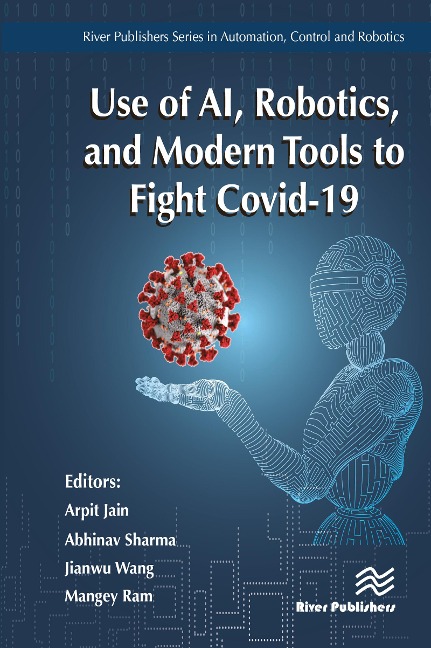
The COVID-19 pandemic has hit the global at a colossal scale. With worldwide reported cases of 5.34 million it has led to severe impact on humanity. Being a highly contagious disease, it has given global health services their most severe challenge. Various countries are fighting to minimize the losses due to the outbreak, however a common trait is enforcing lockdown, which has become the main defence mechanism. Researchers are working around the clock to find a breakthrough in the diagnostics and treatment of the pandemic. AI technology is useful for fast drug development and treatment. In the starting phase of COVID-19 pandemic, the medical fraternity in China diagnosed the virus using computed tomography (CT) and X-ray images due to the limitation of testing kits. Deep learning neural network model have also been used for COVID-19 diagnosis. AI assisted intelligent humanoid robots can be used to reduce the human contact and spread of COVID-19. In Italy robots have been used for measuring blood pressure, oxygen saturation and temperature of patients. Robots have also found applications in disinfecting and sterilizing of public places, COVID-19 testing, food and medicine delivery as well as entertaining patients in hospitals and quarantine centers, thereby reducing the workload of doctors and nurses. Prediction of the spread of virus and providing the guidelines or prevention measures is another AI application in COVID-19. Kaggle and GitHub are the two websites where the real-time data of COVID-19 is aggregated. This includes confirmed cases, active cases, cured cases and deaths in each country. This data set can be used for predicting the active cases across different regions of the world so that appropriate amount of health infrastructure can be made available to these places.
Arpit Jain, Abhinav Sharma, Jianwu Wang, Mangey Ram
Preface Acknowledgement List of Contributors List of Figures List of Tables List of Notations and Abbreviations 1 The History of Pandemics and Evolution So Far 2 Tracing the Origins of COVID-19 3 AI for COVID-19: The Journey So Far 4 Technological Opportunities to Fight COVID-19 for 5 Mobile Robots in COVID-19 6 Predictor System for Tracing COVID-19 Spread 7 Discovery of Robust Distributions of COVID-19 Spread 8 Toward Smart Hospital: An Intelligent Personnel Scheduling Using Evolutionary Algorithms 9 Role of Artificial Intelligence Based Wireless Sensor Network for Pandemic Control: A Case 10 Peculiarities of Technical Measures During the COVID-19 Pandemic 11 Climate Change and COVID-19: An Interplay 12 COVID-19 Pandemic: A New Era in Higher Education 13 Virtual Reality: Solution to Reduce the Impact of COVID-19 on Global Economy References Index About the Editors
Dieses eBook wird im PDF-Format geliefert und ist mit einem Adobe Kopierschutz (DRM) versehen. Sie können dieses eBook mit allen Geräten lesen, die das PDF-Format und den Adobe Kopierschutz (DRM) unterstützen.
Zum Beispiel mit den folgenden Geräten:
• tolino Reader
Laden Sie das eBook direkt über den Reader-Shop auf dem tolino herunter oder übertragen Sie das eBook auf Ihren tolino mit einer kostenlosen Software wie beispielsweise Adobe Digital Editions.
• Sony Reader & andere eBook Reader
Laden Sie das eBook direkt über den Reader-Shop herunter oder übertragen Sie das eBook mit der kostenlosen Software Sony READER FOR PC/Mac oder Adobe Digital Editions auf ein Standard-Lesegeräte mit epub- und Adobe DRM-Unterstützung.
• Tablets & Smartphones
Möchten Sie dieses eBook auf Ihrem Smartphone oder Tablet lesen, finden Sie hier unsere kostenlose Lese-App für iPhone/iPad und Android Smartphone/Tablets.
• PC & Mac
Lesen Sie das eBook direkt nach dem Herunterladen mit einer kostenlosen Lesesoftware, beispielsweise Adobe Digital Editions, Sony READER FOR PC/Mac oder direkt über Ihre eBook-Bibliothek in Ihrem Konto unter „Meine eBooks“ - „online lesen“.
Schalten Sie das eBook mit Ihrer persönlichen Adobe ID auf bis zu sechs Geräten gleichzeitig frei.
Bitte beachten Sie, dass die Kindle-Geräte das Format nicht unterstützen und dieses eBook somit nicht auf Kindle-Geräten lesbar ist.