Und dann auf "Zum Home-Bildschirm [+]".

Stöbern
genialokal zum Startbildschirm hinzufügen
Installieren Sie die genialokal App auf Ihrem Startbildschirm für einen schnellen Zugriff und eine komfortable Nutzung.
Installieren Sie die genialokal App auf Ihrem Startbildschirm für einen schnellen Zugriff und eine komfortable Nutzung.
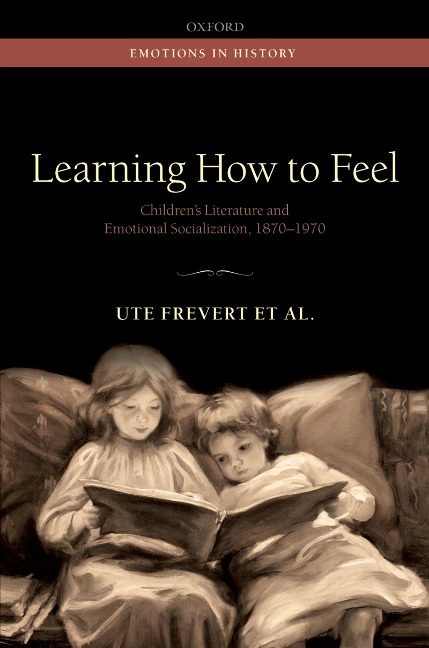
Learning How to Feel explores the ways in which children and adolescents learn not just how to express emotions that are thought to be pre-existing, but actually how to feel. The volume assumes that the embryonic ability to feel unfolds through a complex dialogue with the social and cultural environment and specifically through reading material. The fundamental formation takes place in childhood and youth. A multi-authored historical monograph, Learning How to Feel uses children's literature and advice manuals to access the training practices and learning processes for a wide range of emotions in the modern age, circa 1870-1970. The study takes an international approach, covering a broad array of social, cultural, and political milieus in Britain, Germany, India, Russia, France, Canada, and the United States. Learning How to Feel places multidirectional learning processes at the centre of the discussion, through the concept of practical knowledge. The book innovatively draws a framework for broad historical change during the course of the period. Emotional interaction between adult and child gave way to a focus on emotional interactions among children, while gender categories became less distinct. Children were increasingly taught to take responsibility for their own emotional development, to find 'authenticity' for themselves. In the context of changing social, political, cultural, and gender agendas, the building of nations, subjects and citizens, and the forging of moral and religious values, Learning How to Feel demonstrates how children were provided with emotional learning tools through their reading matter to navigate their emotional lives.
Ute Frevert is Director at the Max Planck Institute for Human Development and a Scientific Member of the Max Planck Society. From 2003 to 2007 she was professor of German history at Yale University and previously taught History at the Universities of Konstanz, Bielefeld and the Free University in Berlin. Her research interests include the social and cultural history of the modern period, the history of emotions, gender history and political history. Some of her best known work has examined the history of women and gender relations in modern Germany, social and medical politics in the nineteenth century, and the impact of military conscription from 1814 to the present day. Ute Frevert is an honorary professor at the Free University in Berlin and member of several scientific advisory boards. In 1998 she was awarded the prestigious Leibniz Prize.
- Introduction - 1: Uffa Jensen: Mrs Gaskell's Anxiety - 2: Stephanie Olsen: Dickon's Trust - 3: Margrit Pernau: Ashgari's Piety - 4: Daniel Brückenhaus: Ralph's Compassion - 5: Pascal Eitler: Doctor Dolittle's Empathy - 6: Magdalena Beljan and Benno Gammerl: Wendy's Love - 7: Ute Frevert: Piggy's Shame - 8: Anja Laukötter: Lebrac's Pain - 9: Bettina Hitzer: Jim Button's Fear - 10: Jan Plamper: Ivan's Bravery - 11: Juliane Brauer: Heidi's Homesickness - 12: Joachim C. Häberlen: Ingrid's Boredom - Epilogue: Translating Books, Translating Emotions
Dieses eBook wird im PDF-Format geliefert und ist mit einem Adobe Kopierschutz (DRM) versehen. Sie können dieses eBook mit allen Geräten lesen, die das PDF-Format und den Adobe Kopierschutz (DRM) unterstützen.
Zum Beispiel mit den folgenden Geräten:
• tolino Reader
Laden Sie das eBook direkt über den Reader-Shop auf dem tolino herunter oder übertragen Sie das eBook auf Ihren tolino mit einer kostenlosen Software wie beispielsweise Adobe Digital Editions.
• Sony Reader & andere eBook Reader
Laden Sie das eBook direkt über den Reader-Shop herunter oder übertragen Sie das eBook mit der kostenlosen Software Sony READER FOR PC/Mac oder Adobe Digital Editions auf ein Standard-Lesegeräte mit epub- und Adobe DRM-Unterstützung.
• Tablets & Smartphones
Möchten Sie dieses eBook auf Ihrem Smartphone oder Tablet lesen, finden Sie hier unsere kostenlose Lese-App für iPhone/iPad und Android Smartphone/Tablets.
• PC & Mac
Lesen Sie das eBook direkt nach dem Herunterladen mit einer kostenlosen Lesesoftware, beispielsweise Adobe Digital Editions, Sony READER FOR PC/Mac oder direkt über Ihre eBook-Bibliothek in Ihrem Konto unter „Meine eBooks“ - „online lesen“.
Schalten Sie das eBook mit Ihrer persönlichen Adobe ID auf bis zu sechs Geräten gleichzeitig frei.
Bitte beachten Sie, dass die Kindle-Geräte das Format nicht unterstützen und dieses eBook somit nicht auf Kindle-Geräten lesbar ist.