Und dann auf "Zum Home-Bildschirm [+]".

Stöbern
genialokal zum Startbildschirm hinzufügen
Installieren Sie die genialokal App auf Ihrem Startbildschirm für einen schnellen Zugriff und eine komfortable Nutzung.
Installieren Sie die genialokal App auf Ihrem Startbildschirm für einen schnellen Zugriff und eine komfortable Nutzung.
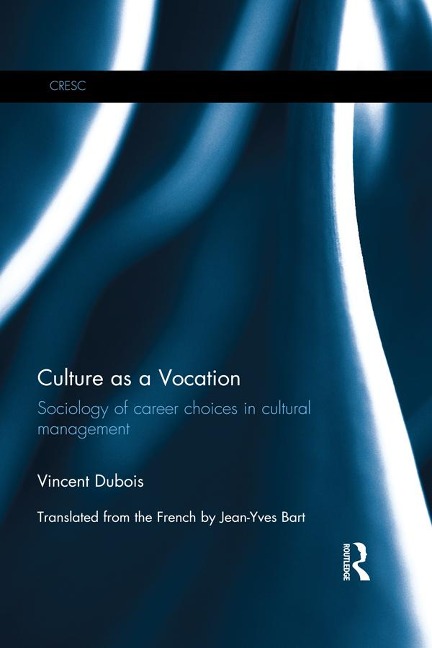
Vocational occupations are attractive not so much for their material rewards as for the prestige and self-fulfillment they confer. They require a strong personal commitment, which can be subjectively experienced in terms of passion and selflessness. The choice of a career in the cultural sector provides a good example of this. What are the terms of this calling? What predisposes individuals to answer it? What are the meanings of such a choice? To answer these questions, this book focuses on would-be cultural managers. By identifying their social patterns, by revealing the resources, expectations and visions of the world they invest in their choice, it sheds new light on these occupations. In these intermediary and indeterminate social positions, family heritages intersect with educational strategies, aspirations of upward mobility with tactics against downward mobility, and social critique with adjustment strategies. Ultimately the study of career choices in cultural management suggests a new take on the analysis of social reproduction and on the embodiment of the new spirit of capitalism. The empirical findings of this research conducted in France are set in a broader comparative perspective, at the European level and with the USA.
Vincent Dubois, sociologist and political scientist, is currently Professor at the Institute for Political Studies in Strasbourg (France). His research fields include cultural sociology and policy, language policy, poverty and welfare. He belongs to the SAGE research unit and to the University of Strasbourg Institute for Advanced Study, and is associate member of the Centre for European Sociology founded by Pierre Bourdieu in Paris. He is a former member of the Institute for Advanced Study in Princeton, NJ, USA, school of social science (2012-3) and of the Institut Universitaire de France (2007-12). He has published 8 books, 2 of which have been published in English translation (The Bureaucrat and the Poor, Ashgate, 2010; The Sociology of Wind Bands, Ashgate, 2013). He has published around 80 scientific contributions in edited volumes and journals including International Journal of Cultural Policy, Cultural Sociology, Poetics, Social Analysis, Current Anthropology, Critical Policy Studies, Actes de la recherche en sciences sociales.
Introduction 1. Culture in the Space of Career Choices 1.1. How Cultural Occupations Became Attractive 1.1.1. The Rise of Cultural Employment 1.1.2. Cultural Managers: Professional labels and vocations 1.1.3. An Attractive Sector Despite Poor Employment Conditions 1.1.4. The Attraction of Uncertainty 1.2. Training and the Genesis of Vocations 1.2.1. The Development of Specialized Training Programs in Cultural Management 1.2.2. The Structured of the Specialized Training Supply 1.2.3. The Effects of the Specialization of Training 2. Who Wants to be a Cultural Manager? 2.1. A Largely Feminine Vocation 2.2. Higher Social Backgrounds 2.3. Educated Applicants 2.4. Well-Rounded Applicants 2.5. The Space of Applicants 3. The Meanings of a Career Choice 3.1. Leaving Doors Open 3 1.1. A Genuine Choice 3.1.2. The Narratives of Vocation 3.1.3. Choosing the Cultural Sector Rather Than a Given Occupation 3.2. A Third Way between Art and Teaching 3.2.1. Teaching as a Foil 3.2.2. The Artistic Vocation as a Reference 3.3. The Social Rationales of a Career Choice 3.3.1. Dreams of Social Mobility 3.3.2. Professional Reproduction 3.3.3. A Devalued Cultural Capital and a Reinvested Educational Capital 3.3.4. Self-Assertion 4. Intermediary Dispositions and Adjustment Strategies 4.1. Between Cultural Legitimism and Eclecticism 4.2. Reinvesting the Artist's Life 4.2.1. Re-Enchanting Work 4.2.2. The New Spirit of Capitalism Embodied 4.2.3. A Different Form of Political Awareness Conclusion
Dieses eBook wird im PDF-Format geliefert und ist mit einem Adobe Kopierschutz (DRM) versehen. Sie können dieses eBook mit allen Geräten lesen, die das PDF-Format und den Adobe Kopierschutz (DRM) unterstützen.
Zum Beispiel mit den folgenden Geräten:
• tolino Reader
Laden Sie das eBook direkt über den Reader-Shop auf dem tolino herunter oder übertragen Sie das eBook auf Ihren tolino mit einer kostenlosen Software wie beispielsweise Adobe Digital Editions.
• Sony Reader & andere eBook Reader
Laden Sie das eBook direkt über den Reader-Shop herunter oder übertragen Sie das eBook mit der kostenlosen Software Sony READER FOR PC/Mac oder Adobe Digital Editions auf ein Standard-Lesegeräte mit epub- und Adobe DRM-Unterstützung.
• Tablets & Smartphones
Möchten Sie dieses eBook auf Ihrem Smartphone oder Tablet lesen, finden Sie hier unsere kostenlose Lese-App für iPhone/iPad und Android Smartphone/Tablets.
• PC & Mac
Lesen Sie das eBook direkt nach dem Herunterladen mit einer kostenlosen Lesesoftware, beispielsweise Adobe Digital Editions, Sony READER FOR PC/Mac oder direkt über Ihre eBook-Bibliothek in Ihrem Konto unter „Meine eBooks“ - „online lesen“.
Schalten Sie das eBook mit Ihrer persönlichen Adobe ID auf bis zu sechs Geräten gleichzeitig frei.
Bitte beachten Sie, dass die Kindle-Geräte das Format nicht unterstützen und dieses eBook somit nicht auf Kindle-Geräten lesbar ist.