Und dann auf "Zum Home-Bildschirm [+]".

Stöbern
genialokal zum Startbildschirm hinzufügen
Installieren Sie die genialokal App auf Ihrem Startbildschirm für einen schnellen Zugriff und eine komfortable Nutzung.
Installieren Sie die genialokal App auf Ihrem Startbildschirm für einen schnellen Zugriff und eine komfortable Nutzung.
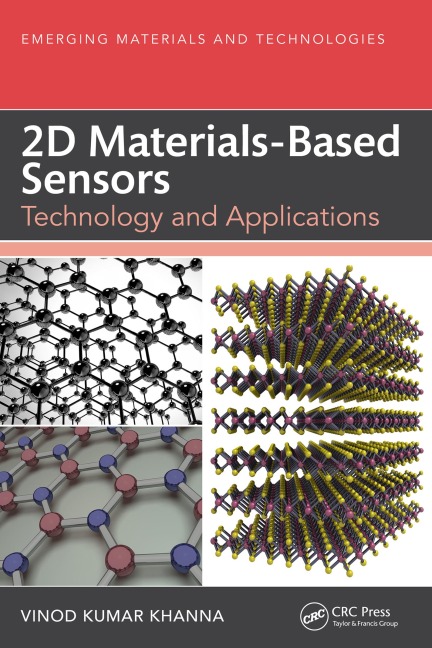
2D Materials-Based Sensors: Technology and Applications is a comprehensive book covering the latest innovations on sensors using the unique properties of 2D materials. This specialized text: Key Features - Describes 2D materials process technology and integration of these materials into sensor fabrication. - Provides an in-depth coverage of the underlying physics, operation, and performance metrics of 2D materials-based sensors. - Highlights state-of-the-art developments in 2D material sensors vis-à-vis challenges faced in their fabrication. - Presents glimpses of emerging 2D materials-based sensor technologies that will shape the future. - Expedites understanding and learning through plain, lucid explanations, and clear, insightful diagrams. Commencing from an introductory survey of the 2D materials family, the book describes their impressive properties and their top-down and bottom-up synthesis techniques. The succeeding chapters present detailed descriptions of 2D materials-based mechanical sensors, photodetectors, magnetic sensors together with quantum sensors, heavy-metal ion sensors, gas sensors, and biological sensors. The book concludes with the research challenges, emerging trends, and limitations providing a balanced perspective of this fast-progressing field. This book is a concise guide for students, scientists, and technologists engaged in sensor research and development.
The author, Vinod Kumar Khanna, Ph.D. (Physics), is an independent researcher at Chandigarh, India; a former emeritus scientist, Council of Scientific and Industrial Research (CSIR), India, and Emeritus Professor, Academy of Scientific and Innovative Research (AcSIR), Ghaziabad, India; a retired chief scientist, CSIR-Central Electronics Engineering Research Institute, Pilani, India, and professor, AcSIR, India. He has worked for more than 37 years on the design, fabrication, and characterization of power semiconductor devices, MEMS, and nanotechnology-based sensors. He has published 194 research papers in refereed journals and conference proceedings, 20 books, and six chapters in edited books. He has five patents to his credit, two US and three Indian.
Contents Preface Acknowledgments About the Author About the Book Abbreviations, Acronyms, and Chemical Symbols Mathematical Notation Greek Alphabet 1. The 2D Materials Family and Properties of 2D Materials Used in Sensors 2. Synthesis, Deposition, and Processing of 2D Materials for Sensor Fabrication 3. 2D Materials-Based Mechanical Sensors 4. 2D Materials-Based Photodetectors 5. 2D Materials-Based Magnetic Sensors 6. 2D Materials-Based Metal Ion Sensors 7. 2D Materials-Based Gas Sensors 8. 2D Materials-Based Biological Sensors 9. Challenges and Perspectives of 2D Materials-Based Sensors Index
Dieses eBook wird im PDF-Format geliefert und ist mit einem Adobe Kopierschutz (DRM) versehen. Sie können dieses eBook mit allen Geräten lesen, die das PDF-Format und den Adobe Kopierschutz (DRM) unterstützen.
Zum Beispiel mit den folgenden Geräten:
• tolino Reader
Laden Sie das eBook direkt über den Reader-Shop auf dem tolino herunter oder übertragen Sie das eBook auf Ihren tolino mit einer kostenlosen Software wie beispielsweise Adobe Digital Editions.
• Sony Reader & andere eBook Reader
Laden Sie das eBook direkt über den Reader-Shop herunter oder übertragen Sie das eBook mit der kostenlosen Software Sony READER FOR PC/Mac oder Adobe Digital Editions auf ein Standard-Lesegeräte mit epub- und Adobe DRM-Unterstützung.
• Tablets & Smartphones
Möchten Sie dieses eBook auf Ihrem Smartphone oder Tablet lesen, finden Sie hier unsere kostenlose Lese-App für iPhone/iPad und Android Smartphone/Tablets.
• PC & Mac
Lesen Sie das eBook direkt nach dem Herunterladen mit einer kostenlosen Lesesoftware, beispielsweise Adobe Digital Editions, Sony READER FOR PC/Mac oder direkt über Ihre eBook-Bibliothek in Ihrem Konto unter „Meine eBooks“ - „online lesen“.
Schalten Sie das eBook mit Ihrer persönlichen Adobe ID auf bis zu sechs Geräten gleichzeitig frei.
Bitte beachten Sie, dass die Kindle-Geräte das Format nicht unterstützen und dieses eBook somit nicht auf Kindle-Geräten lesbar ist.