Und dann auf "Zum Home-Bildschirm [+]".

Stöbern
genialokal zum Startbildschirm hinzufügen
Installieren Sie die genialokal App auf Ihrem Startbildschirm für einen schnellen Zugriff und eine komfortable Nutzung.
Installieren Sie die genialokal App auf Ihrem Startbildschirm für einen schnellen Zugriff und eine komfortable Nutzung.
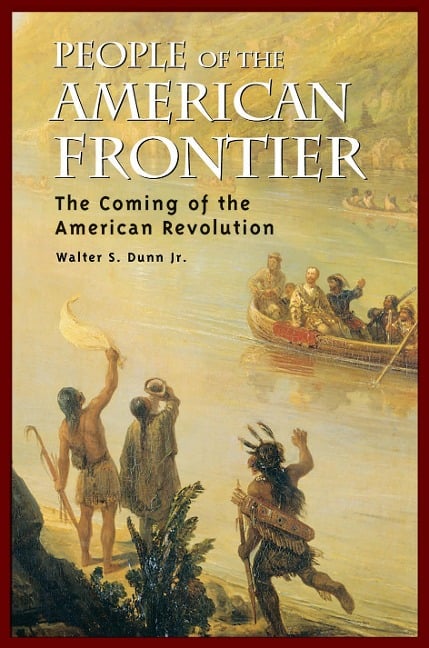
Life on the frontier in the decades before the Revolution was extremely difficult and uncertain. It was a world populated by Native Americans, merchants, fur traders, land speculators, soldiers and settlers-including women, slaves, and indentured servants. Each of these groups depended on the others in some way, and collectively they formed the patchwork that was life on the frontier. Using a wealth of material culled from primary sources, Dunn paints a vivid picture of a world caught up in the winds of change, a world poised on the edge of revolution.
Life on the frontier in the decades before the Revolution was extremely difficult and uncertain. It was a world populated by Indians, merchants, fur traders, land speculators, soldiers and settlers-including women, slaves, and indentured servants. Each of these groups depended on the others in some way, and collectively they formed the patchwork that was life on the frontier. Using a wealth of material culled from primary sources, Dunn paints a vivid picture of a world caught up in the winds of change, a world poised on the edge of revolution.
In the 15 years preceding the American Revolution, the existence of the frontier exerted a dominant influence on the colonial economy. The possibility of new territory in the West and the removal of the French army offered an enormous opportunity for economic expansion but such prospects were not without risk. Farmers worked endlessly to clear a few scant acres for production. Traders struggled to reach remote areas to bargain with local tribes. Merchants weighted the possibilities for enormous profit with huge risk. Native Americans faced increasing encroachment upon their traditional lands. Women and slaves played a greater role in opening the frontier than many sources have indicated.
Walter S. Dunn, Jr. is an independent writer and researcher. He received his Ph.D. from the University of Wisconsin, Madison. His recent publications include Opening New Markets: The British Army and the American Frontier, 1764-1768 (2002).
Preface
Introduction
The Indians
The French Farmers
The French Traders
The Settlers
The New York Traders
The Pennsylvania Traders
The Merchants
Illinois
The Women
The Slaves and Indentured Servants
The Army
Conclusion
Dieses eBook wird im PDF-Format geliefert und ist mit einem Adobe Kopierschutz (DRM) versehen. Sie können dieses eBook mit allen Geräten lesen, die das PDF-Format und den Adobe Kopierschutz (DRM) unterstützen.
Zum Beispiel mit den folgenden Geräten:
• tolino Reader
Laden Sie das eBook direkt über den Reader-Shop auf dem tolino herunter oder übertragen Sie das eBook auf Ihren tolino mit einer kostenlosen Software wie beispielsweise Adobe Digital Editions.
• Sony Reader & andere eBook Reader
Laden Sie das eBook direkt über den Reader-Shop herunter oder übertragen Sie das eBook mit der kostenlosen Software Sony READER FOR PC/Mac oder Adobe Digital Editions auf ein Standard-Lesegeräte mit epub- und Adobe DRM-Unterstützung.
• Tablets & Smartphones
Möchten Sie dieses eBook auf Ihrem Smartphone oder Tablet lesen, finden Sie hier unsere kostenlose Lese-App für iPhone/iPad und Android Smartphone/Tablets.
• PC & Mac
Lesen Sie das eBook direkt nach dem Herunterladen mit einer kostenlosen Lesesoftware, beispielsweise Adobe Digital Editions, Sony READER FOR PC/Mac oder direkt über Ihre eBook-Bibliothek in Ihrem Konto unter „Meine eBooks“ - „online lesen“.
Schalten Sie das eBook mit Ihrer persönlichen Adobe ID auf bis zu sechs Geräten gleichzeitig frei.
Bitte beachten Sie, dass die Kindle-Geräte das Format nicht unterstützen und dieses eBook somit nicht auf Kindle-Geräten lesbar ist.