Und dann auf "Zum Home-Bildschirm [+]".

Stöbern
genialokal zum Startbildschirm hinzufügen
Installieren Sie die genialokal App auf Ihrem Startbildschirm für einen schnellen Zugriff und eine komfortable Nutzung.
Installieren Sie die genialokal App auf Ihrem Startbildschirm für einen schnellen Zugriff und eine komfortable Nutzung.

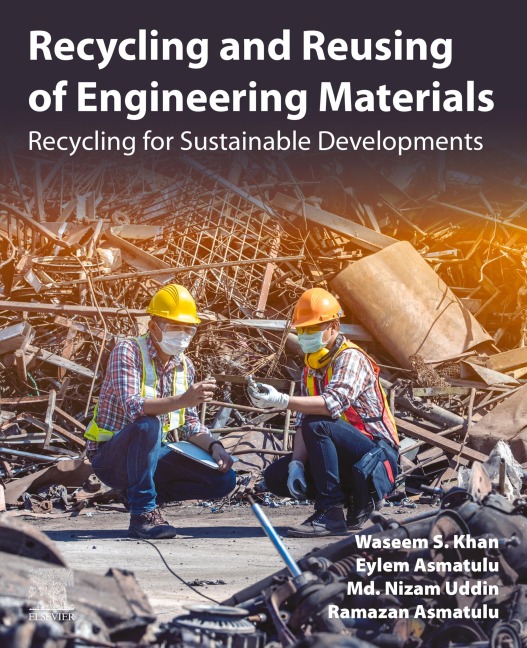
Recycling and Reusing of Engineering Materials: Recycling for Sustainable Developments covers the latest research and developments in recycling and reusing processes, including new fundamental concepts, techniques, methods and process flows. The book provides applications of these novel technologies to recycling processes and analyzes new and modern ways of recycling techniques. It provides a comprehensive literature review on fundamental aspects of recycling processes, recycling goals, characterization of waste streams, legislative policies and evaluation, electronic recycling, aircraft recycling, recycling processes, energy savings and issues, environmental issues, societal issues, recycled materials, market development for recycling, processing facilities, and awareness and importance of recycling safety. The book is an indispensable reference for researchers in academia and industry. Scientists can use this book for literature reviews and experimental details, and the industry can use its comprehensive detail for literature reviews and to upgrade their processes and systems.
- Provides the latest information on recycling and reusing processes
- Includes the results of laboratory experiments from the recycling of electronic waste, recycling of composites, and of aircraft and plastics
- Covers radioactive waste treatment and biological waste disposal
- Written by a team of authors with teaching and industrial experience
Dr. Waseem S. Khan conducted his postdoc research at the Wichita State University, Wichita, Kansas, USA. He joined Majmaah University, Majmaah, Saudi Arab, in 2014 and worked there as Assistant Professor in the department of Mechanical and Industrial Engineering for three years. He later joined Dubai Men's College, Higher Colleges of Technology, Dubai, United Arab Emirates, in 2017. He has been working there an Assistant Professor, since 2017. Throughout, his studies he published more than 30 journal papers, 40 conference papers and 20 book chapters. He received several awards in Saudi Arab and Dubai. He received more than $100,000.00 internal and external grants from different sources.Dr. Eylem Asmatulu received her PhD degree from the Department of Industrial and Manufacturing Engineering at Wichita State University (WSU) in May 2013. She worked as an Engineering Educator in the Department of Mechanical Engineering at WSU between 2015 and 2017, and then joined to the same department as an Assistant professor in August 2017. She is mainly teaching materials and selections, six sigma and recycling courses. Through her academic studies, she has published 15 journal papers and 35 conference proceedings, authored 12 book chapters, presented 11 presentations and reviewed several manuscripts in international journals and conference proceedings.Md. Nizam Uddin is an Assistant Professor of Mechanical Engineering, Texas A & M University-Texarkana, USA. He received his Ph.D. degree from the Department of Mechanical Engineering, Wichita State University, USA in 2020. He worked as a Visiting Faculty, Georgia Southern University, GA, as an Assistant Professor, Department of Mechanical Engineering, Khulna University of Engineering & Technology, Bangladesh.Dr. Ramazan Asmatulu is a Full Professor in the Department of Mechanical Engineering at Wichita State University in the USA. His current research mainly focuses on the synthesis, characterization, and mechanical properties of various nanomaterials, nanocomposites, and biomaterials for primarily aerospace, energy, environment, and biomedical applications.
1. Introduction2. Environmental Impacts of Recycling3. Recycling Processes4. Recycling and Reusing of Papers5. Recycling and Reusing of Construction Materials6. Recycling and Reusing of Glasses and Ceramics7. Recycling and Reusing of Polymers and Plastics8. Recycling and Reusing of Thermoplastic and Thermoset Composites9. Recycling and Reusing of Metals and Alloys10. Recycling and Reusing of Non-Ferrous Metals11. Recycling and Reusing of Electronic Wastes12. Recycling and Reusing of Oils and Chemicals13. Recycling and Reusing of Aircrafts14. Application of Nanotechnology in Recycling15. Radioactive Waste Treatment16. Biological Waste Disposal17. Waste Landfill Reclamation18. Safety Concerns in Recycling Plants