Und dann auf "Zum Home-Bildschirm [+]".

Stöbern
genialokal zum Startbildschirm hinzufügen
Installieren Sie die genialokal App auf Ihrem Startbildschirm für einen schnellen Zugriff und eine komfortable Nutzung.
Installieren Sie die genialokal App auf Ihrem Startbildschirm für einen schnellen Zugriff und eine komfortable Nutzung.
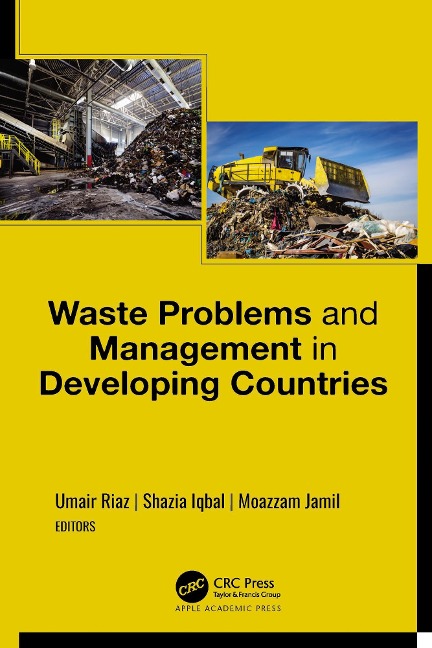
This new volume offers effective solutions to the mismanagement of waste, particularly in developing countries, by providing an understanding of different types of wastes, their generation, and use of advanced technologies for waste management, and by focusing on integrating the technical and regulatory complexities of waste management. It provides a comprehensive overview of the characterization, issues, and regulatory development of waste management for sustainable solutions and prevention techniques. Covering the various types of pollution, including pollution from plastics, industrial activities, metals, livestock, healthcare, food loss and waste, etc., the book explores new techniques for thermal and radioactive waste management and includes such methods as vermicomposting and composting for organic waste management and profitable use. The volume also looks at the role of modern technologies and legislation measures to manage biosolid waste. Numerous data sets obtained from various surveys are included, and special categories of waste that may not fit precisely into either RCRA Subtitle D (solid wastes) or Subtitle C (hazardous wastes) are discussed as well.
Umair Riaz, PhD, is working in the Department of Soil & Environmental Sciences at MNS University of Agriculture Multan, Pakistan. He served as a Scientific Officer for six years in the Soil and Water Testing Laboratory for Research, Bahawalpur, Pakistan, specializing in waste management, metal toxicology, phytochemistry, and phytoremediation. He is the author of more than 30 research papers and book chapters, and he has presented and participated in professional conferences, seminars, workshops, and symposia. Dr. Riaz has received many awards, appreciations, and recognitions for his services to the science of soil, water, pesticide, and fertilizer testing analysis. Shazia Iqbal, PhD, is an Assistant Professor in the Department of Soil and Environmental Sciences, College of Agriculture, University of Sargodha, Pakistan. She specializes in rhizosphere and phosphorus availability to plants. She has published in national and international journals as has contributed book chapters as well. She has presented her research work at many national and international seminars, workshops, symposia, and conferences and is a member of the International Soil Science Society. She is an active participant in national and international science activities. During her academic era, she has received many certificates and awards of merit. Moazzam Jamil, PhD, is Professor (Chairman)/Registrar at the Department of Soil Science at Islamia University of Bahawalpur, Pakistan. Dr. Jamil has expertise in soil fertility and plant nutrition. He has published more than 100 research papers and book chapters in well-reputed journals and books. He is the recipient of several fellowships at both national and international levels. He also served as an Agricultural Officer (Lab) at the Soil and Water Testing Laboratory for Research, Bahawalpur. Currently, he is involved with several international research projects with government organizations. He has organized international conferences, workshops, and seminars.
PART I: WASTE GENERATION IN DEVELOPING COUNTRIES 1. Solid Waste Generation and Its Characteristics 2. Mismanagement of Waste in Developing Countries 3. Sustainable Management of Waste in Developing Countries: Insight into Sustainability and Waste Management: Why It Is Needed 4. Problems and Challenges Associated with Waste: Waste Prevention Techniques PART II: WASTE CATEGORIES, BASES, POLLUTION POTENTIAL, AND MANAGEMENT 5. Environmental Sources and Threats of Plastic Pollution to the Developing World and Eco-Friendly Solutions 6. Industrial Waste: Types, Sources, Pollution Potential, Country-Wise Comparisons 7. Livestock Waste, Types, Sources, Pollution Potential, Country-Wise Comparisons 8. Radioactive Wastes: Management by Potential Treatments 9. Health Care Waste: Pollution Potential from Generation to Disposal, Management, and Treatment 10. Food Loss and Waste: Types, Sources, Pollution Potential, Country-Wise Comparison 11. Thermal Waste Management Techniques PART III: MODERN TECHNIQUES FOR WASTE MANAGEMENT 12. Vermicomposting: A Sustainable and Environment-Friendly Approach for Organic Waste Management 13. Composting for Organic Wastes Management and Profitable Use 14. Role of Modern Technologies and Legislation Measures to Manage Biosolid Waste
Dieses eBook wird im PDF-Format geliefert und ist mit einem Adobe Kopierschutz (DRM) versehen. Sie können dieses eBook mit allen Geräten lesen, die das PDF-Format und den Adobe Kopierschutz (DRM) unterstützen.
Zum Beispiel mit den folgenden Geräten:
• tolino Reader
Laden Sie das eBook direkt über den Reader-Shop auf dem tolino herunter oder übertragen Sie das eBook auf Ihren tolino mit einer kostenlosen Software wie beispielsweise Adobe Digital Editions.
• Sony Reader & andere eBook Reader
Laden Sie das eBook direkt über den Reader-Shop herunter oder übertragen Sie das eBook mit der kostenlosen Software Sony READER FOR PC/Mac oder Adobe Digital Editions auf ein Standard-Lesegeräte mit epub- und Adobe DRM-Unterstützung.
• Tablets & Smartphones
Möchten Sie dieses eBook auf Ihrem Smartphone oder Tablet lesen, finden Sie hier unsere kostenlose Lese-App für iPhone/iPad und Android Smartphone/Tablets.
• PC & Mac
Lesen Sie das eBook direkt nach dem Herunterladen mit einer kostenlosen Lesesoftware, beispielsweise Adobe Digital Editions, Sony READER FOR PC/Mac oder direkt über Ihre eBook-Bibliothek in Ihrem Konto unter „Meine eBooks“ - „online lesen“.
Schalten Sie das eBook mit Ihrer persönlichen Adobe ID auf bis zu sechs Geräten gleichzeitig frei.
Bitte beachten Sie, dass die Kindle-Geräte das Format nicht unterstützen und dieses eBook somit nicht auf Kindle-Geräten lesbar ist.