Und dann auf "Zum Home-Bildschirm [+]".

Stöbern
genialokal zum Startbildschirm hinzufügen
Installieren Sie die genialokal App auf Ihrem Startbildschirm für einen schnellen Zugriff und eine komfortable Nutzung.
Installieren Sie die genialokal App auf Ihrem Startbildschirm für einen schnellen Zugriff und eine komfortable Nutzung.
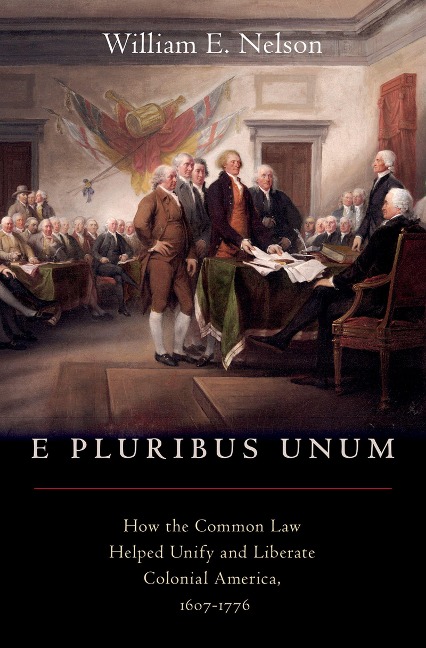
The colonies that comprised pre-revolutionary America had thirteen legal systems and governments. Given their diversity, how did they evolve into a single nation? In E Pluribus Unum, the eminent legal historian William E. Nelson explains how this diverse array of legal orders gradually converged over time, laying the groundwork for the founding of the United States. From their inception, the colonies exercised a range of approaches to the law. For instance, while New England based its legal system around the word of God, Maryland followed the common law tradition, and New York adhered to Dutch law. Over time, though, the British crown standardized legal procedure in an effort to more uniformly and efficiently exert control over the Empire. But, while the common law emerged as the dominant system across the colonies, its effects were far from what English rulers had envisioned. E Pluribus Unum highlights the political context in which the common law developed and how it influenced the United States Constitution. In practice, the triumph of the common law over competing approaches gave lawyers more authority than governing officials. By the end of the eighteenth century, many colonial legal professionals began to espouse constitutional ideology that would mature into the doctrine of judicial review. In turn, laypeople came to accept constitutional doctrine by the time of independence in 1776. Ultimately, Nelson shows that the colonies' gradual embrace of the common law was instrumental to the establishment of the United States. Not simply a masterful legal history of colonial America, Nelson's magnum opus fundamentally reshapes our understanding of the sources of both the American Revolution and the Founding.
William E. Nelson is Judge Edward Weinfeld Professor of Law, New York University. In 1961, he founded the Legal History Colloquium at NYU Law School, where nearly 100 younger scholars have held fellowships and received post-graduate training, and has presided over the Colloquium since that time. He has been writing and teaching in the field of American legal history for nearly fifty years and is the author of many books, including four volumes of The Common Law in Colonial America (Oxford), The Roots of American Bureaucracy, Americanization of the Common Law, and The Fourteenth Amendment.
Table of Contents
Introduction
Part One: The Initial Settlements, 1607-1660
Chapter 1: The Chesapeake Chapter 2: New England Chapter 3: New Netherland
Part Two: The Forging of Empire, 1660-1750
Chapter 4: The Crown's Imposition of the Common Law and Colonial Resistance Chapter 5: The End of Resistance and the Triumph of the Common Law Chapter 6: Ready Acceptance of the Common Law: Pennsylvania, New Jersey, and the South Chapter 7: The Emergence of the Legal Profession Chapter 8: Property, Commercial Law, Labor Law, and Slavery
Part Three: Altering Empire to Defeat France, 1689-1750
Chapter 9: The Local Structure of Power Chapter 10: The Law of Religion Chapter 11: Criminal and Regulatory Law
Part Four: The Collapse of Empire, 1750-1776
Chapter 12: The Well-Functioning Empire of the Mid-Eighteenth Century Chapter 13: Weakening the Bonds of Empire Chapter 14: Testing the Bonds of Empire Chapter 15: Severing the Ties of Empire
Chapter 16: An Historian's Postscript
Bibliography
Dieses eBook wird im PDF-Format geliefert und ist mit einem Adobe Kopierschutz (DRM) versehen. Sie können dieses eBook mit allen Geräten lesen, die das PDF-Format und den Adobe Kopierschutz (DRM) unterstützen.
Zum Beispiel mit den folgenden Geräten:
• tolino Reader
Laden Sie das eBook direkt über den Reader-Shop auf dem tolino herunter oder übertragen Sie das eBook auf Ihren tolino mit einer kostenlosen Software wie beispielsweise Adobe Digital Editions.
• Sony Reader & andere eBook Reader
Laden Sie das eBook direkt über den Reader-Shop herunter oder übertragen Sie das eBook mit der kostenlosen Software Sony READER FOR PC/Mac oder Adobe Digital Editions auf ein Standard-Lesegeräte mit epub- und Adobe DRM-Unterstützung.
• Tablets & Smartphones
Möchten Sie dieses eBook auf Ihrem Smartphone oder Tablet lesen, finden Sie hier unsere kostenlose Lese-App für iPhone/iPad und Android Smartphone/Tablets.
• PC & Mac
Lesen Sie das eBook direkt nach dem Herunterladen mit einer kostenlosen Lesesoftware, beispielsweise Adobe Digital Editions, Sony READER FOR PC/Mac oder direkt über Ihre eBook-Bibliothek in Ihrem Konto unter „Meine eBooks“ - „online lesen“.
Schalten Sie das eBook mit Ihrer persönlichen Adobe ID auf bis zu sechs Geräten gleichzeitig frei.
Bitte beachten Sie, dass die Kindle-Geräte das Format nicht unterstützen und dieses eBook somit nicht auf Kindle-Geräten lesbar ist.