Und dann auf "Zum Home-Bildschirm [+]".

Stöbern
genialokal zum Startbildschirm hinzufügen
Installieren Sie die genialokal App auf Ihrem Startbildschirm für einen schnellen Zugriff und eine komfortable Nutzung.
Installieren Sie die genialokal App auf Ihrem Startbildschirm für einen schnellen Zugriff und eine komfortable Nutzung.
Ihr gewünschter Artikel ist in 0 Buchhandlungen vorrätig - wählen Sie hier eine Buchhandlung in Ihrer Nähe aus:

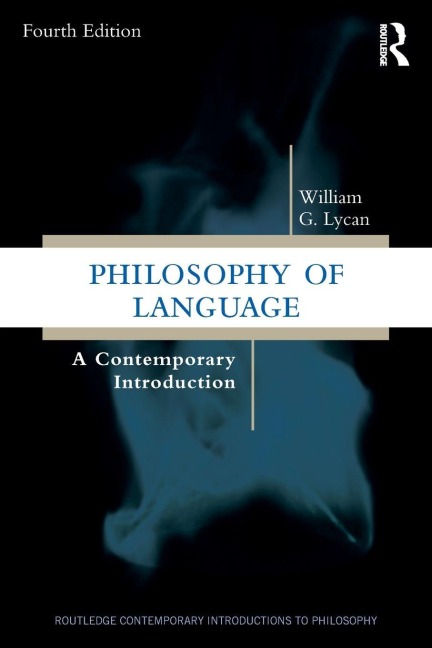
Now in its fourth edition, Philosophy of Language: A Contemporary Introduction introduces students to the main issues and theories in twenty-first-century philosophy of language, focusing specifically on linguistic phenomena. Author William G. Lycan structures the book's thirteen chapters into four general parts. Part I, Reference and referring, includes topics such as Russell's Theory of Descriptions (and its failings), Donnellan's distinction, problems of anaphora, the Description Theory of proper names, Searle's Cluster Theory, and the Causal-Historical Theory. Part II, Theories of meaning, surveys the competing theories of linguistic meaning and compares their various advantages and liabilities. Part III, Pragmatics and speech acts, introduces the basic concepts of linguistic pragmatics and includes an introduction to the Relevance approach to pragmatics. Part IV, The expressive and the figurative, examines various forms of expressive language, as well as what "metaphorical meaning" is and how most listeners readily grasp it. Features of Philosophy of Language include: - chapter overviews and summaries - clear supportive examples - study questions - annotated lists of further reading - a glossary. Key updates to the fourth edition: - a new section on the predicativist theory of proper names - an expanded section on inferentialist theories of meaning - a new section on dynamic ("update") theories of meaning - a separate section on varieties of presupposition - an all-new section on "applied" philosophy of language, listing eleven recent areas of research - up-to-date coverage of new literature, further reading lists, and the bibliography.
William G. Lycan is William Rand Kenan, Jr. Professor of Philosophy Emeritus at the University of North Carolina, Chapel Hill. He is author of Logical Form in Natural Language (1984), Knowing Who (with Steven Boër, 1986), Consciousness (1987), Judgement and Justification (1988), Modality and Meaning (1994), Consciousness and Experience (1996), Real Conditionals (2001), On Evidence in Philosophy (2019), and Perceptual Content (2024).
Introduction: meaning and reference PART I: Reference and referring 2 Definite descriptions 3 Proper names: the Description Theory 4 Proper names: Direct Reference and the Causal-Historical Theory PART II: Theories of meaning 5 "Use" theories 6 Psychological theories: Grice's program 7 Verificationism 8 Truth-Condition theories PART III Pragmatics and speech acts 9 Semantic pragmatics 10 Speech acts and illocutionary force 11 Implicative relations PART IV: The expressive and the figurative 12 Expressive language 13 Metaphor Glossary Bibliography Index