Und dann auf "Zum Home-Bildschirm [+]".

Stöbern
genialokal zum Startbildschirm hinzufügen
Installieren Sie die genialokal App auf Ihrem Startbildschirm für einen schnellen Zugriff und eine komfortable Nutzung.
Installieren Sie die genialokal App auf Ihrem Startbildschirm für einen schnellen Zugriff und eine komfortable Nutzung.
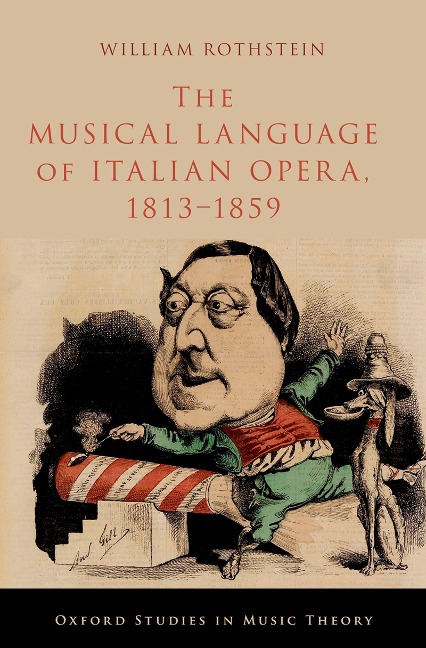
Though studying opera often requires attention to aesthetics, libretti, staging, singers, compositional history, and performance history, the music itself is central. This book examines operatic music by five Italian composers-Rossini, Bellini, Mercadante, Donizetti, and Verdi-and one non-Italian, Meyerbeer, during the period from Rossini's first international successes to Italian unification. Detailed analyses of form, rhythm, melody, and harmony reveal concepts of musical structure different from those usually discussed by music theorists, calling into question the notion of a common practice. Taking an eclectic analytical approach, author William Rothstein uses ideas originating in several centuries, from the sixteenth to the twenty-first, to argue that operatic music can be heard not only as passionate vocality but also in terms of musical forms, pitch structures, and rhythmic patterns-that is, as carefully crafted music worth theoretical attention. Although no single theory accounts for everything, Rothstein's analysis shows how certain recurring principles define a distinctively Italian practice, one that left its mark on the German repertoire more familiar to music theorists.
William Rothstein is Professor of Music Theory at Queens College and The Graduate Center of the City University of New York. He previously taught at Amherst College, Oberlin College, and the University of Michigan. He is author of Phrase Rhythm in Tonal Music and co-author (with Charles Burkhart) of Anthology for Musical Analysis. He has written and lectured extensively on music of the eighteenth and nineteenth centuries, with special emphasis on musical rhythm, Schenkerian theory and analysis, and nineteenth-century Italian opera.
Preface Acknowledgments Introduction: What is there to analyze? Part One: La Via Italiana Chapter 1. The Anvil Chorus Chapter 2. Theoretical contexts I: Nineteenth-century theory Chapter 3. Theoretical contexts II: Schenker and Riemann Chapter 4. Rhythm and meter Chapter 5. Musical form Part Two: Rossini Chapter 6. Rossini's mediants Chapter 7. Tonal coherence in Rossini's Italian operas Chapter 8. Guillaume Tell Part Three: Between Rossini and Verdi Chapter 9. Bellini and the new diatonicism Chapter 10. Meyerbeer and the new chromaticism Chapter 11. Around 1840: Mercadante and Donizetti Part Four: Verdi's Sedici Anni Chapter 12. Ernani to Attila (1844-1846) Chapter 13. Rigoletto and Il trovatore (1851-1853) Chapter 14. Les vêpres siciliennes to Un ballo in maschera (1854-1859) Afterword: Verdi and His Predecessors Selected bibliography Index
Dieses eBook wird im PDF-Format geliefert und ist mit einem Adobe Kopierschutz (DRM) versehen. Sie können dieses eBook mit allen Geräten lesen, die das PDF-Format und den Adobe Kopierschutz (DRM) unterstützen.
Zum Beispiel mit den folgenden Geräten:
• tolino Reader
Laden Sie das eBook direkt über den Reader-Shop auf dem tolino herunter oder übertragen Sie das eBook auf Ihren tolino mit einer kostenlosen Software wie beispielsweise Adobe Digital Editions.
• Sony Reader & andere eBook Reader
Laden Sie das eBook direkt über den Reader-Shop herunter oder übertragen Sie das eBook mit der kostenlosen Software Sony READER FOR PC/Mac oder Adobe Digital Editions auf ein Standard-Lesegeräte mit epub- und Adobe DRM-Unterstützung.
• Tablets & Smartphones
Möchten Sie dieses eBook auf Ihrem Smartphone oder Tablet lesen, finden Sie hier unsere kostenlose Lese-App für iPhone/iPad und Android Smartphone/Tablets.
• PC & Mac
Lesen Sie das eBook direkt nach dem Herunterladen mit einer kostenlosen Lesesoftware, beispielsweise Adobe Digital Editions, Sony READER FOR PC/Mac oder direkt über Ihre eBook-Bibliothek in Ihrem Konto unter „Meine eBooks“ - „online lesen“.
Schalten Sie das eBook mit Ihrer persönlichen Adobe ID auf bis zu sechs Geräten gleichzeitig frei.
Bitte beachten Sie, dass die Kindle-Geräte das Format nicht unterstützen und dieses eBook somit nicht auf Kindle-Geräten lesbar ist.