Und dann auf "Zum Home-Bildschirm [+]".

Stöbern
genialokal zum Startbildschirm hinzufügen
Installieren Sie die genialokal App auf Ihrem Startbildschirm für einen schnellen Zugriff und eine komfortable Nutzung.
Installieren Sie die genialokal App auf Ihrem Startbildschirm für einen schnellen Zugriff und eine komfortable Nutzung.
Ihr gewünschter Artikel ist in 0 Buchhandlungen vorrätig - wählen Sie hier eine Buchhandlung in Ihrer Nähe aus:

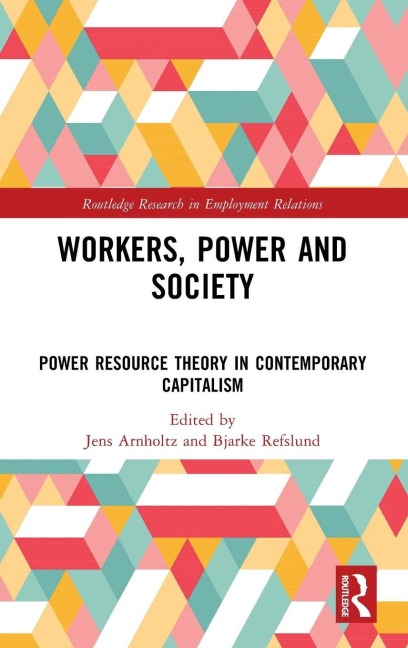

The book addresses how power and power resources remain important analytically as well as empirically dimensions for analysing contemporary capitalism. It provides a theoretical framework for studying, understanding, and explaining changes in the world of work and how that leads to changes in contemporary capitalist societies.
Jens Arnholtz is an associate professor at the Employment Relations Research Centre (FAOS), Department of Sociology, University of Copenhagen. His research interests are in the field of employment relations, with a special focus on cross-border labour mobility, posting of workers, Europeanization of national labour markets and power resource theory. Bjarke Refslund is an associate professor in sociology at Aalborg University. He holds a PhD degree in political science from Aalborg University. His main research areas include industrial relations, labour migration, and labour market sociology, and he has been working on collectivism and unions, organising migrant workers, precarious employment, public regulation and Europeanisation of labour markets amongst others.
Chapter 1: Power resource theory for contemporary society: A research framework Part 1: The five power resources Chapter 2: The structural power of workers under capitalism: A marketization approach Chapter 3: Associational Power Resources: How organisational properties matter for the power of workers Chapter 4: Institutional Power Resources: A Critical Analysis Chapter 5: Ideational Power Resources Chapter 6: Coalition Power Resources Part 2: Empirical applications Chapter 7: Why varieties of power resources matter Chapter 8: Workers' power in supply chains and global production networks - resources, contexts and agency Chapter 9: Leveraging power resources for a decent minimum wage Chapter 10: Power resource theories and the case of trade unions and migrant labour in increasingly fragmented labour markets Chapter 11: Power resources in the public sector employment relations Chapter 12: Conclusion - Power resource theory: where are we at, where should we go and what challenges lay ahead