Und dann auf "Zum Home-Bildschirm [+]".

Stöbern
genialokal zum Startbildschirm hinzufügen
Installieren Sie die genialokal App auf Ihrem Startbildschirm für einen schnellen Zugriff und eine komfortable Nutzung.
Installieren Sie die genialokal App auf Ihrem Startbildschirm für einen schnellen Zugriff und eine komfortable Nutzung.
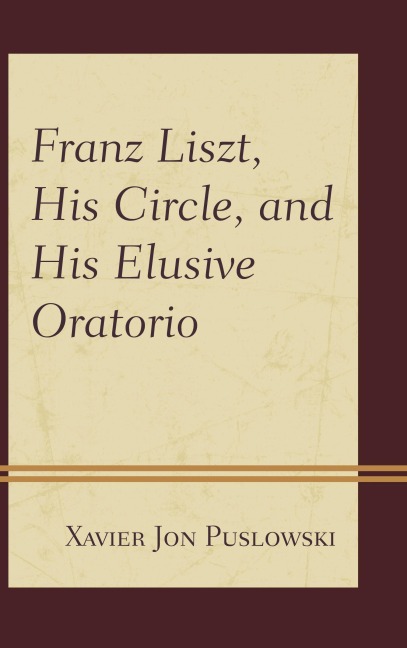
Many scholars, concert pianists, and classical music fans deem Franz Liszt the preeminent pianist of the nineteenth century. In Franz Liszt, His Circle, and His Elusive Oratorio, Xavier Puslowski engages in a detailed study of the links between Liszt, his contemporaries, and his milieu. Drawing on Liszt's famous Saint Stanislas Oratorio as a focal point, Puslowski brings together the history of the Romantic period in classical music and the intersection of key figures and historical events in his story of Liszt's achievements told from a distinctly historicist perspective.
Readers get a new view of Liszt as Puslowski brings together a remarkable cast of characters. Friend and rival, Frederic Chopin, stands tall as a symbol of Poland's fight for independence; the remarkable French "people's poet" Pierre Beranger makes his entrance; virtuoso violinist Niccolo Paganini takes center stage later in Liszt's life; the indefatigable French composer Hector Berlioz and the domineering Richard Wagner assume their roles in this musical drama; and finally two of Poland's premier violinists, Karol Lipinski and Henryk Wieniawski, stand side by side with Russian pianist Anton Rubinstein, as the story of Liszt's influence reaches across national boundaries and time itself to make its presence felt.
Xavier Jon Puslowski taught at Howard University in Washington, D.C., and served as an economist with the U.S. Department of Energy.
Preface
Chapter 1: Romanticism and the musical background
Chapter 2: Youth and the Prodigy
Chapter 3: Béranger and the Revolutions
Chapter 4: Paganini and his crucial influence
Chapter 5: Liszt and the Polish pianist
Chapter 6: Chopin and the Polish bowman
Chapter 7: Chopin and Polish Romanticism
Chapter 8: Liszt and the great virtuosity
Chapter 9: Chopin and his letters
Chapter 10: The Princess and settlement at Weimar
Chapter 11: Liszt and his three lives
Chapter 12: Wieniawski and the hard-earned years
Chapter 13: Liszt and the Polish Oratorio
Chapter 14: The Survivor and his friends
Chapter 15: The Decline and End
Epilogue
Appendix: Listings of Franz Liszt's music connected to Poland
Index
Dieses eBook wird im PDF-Format geliefert und ist mit einem Adobe Kopierschutz (DRM) versehen. Sie können dieses eBook mit allen Geräten lesen, die das PDF-Format und den Adobe Kopierschutz (DRM) unterstützen.
Zum Beispiel mit den folgenden Geräten:
• tolino Reader
Laden Sie das eBook direkt über den Reader-Shop auf dem tolino herunter oder übertragen Sie das eBook auf Ihren tolino mit einer kostenlosen Software wie beispielsweise Adobe Digital Editions.
• Sony Reader & andere eBook Reader
Laden Sie das eBook direkt über den Reader-Shop herunter oder übertragen Sie das eBook mit der kostenlosen Software Sony READER FOR PC/Mac oder Adobe Digital Editions auf ein Standard-Lesegeräte mit epub- und Adobe DRM-Unterstützung.
• Tablets & Smartphones
Möchten Sie dieses eBook auf Ihrem Smartphone oder Tablet lesen, finden Sie hier unsere kostenlose Lese-App für iPhone/iPad und Android Smartphone/Tablets.
• PC & Mac
Lesen Sie das eBook direkt nach dem Herunterladen mit einer kostenlosen Lesesoftware, beispielsweise Adobe Digital Editions, Sony READER FOR PC/Mac oder direkt über Ihre eBook-Bibliothek in Ihrem Konto unter „Meine eBooks“ - „online lesen“.
Schalten Sie das eBook mit Ihrer persönlichen Adobe ID auf bis zu sechs Geräten gleichzeitig frei.
Bitte beachten Sie, dass die Kindle-Geräte das Format nicht unterstützen und dieses eBook somit nicht auf Kindle-Geräten lesbar ist.