Und dann auf "Zum Home-Bildschirm [+]".

Stöbern
genialokal zum Startbildschirm hinzufügen
Installieren Sie die genialokal App auf Ihrem Startbildschirm für einen schnellen Zugriff und eine komfortable Nutzung.
Installieren Sie die genialokal App auf Ihrem Startbildschirm für einen schnellen Zugriff und eine komfortable Nutzung.
Ihr gewünschter Artikel ist in 0 Buchhandlungen vorrätig - wählen Sie hier eine Buchhandlung in Ihrer Nähe aus:

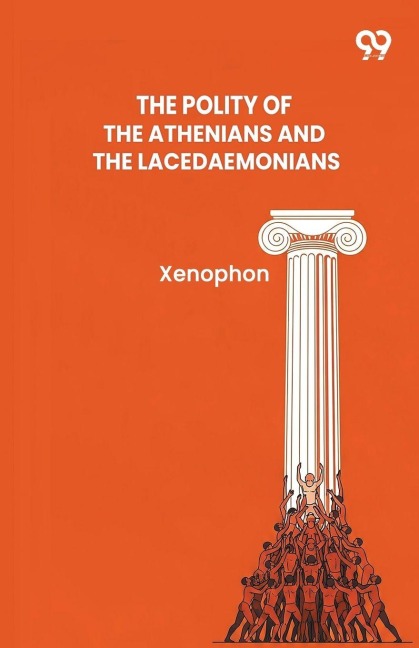
The polity of the Athenians and the Lacedaemonians is a historical account that examines and compares the governmental structures and social institutions of Athens and Sparta, two leading city-states of ancient Greece. Xenophon analyzes the nature of Athenian democracy and Spartan oligarchy, exploring how each system functions and the roles played by different social classes. The work begins with a detailed look at Athens, highlighting both the contributions of its poorer citizens, particularly in maintaining naval strength, and the tensions arising from democratic principles that empower the lower classes while limiting elite influence. Xenophon then contrasts this with Sparta's rigidly militaristic society, emphasizing discipline, hierarchy, and civic duty. Through this comparison, the text explores broader themes of political stability, social justice, and the interplay between governance and societal structure. By providing insight into civic organization, class dynamics, and institutional priorities, Xenophon offers a nuanced understanding of how differing political systems shape human behavior, societal cohesion, and the capacity for collective action.
Xenophon was a Greek historian, soldier, and philosopher born in Athens around 430 BC. He was a student of Socrates and fought as a mercenary in various conflicts throughout his life. In 401 BC, Xenophon joined the expedition of Cyrus the Younger, a Persian prince who sought to overthrow his brother, the king of Persia. After Cyrus was killed in battle, Xenophon led a group of Greek soldiers known as the Ten Thousand on a dangerous retreat across enemy territory, an event he later wrote about in his famous work, the Anabasis. Xenophon also wrote several other works, including the Hellenica, which covers the events in Greece from 411 BC to 362 BC, and the Cyropaedia, a fictionalized biography of Cyrus the Great. In addition to his military and historical pursuits, Xenophon was also interested in philosophy and wrote several works on ethics, including Memorabilia, a collection of Socratic dialogues. He believed in the importance of piety, obedience to the law, and the virtues of the Greek city-state system. Xenophon spent his later years in the Greek city of Corinth, where he continued to write and engage in philosophical discussions. He died around 354 BC at an advanced age.