Und dann auf "Zum Home-Bildschirm [+]".

Stöbern
genialokal zum Startbildschirm hinzufügen
Installieren Sie die genialokal App auf Ihrem Startbildschirm für einen schnellen Zugriff und eine komfortable Nutzung.
Installieren Sie die genialokal App auf Ihrem Startbildschirm für einen schnellen Zugriff und eine komfortable Nutzung.
Ihr gewünschter Artikel ist in 0 Buchhandlungen vorrätig - wählen Sie hier eine Buchhandlung in Ihrer Nähe aus:

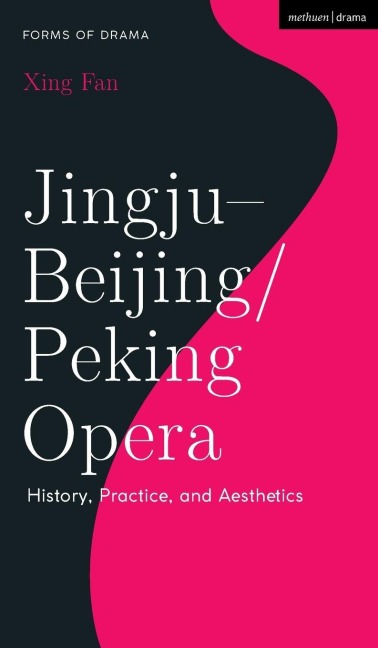
This is an accessible introduction to jingju (Beijing/Peking opera) which presents readers with an analysis of the different components of its aesthetic form in the context of its ongoing cultural history.
It traces the history of jingju from its origin during the 1790s to its present-day status as one of the few theatrical forms to enjoy nation-wide popularity in China. In 2010, UNESCO placed it on the Representative List of the Intangible Heritage of Humanity.
This book traces jingju's history through three lenses. Firstly, it introduces the stage practices that shape a jingju production-including the use of music, acting style, visual components and staging, and dramatic narrative-and details for the reader the practitioner's experience during the developmental creative process, in rehearsals and behind the curtain. Secondly, it illustrates jingju's development with close analyses of case studies, and sheds light on the process of jingju's transformation into its contemporary form. Lastly, it defines and interprets jingju's notion of the beautiful and how this sense of beauty is communicated through stylization.
Xing Fan is Associate Professor of Asian Theatre and Performance Studies in the Centre for Drama, Theatre, and Performance Studies at the University of Toronto, Canada. A specialist in Chinese drama, theatre, and performance culture, she received training in jingju acting at the Academy of Chinese Traditional Theatre and the University of Hawai'i at Manoa.
List of Illustrations List of Tables Series Preface Introduction Chapter 1. Performance Practice: Music, Acting, Visual Components, Play Text, and Mounting Productions Chapter 2. Performance History: "Huangqiang," "Pihuang," "Luantan," "Guoju," and "Jingju" Chapter 3: Performance as Legacy Bibliography Index