Und dann auf "Zum Home-Bildschirm [+]".

Stöbern
genialokal zum Startbildschirm hinzufügen
Installieren Sie die genialokal App auf Ihrem Startbildschirm für einen schnellen Zugriff und eine komfortable Nutzung.
Installieren Sie die genialokal App auf Ihrem Startbildschirm für einen schnellen Zugriff und eine komfortable Nutzung.
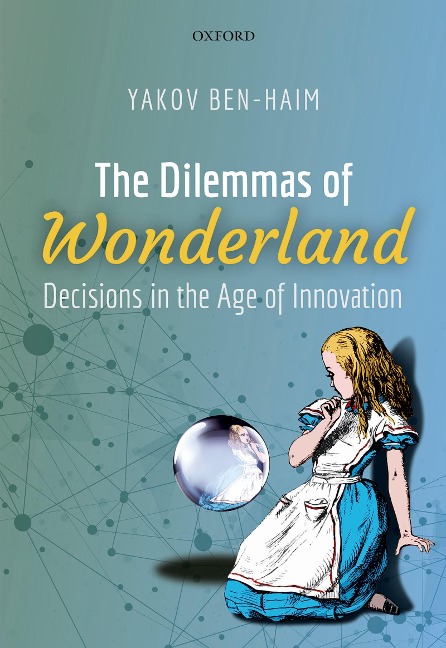
Innovations create both opportunities and dilemmas. They provide new and supposedly better opportunities, but -- because of their newness -- they are often more uncertain and potentially worse than existing options. Recent inventions and discoveries include new drugs, new energy sources, new foods, new manufacturing technologies, new toys and new pedagogical methods, new weapon systems, new home appliances and many other discoveries and inventions.
Is it better to use or not to use a new and promising but unfamiliar and hence uncertain innovation? That dilemma faces just about everybody. The paradigm of the innovation dilemma characterizes many situations, even when a new technology is not actually involved. The dilemma arises from new attitudes, like individual responsibility for the global environment, or new social conceptions, like global allegiance and self-identity transcending nation-states. These dilemmas have far-reaching implications for individuals, organizations, and society at large as they make decisions in the age of innovation. The uncritical belief in outcome-optimization -- "more is better, so most is best" -- pervades decision-making in all domains, but is often irresponsible when facing the uncertainties of innovation.
There is a great need for practical conceptual tools for understanding and managing the dilemmas of innovation. This book offers a new direction for a wide audience. It discusses examples from many fields, including e-reading, bipolar disorder and pregnancy, disruptive technology in industry, stock markets, agricultural productivity and world hunger, military hardware, military intelligence, biological conservation, on-line learning, and more.
Yakov Ben-Haim initiated and developed info-gap decision theory for modeling and managing severe uncertainty. Info-gap theory has impacted the fundamental understanding of uncertainty in human affairs, and is applied by scholars and practitioners around the world in engineering, biological conservation, economics, project management, climate change, natural hazard response, national security, medicine, and other areas (see info-gap.com). Ben-Haim has been a visiting scholar in many countries and has lectured at universities, technological and medical research institutions, public utilities and central banks. He has published more than 100 articles and 6 books. He is a professor of mechanical engineering and holds the Yitzhak Moda'i Chair in Technology and Economics at the Technion - Israel Institute of Technology.
- 1: Introduction - 2: Innovation Dilemmas: Examples - 3: Uncertainty, Ignorance, Surprise -- The Endless Frontier - 4: Optimization and its Limits - 5: Managing Innovation Dilemmas - 6: Cultures of Innovation and Progress
Dieses eBook wird im PDF-Format geliefert und ist mit einem Adobe Kopierschutz (DRM) versehen. Sie können dieses eBook mit allen Geräten lesen, die das PDF-Format und den Adobe Kopierschutz (DRM) unterstützen.
Zum Beispiel mit den folgenden Geräten:
• tolino Reader
Laden Sie das eBook direkt über den Reader-Shop auf dem tolino herunter oder übertragen Sie das eBook auf Ihren tolino mit einer kostenlosen Software wie beispielsweise Adobe Digital Editions.
• Sony Reader & andere eBook Reader
Laden Sie das eBook direkt über den Reader-Shop herunter oder übertragen Sie das eBook mit der kostenlosen Software Sony READER FOR PC/Mac oder Adobe Digital Editions auf ein Standard-Lesegeräte mit epub- und Adobe DRM-Unterstützung.
• Tablets & Smartphones
Möchten Sie dieses eBook auf Ihrem Smartphone oder Tablet lesen, finden Sie hier unsere kostenlose Lese-App für iPhone/iPad und Android Smartphone/Tablets.
• PC & Mac
Lesen Sie das eBook direkt nach dem Herunterladen mit einer kostenlosen Lesesoftware, beispielsweise Adobe Digital Editions, Sony READER FOR PC/Mac oder direkt über Ihre eBook-Bibliothek in Ihrem Konto unter „Meine eBooks“ - „online lesen“.
Schalten Sie das eBook mit Ihrer persönlichen Adobe ID auf bis zu sechs Geräten gleichzeitig frei.
Bitte beachten Sie, dass die Kindle-Geräte das Format nicht unterstützen und dieses eBook somit nicht auf Kindle-Geräten lesbar ist.