Und dann auf "Zum Home-Bildschirm [+]".

Stöbern
genialokal zum Startbildschirm hinzufügen
Installieren Sie die genialokal App auf Ihrem Startbildschirm für einen schnellen Zugriff und eine komfortable Nutzung.
Installieren Sie die genialokal App auf Ihrem Startbildschirm für einen schnellen Zugriff und eine komfortable Nutzung.
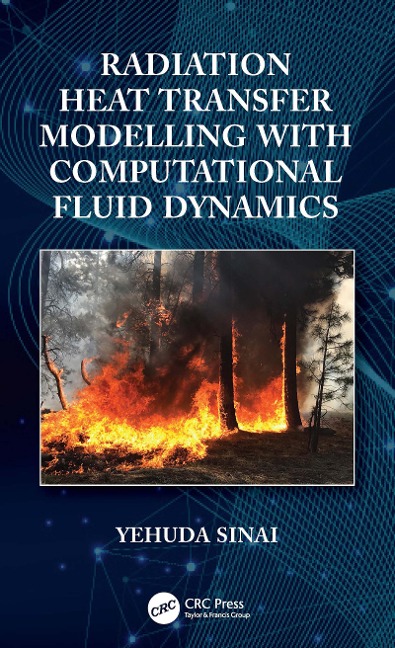
This book serves as a preliminary reference for the principles of thermal radiation and its modelling in computational fluid dynamics (CFD) simulations. Radiation Heat Transfer Modelling with Computational Fluid Dynamics covers strategies and processes for synthesizing radiation with CFD setups, computational techniques for solving the radiative transfer equation, the strengths and weaknesses thereof, boundary and initial conditions and relevant guidelines. Describing the strategic planning of a typical project, the book includes the spectroscopic properties of gases, some particulates and porous media. FEATURES - Fills a gap between existing CFD and thermal radiation textbooks and elaborates on some aspects of user manuals. - Aims at (1) CFD practitioners who are newcomers to thermal radiation and are looking for a preliminary introduction thereon and (2) modellers familiar with thermal radiation looking for a precursory introduction to CFD. The book is tilted somewhat towards the first group. - Provides guidelines for choosing the right model, the strategic planning of the modelling and its implementation. - Outlines the pitfalls of some solution techniques. - Describes how radiation is included in the variety of boundary condition types offered by CFD codes. - Helps to develop the practical skills required to plan, implement and interpret thermal radiation within the typical CFD code. - Addresses a wide variety of physical circumstances in which thermal radiation plays a role. - Offers ample references for readers searching for additional details. - Includes several examples of practical applications, including fire, a utility boiler and car headlights in cold environments. This book is intended for researchers and professionals who wish to simulate problems that involve fluid flow and heat transfer with thermal radiation.
Yehuda Sinai qualified in Mechanical Engineering at Witwatersrand University (South Africa) in 1968. He obtained a PhD in Aerodynamics at Cranfield University in 1975, on non-equilibrium molecular relaxation effects in sonic booms. After a spell in academia, working on acoustics and two-phase fluid-structure vibrations, on contract for the US Navy and the British Admiralty, he spent 10 years at NNC (National Nuclear Corporation Ltd.), principally on mathematical modelling of nuclear safety thermal-hydraulics. He joined AEA Technology in 1992, where he specialised in CFD (Computational Fluid Dynamics) modelling in the safety sphere, and became CFD Project Manager for Fire, Safety, HVAC and Environment. This role continued after the acquisition of AEA's CFD operation by ANSYS Inc. in 2003. In July 2009, Yehuda set up his own company, HeatAndFlow Consultancy Ltd., offering general modelling but with a focus on CFD tools. He has authored and co-authored approximately 60 scientific papers in archival journals and conference proceedings and is the author of a chapter in a technical encyclopedia.
1. Introduction 2. A Brief Outline of CFD 2.1 Preliminaries. 2.2 Governing Equations. 2.3 Geometry and Meshing. 2.4 More physics. 2.5 Numerics. 2.6 Problem Sizes. 3. Outline of a Typical Process for CFD Analysis with Radiation 4. Fundamentals of Thermal Radiation 4.1 Basics. 4.2 Introduction to the Radiative Transfer Equation and Opacity. 4.3 Estimation of a Characteristic Opacity, and Dimensionless Groups. 4.4 Coupling Between Flow and Radiation. 4.5 Equilibrium or Non-Equilibrium? 4.6 The Meaning of 'Semi-Transparent'. 4.7 Semi-Transparent Slabs, Windows, Solar Radiation. 5. Modelling 5.1 Boundary Conditions. 5.2 Initial Conditions. 5.3 Spectroscopic Properties. 5.4 Solution Techniques. 5.5 Estimation of Irradiation at Sub-Grid objects in a CFD Simulation. 5.6 Computational Meshes. 6. Quality Assurance 7. Examples 7.1 Utility Boiler. 7.2 Forensic Investigation of a Furniture Store Fire. 7.3 Sensitivity Tests of Grey Gas Models for Pool Fires. 7.4 Headlight. Appendices Index
Dieses eBook wird im PDF-Format geliefert und ist mit einem Adobe Kopierschutz (DRM) versehen. Sie können dieses eBook mit allen Geräten lesen, die das PDF-Format und den Adobe Kopierschutz (DRM) unterstützen.
Zum Beispiel mit den folgenden Geräten:
• tolino Reader
Laden Sie das eBook direkt über den Reader-Shop auf dem tolino herunter oder übertragen Sie das eBook auf Ihren tolino mit einer kostenlosen Software wie beispielsweise Adobe Digital Editions.
• Sony Reader & andere eBook Reader
Laden Sie das eBook direkt über den Reader-Shop herunter oder übertragen Sie das eBook mit der kostenlosen Software Sony READER FOR PC/Mac oder Adobe Digital Editions auf ein Standard-Lesegeräte mit epub- und Adobe DRM-Unterstützung.
• Tablets & Smartphones
Möchten Sie dieses eBook auf Ihrem Smartphone oder Tablet lesen, finden Sie hier unsere kostenlose Lese-App für iPhone/iPad und Android Smartphone/Tablets.
• PC & Mac
Lesen Sie das eBook direkt nach dem Herunterladen mit einer kostenlosen Lesesoftware, beispielsweise Adobe Digital Editions, Sony READER FOR PC/Mac oder direkt über Ihre eBook-Bibliothek in Ihrem Konto unter „Meine eBooks“ - „online lesen“.
Schalten Sie das eBook mit Ihrer persönlichen Adobe ID auf bis zu sechs Geräten gleichzeitig frei.
Bitte beachten Sie, dass die Kindle-Geräte das Format nicht unterstützen und dieses eBook somit nicht auf Kindle-Geräten lesbar ist.