Und dann auf "Zum Home-Bildschirm [+]".

Stöbern
genialokal zum Startbildschirm hinzufügen
Installieren Sie die genialokal App auf Ihrem Startbildschirm für einen schnellen Zugriff und eine komfortable Nutzung.
Installieren Sie die genialokal App auf Ihrem Startbildschirm für einen schnellen Zugriff und eine komfortable Nutzung.
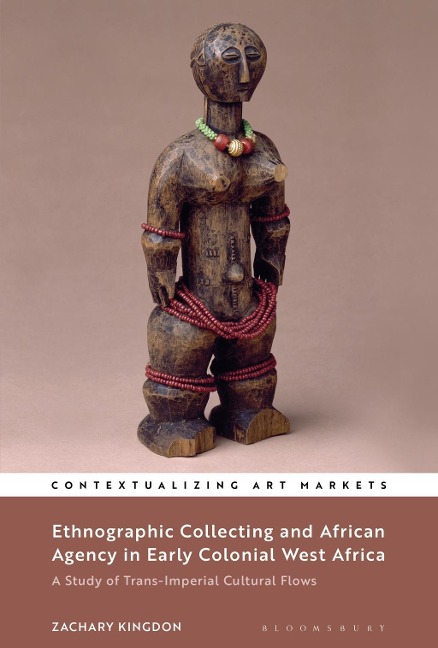
The early collections from Africa in Liverpool's World Museum reflect the city's longstanding shipping and commercial links with Africa's Atlantic coast. A principal component of these collections is an assemblage of several thousand artefacts from western Africa that were transported to institutions in northwest England between 1894 and 1916 by the Liverpool steam ship engineer Arnold Ridyard. While Ridyard's collecting efforts can be seen to have been shaped by the steamers' dynamic capacity to connect widely separated people and places, his Methodist credentials were fundamental in determining the profile of his African networks, because they meant that he was not part of official colonial authority in West Africa. Kingdon's study uncovers the identities of many of Ridyard's numerous West African collaborators and discusses their interests and predicaments under the colonial dispensation. Against this background account, their agendas are examined with reference to surviving narratives that accompanied their donations and within the context of broader processes of trans-imperial exchange, through which they forged new identities and statuses for themselves and attempted to counter expressions of British cultural imperialism in the region. The study concludes with a discussion of the competing meanings assigned to the Ridyard assemblage by the Liverpool Museum and examines the ways in which its re-contextualization in museum contexts helped to efface signs of the energies and narratives behind its creation.
Zachary Kingdon is Curator of African Collections at National Museums Liverpool, UK.
List of Illustrations
List of Colour Plates
Acknowledgements
1. Introduction
Approach
Structure and Outline
2. Prologue: Western Africa, Africans, and Liverpool's Municipal Museum
After the Slave Trade
The Niger Expedition
Joseph Mayer and the Inauguration of Liverpool's Ethnography Collection
Between Empire and Trade
Conclusion
3. Arnold Ridyard and his Assemblage
Ridyard's Family Background and Methodist Identity
Maritime Career, Collecting Practices and Social Networks
Acquisition and Generosity
Ridyard's Dissenting Interests
Conclusion
4. Diasporic Dialogues: The Sierra Leonean Donors I
W. R. Renner, West African Capitalist
Krio Diaspora: Collecting and Culture in the Early Twentieth Century
Women Donors: Mrs W. E. Johnson and Miss B Yorke
The Muslim Donors: Colonial Exclusion, African Regional Trajectories
Conclusion
5. Trans-Imperial Identities: The Sierra Leonean Donors II
Freetown, Architecture, and Krio Self-Orientation
Krio Male Elites
'Upbuilding' and Empire
Claudius D. Hotobah During
Conclusion
6. Coastal 'Kings': The Gold Coast Donors I
Ababio IV, Amonu V, Acquah II, and Prince Tackie
Kojo Ababio IV, Accra Political Player
Potters of Accra's Western Plains
Ambiguous 'Traditionalist': E. W. Quartey-Papafio
Dr. Edward Mettle, 'Man of Mystery and Power'
Conclusion
7. Coastal Cosmopolitans: The Gold Coast Donors II
Frederick Lutterodt, West African Photographer
Arthur Robert Chinery, Euro-Ga Professional
John Mensah Sarbah, 'Cosmopolitan Patriot'
J. P. Brown, C. J. Bannerman and other 'Cosmopolitan Patriots'
Mobile Elites: C. J. Reindorf, H. Van Hien and others
Conclusion
8. Museum Meanings: Regimes of Classification, Representation and Display
Exhibiting Order
Re-arranging and Re-evaluating the Liverpool Museum African Collection in the 1930s
Erosion and Occlusion: The Ridyard Assemblage at the Liverpool Museum, 1905 to 1968
Conclusion
Epilogue
References
Index
Dieses eBook wird im PDF-Format geliefert und ist mit einem Adobe Kopierschutz (DRM) versehen. Sie können dieses eBook mit allen Geräten lesen, die das PDF-Format und den Adobe Kopierschutz (DRM) unterstützen.
Zum Beispiel mit den folgenden Geräten:
• tolino Reader
Laden Sie das eBook direkt über den Reader-Shop auf dem tolino herunter oder übertragen Sie das eBook auf Ihren tolino mit einer kostenlosen Software wie beispielsweise Adobe Digital Editions.
• Sony Reader & andere eBook Reader
Laden Sie das eBook direkt über den Reader-Shop herunter oder übertragen Sie das eBook mit der kostenlosen Software Sony READER FOR PC/Mac oder Adobe Digital Editions auf ein Standard-Lesegeräte mit epub- und Adobe DRM-Unterstützung.
• Tablets & Smartphones
Möchten Sie dieses eBook auf Ihrem Smartphone oder Tablet lesen, finden Sie hier unsere kostenlose Lese-App für iPhone/iPad und Android Smartphone/Tablets.
• PC & Mac
Lesen Sie das eBook direkt nach dem Herunterladen mit einer kostenlosen Lesesoftware, beispielsweise Adobe Digital Editions, Sony READER FOR PC/Mac oder direkt über Ihre eBook-Bibliothek in Ihrem Konto unter „Meine eBooks“ - „online lesen“.
Schalten Sie das eBook mit Ihrer persönlichen Adobe ID auf bis zu sechs Geräten gleichzeitig frei.
Bitte beachten Sie, dass die Kindle-Geräte das Format nicht unterstützen und dieses eBook somit nicht auf Kindle-Geräten lesbar ist.