Und dann auf "Zum Home-Bildschirm [+]".

Stöbern
genialokal zum Startbildschirm hinzufügen
Installieren Sie die genialokal App auf Ihrem Startbildschirm für einen schnellen Zugriff und eine komfortable Nutzung.
Installieren Sie die genialokal App auf Ihrem Startbildschirm für einen schnellen Zugriff und eine komfortable Nutzung.
Ihr gewünschter Artikel ist in 0 Buchhandlungen vorrätig - wählen Sie hier eine Buchhandlung in Ihrer Nähe aus:

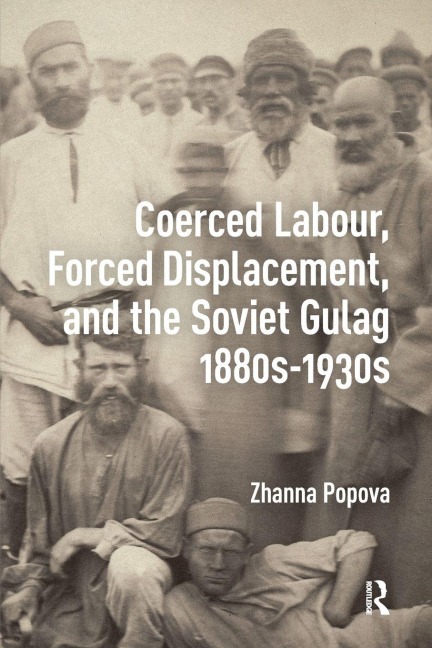
Exploring the emergence of this vast Soviet system of concentration camps in long-term perspective, this book aims to inscribe this process within global histories of coerced labour, forced displacement, and punishment. It highlights the inextricable interconnection of coerced labour and forced displacement as tools of punishment in the multitude of their historical forms.
Zhanna Popova is a postdoctoral researcher at Central European University in Vienna, Austria. Her research interests include labour history, social history of Eastern Europe and Russia, and history of migration, with a particular interest towards the conditions and struggles of marginalized workers.
Introduction, Chapter 1. A Threatening Geography: Shifting Usages of Forced Displacement and Convict Labour, 1879-1905, Chapter 2. Under Pressure: Revolution, Repression, and War in the Russian Empire, 1905-1917, Chapter 3. Blueprints for the Gulag? The Advance of Mass Internment, 1914-1923, Chapter 4. Revolutionary Utopias and Dystopias: Violence and the Making of the Soviet Man, 1923-1929, Chapter 5. Special Settlements and the Making of the Gulag, 1929-1934, Epilogue. Paroxysms of Violence, 1937-1953.