Und dann auf "Zum Home-Bildschirm [+]".

Stöbern
genialokal zum Startbildschirm hinzufügen
Installieren Sie die genialokal App auf Ihrem Startbildschirm für einen schnellen Zugriff und eine komfortable Nutzung.
Installieren Sie die genialokal App auf Ihrem Startbildschirm für einen schnellen Zugriff und eine komfortable Nutzung.
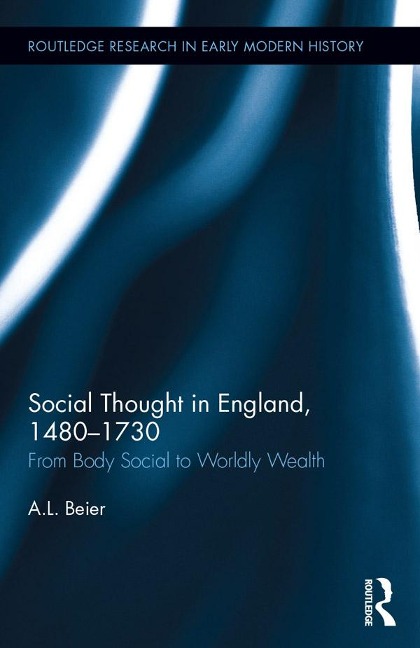
Authorities ranging from philosophers to politicians nowadays question the existence of concepts of society, whether in the present or the past. This book argues that social concepts most definitely existed in late medieval and early modern England, laying the foundations for modern models of society. The book analyzes social paradigms and how they changed in the period. A pervasive medieval model was the "body social," which imagined a society of three estates - the clergy, the nobility, and the commonalty - conjoined by interdependent functions, arranged in static hierarchies based upon birth, and rejecting wealth and championing poverty. Another model the book describes as "social humanist," that fundamentally questioned the body social, advancing merit over birth, mobility over stasis, and wealth over poverty. The theory of the body social was vigorously articulated between the 1480s and the 1550s. Parts of the old metaphor actually survived beyond 1550, but alternative models of social humanist thought challenged the body concept in the period, advancing a novel paradigm of merit, mobility, and wealth. The book's methodology focuses on the intellectual context of a variety of contemporary texts.
A.L. Beier is Professor Emeritus at Illinois State University.
Part I: The Body Social, 1480-1550 1. The Body Imagined 2. Contexts and Conflicts 3. The Body Examined: Ancient, Medieval, Modern 4. Different Metaphor, Similar Message: Edmund Dudley's "Tree of Commonwealth," 1509-1510 5. The Body Historicized: Clement Armstrong, 1529-1536 6. Defending the Body: "Commonwealth-Men," c. 1520-c. 1553 Part II: Social Humanist Challenges to the Body Social, 1516-1549 7. Moving Away from the Body: An Overview 8. Poverty, Wealth, and Labor: New Theory, New Practices 9. A Radical Re-Ordering: Thomas More's Utopia, 1516 10. Social Humanist Thought Re-Defines the Social, c. 1523/5-1536. 11. Rethinking the Three Estates: Thomas Starkey's "Dialogue Between Lupset and Pole," 1529-1532 12. Virtue Meets Profit: The Brave New World of Sir Thomas Smith, 1549 Part III: Society as Property, 1550-1697 13. Re-Drawing the Social Picture, 1550-1600 14. Property, Patriarchy, and the Agrarian Problem, 1593-1656 15. The Power of Property Perceived, 1576-1730 16. Property Assailed and Defended: Grandees, Levellers, and Diggers: 1647-1649 17. Conclusions: The Past Makes the Future
Dieses eBook wird im PDF-Format geliefert und ist mit einem Adobe Kopierschutz (DRM) versehen. Sie können dieses eBook mit allen Geräten lesen, die das PDF-Format und den Adobe Kopierschutz (DRM) unterstützen.
Zum Beispiel mit den folgenden Geräten:
• tolino Reader
Laden Sie das eBook direkt über den Reader-Shop auf dem tolino herunter oder übertragen Sie das eBook auf Ihren tolino mit einer kostenlosen Software wie beispielsweise Adobe Digital Editions.
• Sony Reader & andere eBook Reader
Laden Sie das eBook direkt über den Reader-Shop herunter oder übertragen Sie das eBook mit der kostenlosen Software Sony READER FOR PC/Mac oder Adobe Digital Editions auf ein Standard-Lesegeräte mit epub- und Adobe DRM-Unterstützung.
• Tablets & Smartphones
Möchten Sie dieses eBook auf Ihrem Smartphone oder Tablet lesen, finden Sie hier unsere kostenlose Lese-App für iPhone/iPad und Android Smartphone/Tablets.
• PC & Mac
Lesen Sie das eBook direkt nach dem Herunterladen mit einer kostenlosen Lesesoftware, beispielsweise Adobe Digital Editions, Sony READER FOR PC/Mac oder direkt über Ihre eBook-Bibliothek in Ihrem Konto unter „Meine eBooks“ - „online lesen“.
Schalten Sie das eBook mit Ihrer persönlichen Adobe ID auf bis zu sechs Geräten gleichzeitig frei.
Bitte beachten Sie, dass die Kindle-Geräte das Format nicht unterstützen und dieses eBook somit nicht auf Kindle-Geräten lesbar ist.