Und dann auf "Zum Home-Bildschirm [+]".

Stöbern
genialokal zum Startbildschirm hinzufügen
Installieren Sie die genialokal App auf Ihrem Startbildschirm für einen schnellen Zugriff und eine komfortable Nutzung.
Installieren Sie die genialokal App auf Ihrem Startbildschirm für einen schnellen Zugriff und eine komfortable Nutzung.
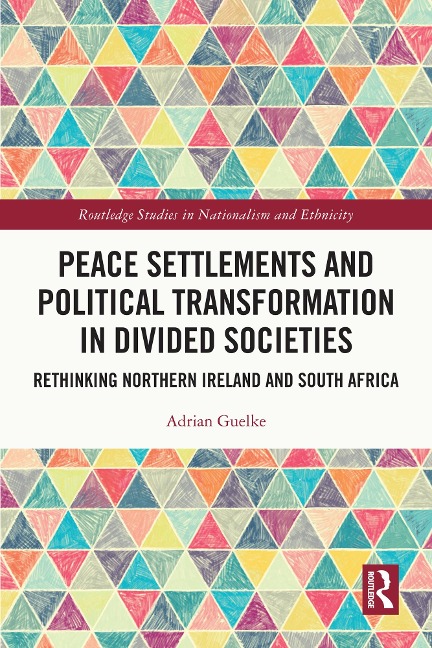
Peace Settlements and Political Transformation in Divided Societies examines what happened to Northern Ireland and South Africa after their miraculous political settlements in the 1990s, in which comparison between the two cases played a small but significant role. The author extends the story by exploring the connections between these two deeply divided societies during the consolidation of their settlements. He shows the ways in which their paths have subsequently diverged in both reality and perception. At the outset of the transformation of the two polities, the similarities between the two cases tended to be overstated. In this context, the book explains how the South African case came to be misidentified as an example of consociationalism, and the influence that this has continued to exert on comparative studies of power-sharing. In the process, other aspects of South Africa's political transformation, including respect for the constitution and the rule of law, have been overlooked and underappreciated. In the case of Northern Ireland, a missing element in the treatment of its settlement as a model for other deeply divided societies has been the role that external mediation played in the creation and survival of its institutions. Northern Ireland's dependence on favourable external circumstances explains in large part why the Good Friday Agreement is now facing a threat to its survival. By contrast, South Africa's political institutions seem relatively secure, despite the vast scale of the country's socio-economic problems. This book will be of interest to students, researchers and scholars of conflict resolution and peace processes, comparative politics, ethnic politics and democratisation, as well as those involved in the governance of deeply divided societies.
Adrian Guelke is Professor Emeritus in Comparative Politics at Queen's University Belfast, UK. He is attached to the Centre for the Study of Ethnic Conflict in the School of History, Anthropology, Philosophy and Politics. He edited Nationalism and Ethnic Politics from 2010 to 2018.
1. A Brief History of the Comparison 2. Overcoming Intractable Conflicts Part I: Northern Ireland 3. Implementation 4. Consolidation 5. External Challenges Part II: South Africa 6. Reconciliation 7. Party Battles 8. Internal Challenges Part III: Comparison 9. Framing the Cases 10. Conclusion Postscript: Desmond Tutu and the Northern Ireland Peace Process
Dieses eBook wird im PDF-Format geliefert und ist mit einem Adobe Kopierschutz (DRM) versehen. Sie können dieses eBook mit allen Geräten lesen, die das PDF-Format und den Adobe Kopierschutz (DRM) unterstützen.
Zum Beispiel mit den folgenden Geräten:
• tolino Reader
Laden Sie das eBook direkt über den Reader-Shop auf dem tolino herunter oder übertragen Sie das eBook auf Ihren tolino mit einer kostenlosen Software wie beispielsweise Adobe Digital Editions.
• Sony Reader & andere eBook Reader
Laden Sie das eBook direkt über den Reader-Shop herunter oder übertragen Sie das eBook mit der kostenlosen Software Sony READER FOR PC/Mac oder Adobe Digital Editions auf ein Standard-Lesegeräte mit epub- und Adobe DRM-Unterstützung.
• Tablets & Smartphones
Möchten Sie dieses eBook auf Ihrem Smartphone oder Tablet lesen, finden Sie hier unsere kostenlose Lese-App für iPhone/iPad und Android Smartphone/Tablets.
• PC & Mac
Lesen Sie das eBook direkt nach dem Herunterladen mit einer kostenlosen Lesesoftware, beispielsweise Adobe Digital Editions, Sony READER FOR PC/Mac oder direkt über Ihre eBook-Bibliothek in Ihrem Konto unter „Meine eBooks“ - „online lesen“.
Schalten Sie das eBook mit Ihrer persönlichen Adobe ID auf bis zu sechs Geräten gleichzeitig frei.
Bitte beachten Sie, dass die Kindle-Geräte das Format nicht unterstützen und dieses eBook somit nicht auf Kindle-Geräten lesbar ist.