Und dann auf "Zum Home-Bildschirm [+]".

Stöbern
genialokal zum Startbildschirm hinzufügen
Installieren Sie die genialokal App auf Ihrem Startbildschirm für einen schnellen Zugriff und eine komfortable Nutzung.
Installieren Sie die genialokal App auf Ihrem Startbildschirm für einen schnellen Zugriff und eine komfortable Nutzung.
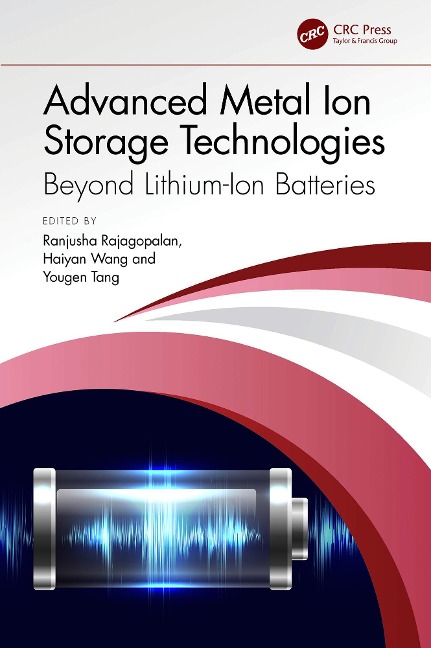
This book focusses on the current research on materials for advanced battery technologies and proposes future directions for different types of batteries to meet the current challenges associated with the fuel cell. Furthermore, it provides insights into scientific and practical issues in the development of various batteries like sodium, potassium, zinc, magnesium, aluminum, calcium, and dual metal ion, to bring a new perspective to storage technologies beyond lithium-ion batteries. It introduces different themes of batteries to evaluate the opportunities and challenges of these battery systems from a commercial aspect. Key features: - Deals with different potential rechargeable battery systems as suitable substitutes for LIBs - Discusses different investigated materials as anode, cathode, and electrolytes for different energy storage systems - Provides a complete and comprehensive review of all the existing metal-ion batteries - Includes practical challenges and future opportunities of each battery category - Reviews commercial aspects of different battery systems This book is aimed at researchers, graduate students, and professionals in industrial and applied chemistry, renewable energy, clean and sustainable processes, chemical engineering, materials science, nanotechnology, and battery chemistry.
Ranjusha Rajagopalan received her PhD in Physics with specialization in battery technology from University of Wollongong, Australia in the year 2017. She received her Master and Bachelor Degree in Physics from Calicut University, India. She owns another master (Nanosciences) and Doctoral (Chemical Engineering) Degree. During her tenure, at College of Chemistry and Chemical Engineering, Central South University, China, she was working on the functionalization of organic/inorganic materials for developing high performance metal ion batteries, including sodium and potassium ion batteries. Her research interests also include enhancement of power and cycling performances of battery electrodes by designing novel materials and composites. Her current research interest is on the material development for biosensor at Vitaltrace, Australia. Haiyan Wang earned Ph.D degree in Applied Chemistry at Central South University in 2012. He once studied in University of St. Andrews as a visiting Ph.D student. He also worked for 2 years at The Hong Kong University of Science and Technology. Now he is a full Professor in College of Chemistry and Chemical Engineering at Central South University. His current research interests are mainly focused on the new energy materials and devices for energy storage, including Li/Na ion batteries and aqueous metal batteries (Al/Zn). He has published over 160 refereed papers as corresponding author, including Nat Commun, Angew. Chem. Int. Ed, Energy Environ Sci, Adv Mater (over 9000 citation times, H-index 56). He has received some important awards, for examples, the First Science and Technology Progress Award in Chongqing Province and the Second Natural Science Award in Hunan Province. He is also the winner of HongKong Scholar, Leading Talents of Science and Technology Innovation in Hunan Province, Distinguished Young Scholar of Hunan Natural Science Fund, Young Talents in Hunan Province, My Favorite Young Teacher in Hunan Province, and Fellow of International Association of Advanced Materials (IAAM). Yougen Tang earned his Ph.D. in Material science at Central South University. From 2000, he is a full Professor in College of Chemistry and Chemical Engineering at Central South University. He is the director of Institute of Chemical Powder Sources and Materials at Central South University and he is also the head of Hunan Provincial Key Laboratory of Chemical Power Sources. He has published over 200 refereed papers. His current research interests are focused on the new energy materials and advanced batteries.
1. Introduction to Metal Ion Batteries 2. Sodium Ion Batteries: A Potential Replacement to Lithium Ion Batteries 3. Potassium Ion Batteries: Future of Metal Ion Batteries 4. Zinc ion batteries: A promising solution for future energy demands 5. Magnesium ion batteries: promising application for large-scale energy storage 6. Aluminum ion batteries: attractive new emerging energy storage devices 7. Calcium ion batteries 8. Metal ion to Metal Batteries
Dieses eBook wird im PDF-Format geliefert und ist mit einem Adobe Kopierschutz (DRM) versehen. Sie können dieses eBook mit allen Geräten lesen, die das PDF-Format und den Adobe Kopierschutz (DRM) unterstützen.
Zum Beispiel mit den folgenden Geräten:
• tolino Reader
Laden Sie das eBook direkt über den Reader-Shop auf dem tolino herunter oder übertragen Sie das eBook auf Ihren tolino mit einer kostenlosen Software wie beispielsweise Adobe Digital Editions.
• Sony Reader & andere eBook Reader
Laden Sie das eBook direkt über den Reader-Shop herunter oder übertragen Sie das eBook mit der kostenlosen Software Sony READER FOR PC/Mac oder Adobe Digital Editions auf ein Standard-Lesegeräte mit epub- und Adobe DRM-Unterstützung.
• Tablets & Smartphones
Möchten Sie dieses eBook auf Ihrem Smartphone oder Tablet lesen, finden Sie hier unsere kostenlose Lese-App für iPhone/iPad und Android Smartphone/Tablets.
• PC & Mac
Lesen Sie das eBook direkt nach dem Herunterladen mit einer kostenlosen Lesesoftware, beispielsweise Adobe Digital Editions, Sony READER FOR PC/Mac oder direkt über Ihre eBook-Bibliothek in Ihrem Konto unter „Meine eBooks“ - „online lesen“.
Schalten Sie das eBook mit Ihrer persönlichen Adobe ID auf bis zu sechs Geräten gleichzeitig frei.
Bitte beachten Sie, dass die Kindle-Geräte das Format nicht unterstützen und dieses eBook somit nicht auf Kindle-Geräten lesbar ist.