Und dann auf "Zum Home-Bildschirm [+]".

Stöbern
genialokal zum Startbildschirm hinzufügen
Installieren Sie die genialokal App auf Ihrem Startbildschirm für einen schnellen Zugriff und eine komfortable Nutzung.
Installieren Sie die genialokal App auf Ihrem Startbildschirm für einen schnellen Zugriff und eine komfortable Nutzung.



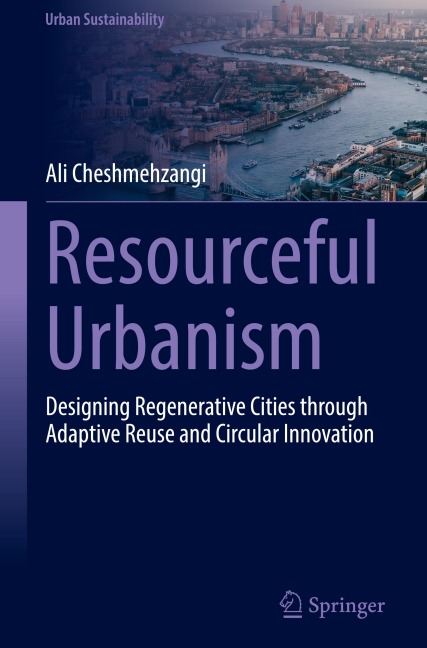
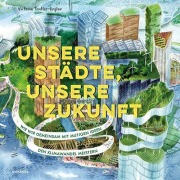
Resourceful Urbanism reimagines how cities can thrive through constraints, whether environmental, economic, or spatial, by harnessing ingenuity, local knowledge, and innovative design. This book focuses on how adaptive reuse, circular thinking, and participatory governance might lead to urban resilience rather than high-tech fixes or significant advancements. It makes the case that being "resourceful" in the urban context means changing our values for things like relationships, materials, ecosystems, and lived experience in addition to getting more done with less. The transformative tactics that influence the urban futures of both Global North and Global South contexts are examined in this book in a current and fact-based manner. It combines several approaches, i.e., formal and informal, grassroots and institutional, to show how locally rooted activities may make cities more regenerative, inclusive, and adaptable. The book is structured around four central themes that collectively define resourceful urbanism: "Community-Led Innovation", "Adaptive Reuse and Retrofitting", "Circular Resource Management", and "Multifunctional Urban Spaces". Each theme is illustrated through two in-depth case studies, one from a developed context and one from a developing context, showing how contextually tailored interventions can drive systemic transformation.
Ali CHESHMEHZANGI is a Professor and Head of the School of Architecture, Design and Planning (ADP) at The University of Queensland. He is the Brisbane Olympics Committee member for Games Legacy and Growth Sub-Committee as well as the Expert member of the 2032 Games led by UQ. He has been in the World’s top 2 percent field leader since 2022, recognised by Stanford University. He is among the top 25 global scholars in the urban sustainability research area.
Ali has a wealth of experience, expertise, and a strong commitment to innovation and excellence in the fields of architecture, design, and planning, the three core disciplines of his School at UQ. With a career spanning over two decades, he has made significant contributions to the academic and professional communities, with a focus on sustainable and environmentally conscious design. Prior to joining UQ, Ali held several strategic leadership and senior managerial roles, such as Vice-President for International Engagement and Global Partnership, Founding Director and Head of the Center for Innovation in Education and Research, Head of the Department of Architecture and Built Environment, Founding Director of the Urban Innovation Lab, Director of a university-wide Teaching and Learning platform, Director of International Research Network for Rural and Urban Development, Founder and Head of Research Group for Sustainable Built Environment, co-director of university-wide research priority areas, Director of Center for Sustainable Energy Technologies, and Interim Director of Digital Design Lab. So far, Ali has published over 500 journal papers, articles, conference papers, book chapters, and reports. This is his 50th academic book, alongside his many poetry collections that he has written in Parsi/Persian and English. Some of his previous academic books have received awards at the national, provincial, and municipal levels. He also has received international awards and recognition for his research on urban resilience studies and sustainability research, as well as a 2018 Vice-Chancellor’s award for his impactful contribution to higher education.
Chapter 1. Beyond Scarcity: Reimagining Urban Futures Through Resourceful Innovation.- Part I. Community-led Innovation.- Chapter 2. From Derelict Riverside to Residents’ Commons: Coin Street Community Builders and the Politics of Collective Urban Stewardship.- Chapter 3. Building with Scarcity: Koroipita and the Resourceful Urbanism of the Pacific.- Part II. Adaptive Reuse and Retrofitting.- Chapter 4. From Tracks to Commons: The Goods Line and Adaptive Urbanism in Sydney, Australia.- Chapter 5. From Grain to Gallery: The Zeitz MOCAA and the Cultural Rebirth of Cape Town’s Waterfront.- Part III. Circular Resource Management.- Chapter 6. Loops of Value: The Kalundborg Industrial Symbiosis and the Architecture of Circular Exchange in Denmark.- Chapter 7. Everyday Circularity: Informal Labour and the SWaCH Model in Pune, India.- Part IV. Multifunctional Urban Spaces.- Chapter 8. Landscapes of Multiplicity: Yokohama’s Zoorasia and Forest Park Network.- Chapter 9. Resourceful Social Urbanism: Medellín’s Library Parks as Engines of Collective Transformation.- Chapter 10. From Ingenuity to Transformation: The Future of Resourceful Urbanism.