Und dann auf "Zum Home-Bildschirm [+]".

Stöbern
genialokal zum Startbildschirm hinzufügen
Installieren Sie die genialokal App auf Ihrem Startbildschirm für einen schnellen Zugriff und eine komfortable Nutzung.
Installieren Sie die genialokal App auf Ihrem Startbildschirm für einen schnellen Zugriff und eine komfortable Nutzung.
Ihr gewünschter Artikel ist in 0 Buchhandlungen vorrätig - wählen Sie hier eine Buchhandlung in Ihrer Nähe aus:

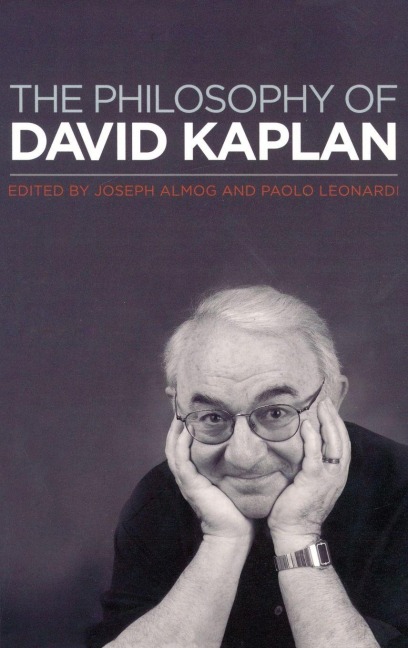
David Kaplan's intellectual influence on 20th century analytic philosophy has been transformative. He introduced lasting innovations in the philosophy of language and philosophical logic. Just as important, however, is Kaplan's way of doing philosophy; generous but incisive, his profoundly interactive style mentored countless generations of students, many of whom contribute to this volume.
This volume collects new, previously unpublished articles on Kaplan, analyzing a broad spectrum of topics ranging from cutting edge linguistics and the philosophy of mathematics, to metaphysics, the foundations of pragmatics, and the theory of communication.
With its historical introduction and personal tributes, The Philosophy of David Kaplan also reveals much of Kaplan's life and times, highlighting the key players of analytic philosophy of the last century, and underscoring Kaplan's substantial impact on contemporary philosophy.
Joseph Almog is Professor of Philosophy at the University of California, Los Angeles. He is author of What Am I? (Oxford, 2002) and co-editor of Themes from Kaplan (Oxford, 1989), and most recently Cogito (Oxford, 2008).
- c Acknowledgements
- About the contributors
- I. Life and Work
- 1: Joseph Almog: "David Kaplan - The Man at Work";
- 2: C. Anthony Anderson: "David Kaplan's Essential Attributes and Formal Aspects of His Work"
- 3: Nathan Salmon: "Quantifying Into The Unquantifiable / The Life and Work of David Kaplan"
- II. Logic and Semantics
- 4Terence Parsons: "Higher-Order Senses";
- 5: Edward Keenan: "Some Logical Properties of Natural Language Quantifiers"
- 6: C. Anthony Anderson: "The Lesson Of Kaplan's Paradox About Possible World Semantics"
- 7: Sten Lindstrom: "Possible Worlds Semantics and the Liar / Reflections on a Problem Posed by Kaplan"
- 8: Kit Fine: "The Role of Variables"
- III. Language and Thought
- 9.: Tim Williamson: "Reference, Inference and the Semantics of Pejoratives"
- 10: Christopher Peacocke: "Representing Thoughts: Sense, the Hierarchy and Understanding"
- 11: John Perry: "Demonstratives, Utterances and Logic"
- 12: Stavroula Glezakos: "Can Frege Pose Frege's Puzzle?"
- 13: Erin L. Eaker: "David Kaplan on De Re Belief"
- 14: Robert Stalnaker: "What is De Re Belief?"
- 15: Tyler Burge: "Five Theses on De Re States and Attitudes"