Und dann auf "Zum Home-Bildschirm [+]".

Stöbern
genialokal zum Startbildschirm hinzufügen
Installieren Sie die genialokal App auf Ihrem Startbildschirm für einen schnellen Zugriff und eine komfortable Nutzung.
Installieren Sie die genialokal App auf Ihrem Startbildschirm für einen schnellen Zugriff und eine komfortable Nutzung.
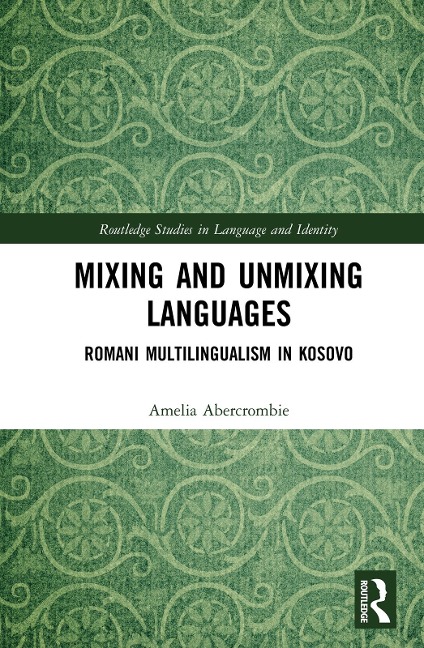
Mixing and Unmixing Languages uses the politics and practices of language to understand social hierarchies and social change in a post-conflict and post-socialist context. The book focuses on Roma in Prizren, Kosovo, where the author conducted long-term ethnographic fieldwork, using language learning as a central method. Shifts in language practices among this highly multilingual group have reflected the demise of Yugoslav socialism, the rise of ethno-nationalist politics and conflict, and the post-war reversal of power relations in Kosovo. Roma in Prizren nostalgically narrate a past of cosmopolitanism and employment in contrast to the present. Their position today is complex: while they stress their relative integration, this position is fragile in the face of nationalist politics and imported neoliberal economic policies. Within this context, Roma NGO workers have found an economic niche working on projects to protect multiculturalism and minorities, funded by international aid agencies, centred on Romani language. This book discusses the historical trajectory and current configurations of a Romani organisation in the town, the standardisation of Romani and the hierarchical organisation of linguistic forms and language learning, the self-representation of Roma and the 'gypsy' image through Romani-language drama, and attitudes to purism, mixing and cosmopolitanism. Mixing and Unmixing Languages is suitable for academics and students in the areas of linguistic anthropology and linguistic ethnography, Romani studies, South-East European studies and sociolinguistics.
Amelia Abercrombie has recently worked as a postdoctoral research associate looking at language learning among marginalised migrants in Manchester, UK. She completed a PhD in the department of Social Anthropology at the University of Manchester, UK, in 2017. Before that she was at University College London, School of Slavonic and East European Studies, UK, completing MRes East European Studies in 2011, and BA Serbian and Croatian Studies in 2008. She has also worked as a support worker for mental health and learning disabilities.
Contents Notes on Orthographies Acknowledgements Introduction Part 1: Roma, Prizren & Language 1 Terzimahalla, Durmish Aslano and Me 2 Durmish Aslano in Prizren: From Partizan to NGO 3 Intangible Culture And Tangible Employment After Socialism Part 2: Purity, Mixture and Representation 4 O Romano Teatro and Gypsy Theatricality 5 Standardisation: Learning Linguistics in the Bath 6 Before the War: A Nostalgic Speech Genre 7 Between two fires? Dissonance, diglossia, disorientation Bibliography Index
Dieses eBook wird im PDF-Format geliefert und ist mit einem Adobe Kopierschutz (DRM) versehen. Sie können dieses eBook mit allen Geräten lesen, die das PDF-Format und den Adobe Kopierschutz (DRM) unterstützen.
Zum Beispiel mit den folgenden Geräten:
• tolino Reader
Laden Sie das eBook direkt über den Reader-Shop auf dem tolino herunter oder übertragen Sie das eBook auf Ihren tolino mit einer kostenlosen Software wie beispielsweise Adobe Digital Editions.
• Sony Reader & andere eBook Reader
Laden Sie das eBook direkt über den Reader-Shop herunter oder übertragen Sie das eBook mit der kostenlosen Software Sony READER FOR PC/Mac oder Adobe Digital Editions auf ein Standard-Lesegeräte mit epub- und Adobe DRM-Unterstützung.
• Tablets & Smartphones
Möchten Sie dieses eBook auf Ihrem Smartphone oder Tablet lesen, finden Sie hier unsere kostenlose Lese-App für iPhone/iPad und Android Smartphone/Tablets.
• PC & Mac
Lesen Sie das eBook direkt nach dem Herunterladen mit einer kostenlosen Lesesoftware, beispielsweise Adobe Digital Editions, Sony READER FOR PC/Mac oder direkt über Ihre eBook-Bibliothek in Ihrem Konto unter „Meine eBooks“ - „online lesen“.
Schalten Sie das eBook mit Ihrer persönlichen Adobe ID auf bis zu sechs Geräten gleichzeitig frei.
Bitte beachten Sie, dass die Kindle-Geräte das Format nicht unterstützen und dieses eBook somit nicht auf Kindle-Geräten lesbar ist.