Und dann auf "Zum Home-Bildschirm [+]".

Stöbern
genialokal zum Startbildschirm hinzufügen
Installieren Sie die genialokal App auf Ihrem Startbildschirm für einen schnellen Zugriff und eine komfortable Nutzung.
Installieren Sie die genialokal App auf Ihrem Startbildschirm für einen schnellen Zugriff und eine komfortable Nutzung.
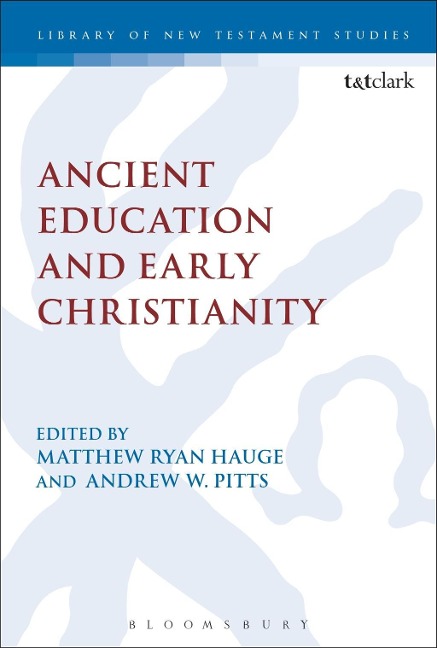
What was the relationship of ancient education to early Christianity? This volume provides an in-depth look at different approaches currently employed by scholars who draw upon educational settings in the ancient world to inform their historical research in Christian origins. The book is divided into two sections: one consisting of essays on education in the ancient world, and one consisting of exegetical studies dealing with various passages where motifs emerging from ancient educational culture provide illumination.
The chapters summarize the state of the discussion on ancient education in classical and biblical studies, examine obstacles to arriving at a comprehensive theory of early Christianity's relationship to ancient education, compare different approaches, and compile the diverse methodologies into one comparative study. Several educational motifs are integrated in order to demonstrate the exegetical insights that they may yield when utilized in New Testament historical investigation and interpretation.
Andrew W. Pitts is an Assistant Professor of Biblical Studies at Arizona Christian University, USA.
Matthew Ryan Hauge is Associate Professor of Biblical Studies at Azusa Pacific University in California, USA.
Preface
Acknowledgements
1. Introduction: Matthew Ryan Hauge & Andrew W. Pitts
Part I: Educational Contexts and Settings
2. The Torah versus Homer: Jewish and Graeco-Roman
Catherine Hezser, SOAS, University of London, UK
3. Exodus from the Cave: Moses as Platonic Educator
Craig Evan Anderson, Claremont School of Theology in California, USA
4. Observing a Teacher of Progymnasmata
Ronald F. Hock, University of Southern California, USA
5. The Seven Sages, The Delphic Canon and Ethical Education in Antiquity
James R. Harrison, Sydney College of Divinity, Australia
Part II: Early Christian Appropriations
6. Fabulous Parables: The Storytelling Tradition in the Synoptic Gospels
Matthew Ryan Hauge, Azusa Pacific University, USA
7. The Origins of Greek Mimesis, Ancient Education, and Gospel of Mark: Genre as a Potential Constraint in Assessing Markan Imitation
Andrew W. Pitts, Arizona Christian University, USA
8. Luke and Progymnasmata: Rhetorical Handbooks, Rhetorical Sophistication and Genre Selection
Sean A. Adams, University of Glasgow, UK
9. Luke's Antetextuality in Light of Ancient Rhetorical Education
Dennis R. MacDonald, Claremont School of Theology in California, USA
10. A School pf Paul? The Use of Pauline Texts in Early Christian Schooltext Papyri
Jennifer R. Strawbridge, University of Oxford, UK
11. How Did the 'Teaching' Teach? The Didache as Catechesis
William Varner, The Master's College, USA
Dieses eBook wird im PDF-Format geliefert und ist mit einem Adobe Kopierschutz (DRM) versehen. Sie können dieses eBook mit allen Geräten lesen, die das PDF-Format und den Adobe Kopierschutz (DRM) unterstützen.
Zum Beispiel mit den folgenden Geräten:
• tolino Reader
Laden Sie das eBook direkt über den Reader-Shop auf dem tolino herunter oder übertragen Sie das eBook auf Ihren tolino mit einer kostenlosen Software wie beispielsweise Adobe Digital Editions.
• Sony Reader & andere eBook Reader
Laden Sie das eBook direkt über den Reader-Shop herunter oder übertragen Sie das eBook mit der kostenlosen Software Sony READER FOR PC/Mac oder Adobe Digital Editions auf ein Standard-Lesegeräte mit epub- und Adobe DRM-Unterstützung.
• Tablets & Smartphones
Möchten Sie dieses eBook auf Ihrem Smartphone oder Tablet lesen, finden Sie hier unsere kostenlose Lese-App für iPhone/iPad und Android Smartphone/Tablets.
• PC & Mac
Lesen Sie das eBook direkt nach dem Herunterladen mit einer kostenlosen Lesesoftware, beispielsweise Adobe Digital Editions, Sony READER FOR PC/Mac oder direkt über Ihre eBook-Bibliothek in Ihrem Konto unter „Meine eBooks“ - „online lesen“.
Schalten Sie das eBook mit Ihrer persönlichen Adobe ID auf bis zu sechs Geräten gleichzeitig frei.
Bitte beachten Sie, dass die Kindle-Geräte das Format nicht unterstützen und dieses eBook somit nicht auf Kindle-Geräten lesbar ist.