Und dann auf "Zum Home-Bildschirm [+]".

Stöbern
genialokal zum Startbildschirm hinzufügen
Installieren Sie die genialokal App auf Ihrem Startbildschirm für einen schnellen Zugriff und eine komfortable Nutzung.
Installieren Sie die genialokal App auf Ihrem Startbildschirm für einen schnellen Zugriff und eine komfortable Nutzung.
Ihr gewünschter Artikel ist in 0 Buchhandlungen vorrätig - wählen Sie hier eine Buchhandlung in Ihrer Nähe aus:

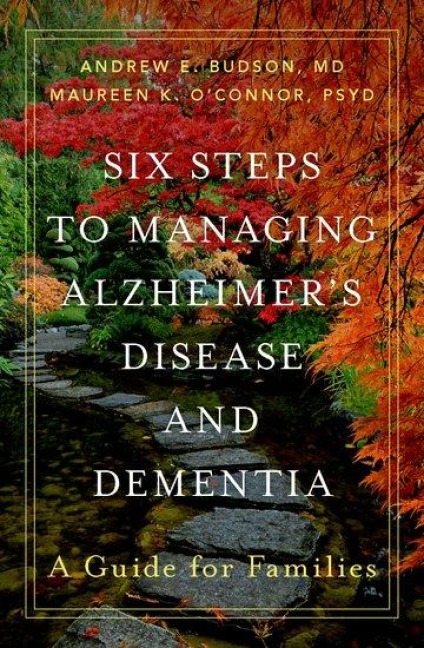
Your needs as a caregiver are just as important as those your family member with Alzheimer's Disease or dementia. This book will provide just the insight and guidance you need. Caregiving for a loved one with Alzheimer's disease or dementia is hard. It's hard whether you're caring for your spouse, parent, grandparent, sibling, other family member, or friend. Even if you had an extra ten hours each day to do it, it's hard to manage all the problems that come with dementia. And caring for a loved one with dementia can sometimes feel like a long, lonely journey. Six Steps to Managing Alzheimer's Disease and Dementia can help, addressing concerns such as: · Is the problem Alzheimer's, dementia, or something else? · How do you approach problems in dementia? · How do you manage problems with memory, language, and vision? · How do you cope with emotional and behavioral problems? · What are the best ways to manage troubles with sleep and incontinence? · Which medications can help? · Which medications can actually make things worse? · How do you build your care team? · Why is it important to care for yourself? · How do you sustain your relationship with your loved one? · How do you plan for the progression of dementia? · How do you plan for the end and beyond? Six Steps to Managing Alzheimer's Disease and Dementia is comprehensive yet written in an easy-to-read style, featuring clinical vignettes and character-based stories that provide real-life examples of how to successfully manage Alzheimer's disease and dementia.
Andrew E. Budson Chief, Cognitive & Behavioral Neurology and Associate Chief of Staff for Education, VA Boston Healthcare System Associate Director & Education Core Leader, Boston University Alzheimer's Disease Center Professor of Neurology, Boston University School of Medicine Lecturer in Neurology, Harvard Medical School Maureen K. O'Connor Edith Nourse Rogers Memorial Veterans Affairs Medical Center Department of Psychology
- Preface - Acknowledgments - Introduction - Step 1 Understand dementia - 1 What is dementia? - 2 What is Alzheimer's disease? - 3 Which other disorders cause dementia? - Step 2 Manage problems - 4 How to approach problems in dementia - 5 How to manage memory problems - 6 How to manage language problems - 7 How to manage vision problems - 8 How to manage emotional problems - 9 How to manage behavioral problems - 10 How to manage sleep problems - 11 How to manage problems with bodily functions - Step 3 Ask about medications - 12 Which medications can worsen thinking, memory, behavior, or function? - 13 Which medications can improve thinking, memory, behavior, or function? - Step 4 Build your care team - 14 Why and how should you care for yourself? - 15 How do you build your care team? - Step 5 Sustain your relationship - 16 Why is it important to sustain your relationship? - 17 What are some ways to sustain your relationship? - Step 6 Plan for the future - 18 How to plan for the progression of dementia - 19 How to plan for the end and beyond - Glossary (with additional disorders and neuroanatomy) - Further resources - About the authors - Index