Und dann auf "Zum Home-Bildschirm [+]".

Stöbern
genialokal zum Startbildschirm hinzufügen
Installieren Sie die genialokal App auf Ihrem Startbildschirm für einen schnellen Zugriff und eine komfortable Nutzung.
Installieren Sie die genialokal App auf Ihrem Startbildschirm für einen schnellen Zugriff und eine komfortable Nutzung.
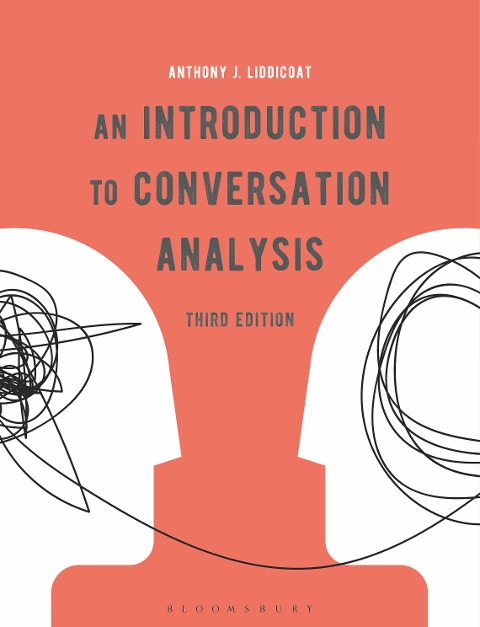
Conversation is one of the most widespread uses of human language, but what is actually happening when we interact this way? How is conversation structured? How does it function?
Answering these questions and more, An Introduction to Conversation Analysis is an essential overview of this topic for students in a wide range of disciplines including sociolinguistics, discourse analysis and sociology. This is the only book you need to learn how to do conversation analysis.
Beginning by positioning conversation analysis amongst other methodologies, this book explains the advantages before guiding you step-by-step through how to do conversation analysis and what it reveals about the ways language works in communication. Chapters introduce every aspect of conversation analysis logically and clearly, covering topics such as transcription, turn-taking, sequence organisation, repair, and storytelling.
Now fully revised and expanded to take account of recent developments, this third edition includes:
- 3 new chapters, covering action formation and epistemics, multimodality and spoken interaction, and written conversation
- New topics including online and mobile technology, cross-cultural conversation and medical discourse
- A glossary of key terms, brand new exercises and updated lists of further reading
- A fully updated companion website, featuring tutorials, audio and video files, and a range of different exercises covering turn taking, organisation and repair
Anthony J. Liddicoat is Professor of Applied Linguistics at the University of Warwick, UK.
1. Conversation and Conversation Analysis
2. Collecting Conversational Data
3. Transcribing Conversation
4. Analysing Conversational Data
5. Turn-Taking in Conversation
6. Gaps and Overlaps in Turn-Taking
7. Adjacency Pairs and Preference Organization
8. Expanding Sequences
9. Repair
10. Epistemics and Action Formation
11. Embodied Actions and the Multimodality of Spoken Interaction
12. Online Written Interaction
13. Opening Conversation
14. Closing Conversation
15. Storytelling in Conversation
16. Applying Conversation Analysis
Glossary
Transcription Conventions
References
Index
Dieses eBook wird im PDF-Format geliefert und ist mit einem Adobe Kopierschutz (DRM) versehen. Sie können dieses eBook mit allen Geräten lesen, die das PDF-Format und den Adobe Kopierschutz (DRM) unterstützen.
Zum Beispiel mit den folgenden Geräten:
• tolino Reader
Laden Sie das eBook direkt über den Reader-Shop auf dem tolino herunter oder übertragen Sie das eBook auf Ihren tolino mit einer kostenlosen Software wie beispielsweise Adobe Digital Editions.
• Sony Reader & andere eBook Reader
Laden Sie das eBook direkt über den Reader-Shop herunter oder übertragen Sie das eBook mit der kostenlosen Software Sony READER FOR PC/Mac oder Adobe Digital Editions auf ein Standard-Lesegeräte mit epub- und Adobe DRM-Unterstützung.
• Tablets & Smartphones
Möchten Sie dieses eBook auf Ihrem Smartphone oder Tablet lesen, finden Sie hier unsere kostenlose Lese-App für iPhone/iPad und Android Smartphone/Tablets.
• PC & Mac
Lesen Sie das eBook direkt nach dem Herunterladen mit einer kostenlosen Lesesoftware, beispielsweise Adobe Digital Editions, Sony READER FOR PC/Mac oder direkt über Ihre eBook-Bibliothek in Ihrem Konto unter „Meine eBooks“ - „online lesen“.
Schalten Sie das eBook mit Ihrer persönlichen Adobe ID auf bis zu sechs Geräten gleichzeitig frei.
Bitte beachten Sie, dass die Kindle-Geräte das Format nicht unterstützen und dieses eBook somit nicht auf Kindle-Geräten lesbar ist.