Und dann auf "Zum Home-Bildschirm [+]".

Stöbern
genialokal zum Startbildschirm hinzufügen
Installieren Sie die genialokal App auf Ihrem Startbildschirm für einen schnellen Zugriff und eine komfortable Nutzung.
Installieren Sie die genialokal App auf Ihrem Startbildschirm für einen schnellen Zugriff und eine komfortable Nutzung.
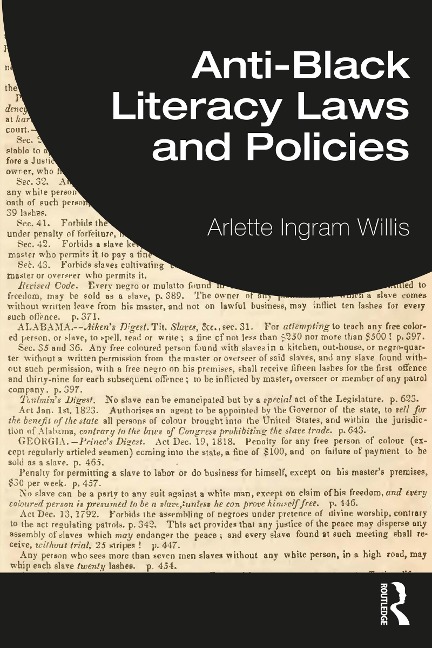
A COUNTERNARRATIVE This groundbreaking book uncovers how anti-Black racism has informed and perpetuated anti-literacy laws, policies, and customs from the colonial period to the present day. As a counternarrative of the history of Black literacy in the United States, the book's historical lens reveals the interlocking political and social structures that have repeatedly failed to support equity in literacy for Black students. Arlette Ingram Willis walks readers through the impact of anti-Black racism's impact on literacy education by identifying and documenting the unacknowledged history of Black literacy education, one that is inextricably bound up with a history of White supremacy. Willis analyzes, exposes, illuminates, and interrogates incontrovertible historical evidence of the social, political, and legal efforts to deny equal literacy access. The chapters cover an in-depth evolution of the role of White supremacy and the harm it causes in forestalling Black readers' progress; a critical examination of empirical research and underlying ideological assumptions that resulted in limiting literacy access; and a review of federal and state documents that restricted reading access for Black people. Willis interweaves historical vignettes throughout the text as antidotes to whitewashing the history of literacy among Black people in the United States and offers recommendations on ways forward to dismantle racist reading research and laws. By centering the narrative on the experiences of Black people in the United States, Willis shifts the conversation and provides an uncompromising focus on not only the historical impact of such laws and policies but also their connections to present-day laws and policies. A definitive history of the instructional and legal structures that have harmed generations of Black people, this text is essential for scholars, students, and policymakers in literacy education, reading research, history of education, and social justice education.
Arlette Ingram Willis is Professor of Language and Literacy in the Department of Curriculum and Instruction at the University of Illinois Urbana-Champaign, USA.
1. A Brief History: Anti-Black Racism and Anti-Black Literacy in Federal and State Laws 2. An Overview of the History of Reading Research, 1800-1999 3.The Politicization of Reading and Reading Research, 2000-2022 4. Like Lambs to the Slaughter: Grade Retention Research, Reading Retention Research, and State Reading Retention Laws 5. Reading Research Barriers to Black Students' Reading Performance 6. Fault lines: Florida's Anti-Black Literacy Laws 7. Linking the Past to the Present Anti-Black Racism and Anti-Black Literacy Afterword
Dieses eBook wird im PDF-Format geliefert und ist mit einem Adobe Kopierschutz (DRM) versehen. Sie können dieses eBook mit allen Geräten lesen, die das PDF-Format und den Adobe Kopierschutz (DRM) unterstützen.
Zum Beispiel mit den folgenden Geräten:
• tolino Reader
Laden Sie das eBook direkt über den Reader-Shop auf dem tolino herunter oder übertragen Sie das eBook auf Ihren tolino mit einer kostenlosen Software wie beispielsweise Adobe Digital Editions.
• Sony Reader & andere eBook Reader
Laden Sie das eBook direkt über den Reader-Shop herunter oder übertragen Sie das eBook mit der kostenlosen Software Sony READER FOR PC/Mac oder Adobe Digital Editions auf ein Standard-Lesegeräte mit epub- und Adobe DRM-Unterstützung.
• Tablets & Smartphones
Möchten Sie dieses eBook auf Ihrem Smartphone oder Tablet lesen, finden Sie hier unsere kostenlose Lese-App für iPhone/iPad und Android Smartphone/Tablets.
• PC & Mac
Lesen Sie das eBook direkt nach dem Herunterladen mit einer kostenlosen Lesesoftware, beispielsweise Adobe Digital Editions, Sony READER FOR PC/Mac oder direkt über Ihre eBook-Bibliothek in Ihrem Konto unter „Meine eBooks“ - „online lesen“.
Schalten Sie das eBook mit Ihrer persönlichen Adobe ID auf bis zu sechs Geräten gleichzeitig frei.
Bitte beachten Sie, dass die Kindle-Geräte das Format nicht unterstützen und dieses eBook somit nicht auf Kindle-Geräten lesbar ist.