Und dann auf "Zum Home-Bildschirm [+]".

Stöbern
genialokal zum Startbildschirm hinzufügen
Installieren Sie die genialokal App auf Ihrem Startbildschirm für einen schnellen Zugriff und eine komfortable Nutzung.
Installieren Sie die genialokal App auf Ihrem Startbildschirm für einen schnellen Zugriff und eine komfortable Nutzung.
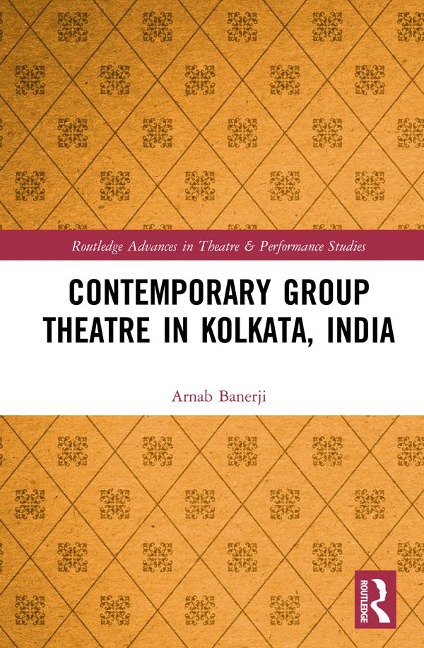
This book is the first of its kind offering a materialistic semiotic analysis of a non-Western theatre culture: Bengali group theatre. Arnab Banerji fills two lacunas in contemporary theatre scholarship. First, the materialist semiotic approach to studying a non-Western theatre event allows Banerji to critically examine the material conditions in which theatre is created and seen outside the Euro-American context. And second, by shifting the critical lens onto a contemporary urban theatre phenomenon from India, the book attempts to even out the scholastic imbalance in Indian theatre scholarship which has largely focused on folk and classical traditions. The book shows a refreshing new perspective toward a theatre culture that frequently escapes the critical lens in spite of being one of the largest urban theatre cultures in the world. Theatre events are a sum total of the conditions in which they are built and the conditions in which they are viewed. Studying the event separate from its materialistic beginnings and semiotic effects allow only a partial insight into the performance phenomenon. The materialist semiotic critical framework of this book locates the Bengali group theatre within its performative context and offers a heretofore unexplored insight into this vibrant theatre culture.
Arnab Banerji is Assistant Professor of Theatre History and Dramatic Literature at Loyola Marymount University, Los Angeles. Arnab's essays and reviews have been published in Theatre Journal, Theatre Topics, Asian Theatre Journal, TDR, BOOM California, Ecumenica, Theatre Symposium, Sanglap, Cerebration, SERAS, and Virginia Review of Asian Studies. His current research is in performances by the Indian diaspora, translations of Indian vernacular plays, and contemporary Bengali theatre. Arnab is married and lives with his partner Sayantika in Los Angeles. When he is not doing academic stuff, Arnab enjoys drinking specialty coffee, looking up restaurants around town, binge-watching The Office, and browsing through graphic novels.
Setting the stage: an introduction Part 1: The city and its theatre 1. The city of Kolkata 2. The evolution of Bengali group theatre Part II: The material conditions of Bengali group theatre 3. Can you train to be a laborer: training in and for Bengali group theatre 4. No space to call home 5. In the corridors of Shastri Bhavan: funding theatre in Kolkata 6. From the page to the stage: organization and rehearsal in Bengali group theatre Part III: Case studies 7. Rang-Roop: good ol' Bengali group theatre 8. Revolution through play: the theatre of Theatre Formation Paribartak The materialist semiotics of Bengali group theatre: some concluding thoughts
Dieses eBook wird im PDF-Format geliefert und ist mit einem Adobe Kopierschutz (DRM) versehen. Sie können dieses eBook mit allen Geräten lesen, die das PDF-Format und den Adobe Kopierschutz (DRM) unterstützen.
Zum Beispiel mit den folgenden Geräten:
• tolino Reader
Laden Sie das eBook direkt über den Reader-Shop auf dem tolino herunter oder übertragen Sie das eBook auf Ihren tolino mit einer kostenlosen Software wie beispielsweise Adobe Digital Editions.
• Sony Reader & andere eBook Reader
Laden Sie das eBook direkt über den Reader-Shop herunter oder übertragen Sie das eBook mit der kostenlosen Software Sony READER FOR PC/Mac oder Adobe Digital Editions auf ein Standard-Lesegeräte mit epub- und Adobe DRM-Unterstützung.
• Tablets & Smartphones
Möchten Sie dieses eBook auf Ihrem Smartphone oder Tablet lesen, finden Sie hier unsere kostenlose Lese-App für iPhone/iPad und Android Smartphone/Tablets.
• PC & Mac
Lesen Sie das eBook direkt nach dem Herunterladen mit einer kostenlosen Lesesoftware, beispielsweise Adobe Digital Editions, Sony READER FOR PC/Mac oder direkt über Ihre eBook-Bibliothek in Ihrem Konto unter „Meine eBooks“ - „online lesen“.
Schalten Sie das eBook mit Ihrer persönlichen Adobe ID auf bis zu sechs Geräten gleichzeitig frei.
Bitte beachten Sie, dass die Kindle-Geräte das Format nicht unterstützen und dieses eBook somit nicht auf Kindle-Geräten lesbar ist.