Und dann auf "Zum Home-Bildschirm [+]".

Stöbern
genialokal zum Startbildschirm hinzufügen
Installieren Sie die genialokal App auf Ihrem Startbildschirm für einen schnellen Zugriff und eine komfortable Nutzung.
Installieren Sie die genialokal App auf Ihrem Startbildschirm für einen schnellen Zugriff und eine komfortable Nutzung.
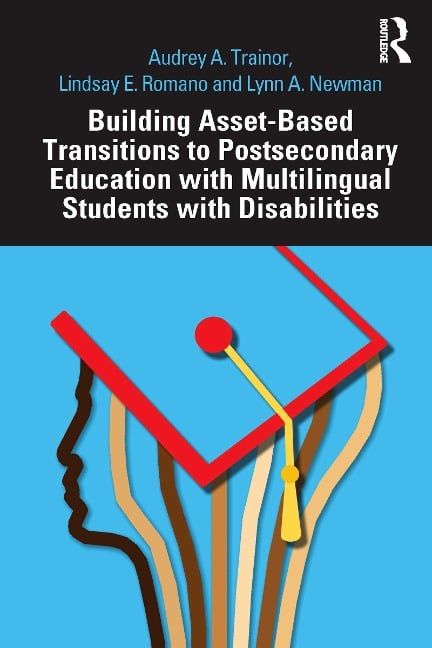
This important volume presents the results from a five-year, mixed methods study on the transition from high school to postsecondary education for young adults who, during secondary school, received both English learner and special education services. It aims to improve our understanding of, and thus the supportive service provisions for, the dually identified student population in secondary and higher education settings. The book explores dually identified students' complex and intersectional experiences, strengths, and needs using multiple methods of inquiry, including the examination of educational transition-focused policies and practices, a comprehensive review of research results, case studies, and comparative analysis of key stakeholder perspectives for this student population. With a focus on equitable, culturally sustaining transition research and practice, the book informs graduate students, researchers, and teacher educators about how to mitigate the effects of historical marginalization, increasing our collective understanding of intersectional experiences and how they shape young adults' choices as they leave high school and move into young adulthood.
Audrey A. Trainor, PhD, professor of special education, teaches qualitative research methods and special education teacher preparation courses. After an early career as a high school special educator, she focused her research on equity and special education transition policies, procedures, practices, and perspectives. Lindsay E. Romano, MS, is a former high school special education teacher and current doctoral candidate at New York University. Her research aims to disrupt inequities at the intersections of racism, ableism, and linguicism, studying how teachers perpetuate/disrupt inequities and how mindfulness-based practices can advance social justice in classrooms. Lynn A. Newman, EdD, Principal Education Researcher at SRI International, has more than 30 years of research experience focused on improving access and opportunity for students and young adults with disabilities through identifying the high school and postsecondary experiences linked to positive outcomes for all individuals with disabilities.
Data Availability Statements Disclaimer Acknowledgements Introduction 1) Chapter 1: Our Five-Year, Mixed Methods Study of Dually Identified Students: Research Direction, Design, and Decisions a) Situating the Study i) A Brief History of Special and Bilingual/EL Education Research and Policy ii) Background on Special and EL Education b) Our Multiyear Mixed Methods Study i) Mixed Methods Study: Quantitative Research Component ii) Mixed Methods Study: Qualitative Research Component (1) Implementing Qualitative Research in Times of Duress (2) Recruitment, Data Collection, and Data Analysis c) Limitations and Implications d) Researcher Reflections e) Discussion Questions f) Suggestions for Further Reading 2) Chapter 2: Navigating Multiple Service Systems: How College and Career Ready Are Dually Identified High School Students? a) The Expected Paths to Adulthood b) The Role of College and Career Readiness in Postschool Transitions i) Expectations ii) Secondary Education Experiences (1) Employment (2) High School Curricula (3) Instructional Classroom Contexts iii) Access to Postsecondary Education c) Methodological and Theoretical Considerations d) Study Results i) The National Sample ii) The NYC Sample (1) Classroom Contexts (2) Stakeholders' Perceptions of Contexts (3) Preparedness and Outcomes e) Limitations and Implications i) Implications for Research ii) Implications for Practice f) Researcher Reflections g) Discussion Questions h) Suggestions for Further Reading 3) Chapter 3: Looking Through the Lenses of Identity Theories: How Do Students Navigate the Affordances and Liabilities of Labeling? a) The Roles of Language and Learner Identities in Postsecondary Transition b) The Multidimensionality and Fluidity of Multilingual Learners i) Vulnerability and Protection Associated with Perceptions and Attitudes ii) Vulnerability and Protection Associated with Systems and Structures c) Methodological and Theoretical Considerations i) Data Collection and Analysis ii) Theoretical Anchors d) Study Results i) Protective Factors Associated with Learning Multiple Languages ii) Vulnerabilities Linked to Ambivalence and Resource Availability iii) Protection and Vulnerability Associated with Moving Forward iv) A Broader View of Vulnerabilities and Protective Intersectional Factors e) Limitations and Implications f) Researcher Reflections g) Discussion Questions h) Suggestions for Further Reading 4) Chapter 4: School-Home Collaborations: Navigating Distance and Finding Common Ground a) The Promise of School-Home Connections in Transition Planning b) The Role of Teachers in Building Home-School Collaborations c) School-Home Collaborations for Dually Identified Youth i) Extended Family and Siblings ii) Self-determination iii) Community Cultural Wealth d) Methodological and Theoretical Considerations e) Study Results i) Conflicting Interests ii) Language Learning iii) Siblings and Extended Family iv) Developing Self-Determination f) Limitations and Implications g) Researcher Reflections h) Discussion Questions i) Suggestions for Further Reading 5) Chapter 5: Being Supported and Belonging in Postsecondary Education: The Availability of Disability- and EL-Focused Resources a) The Challenge of Postsecondary Education b) Transition to Postsecondary Education i) Examining Preparedness and Enrollment ii) Examining Engagement and Degree Completion iii) Understanding the Amplified Role of Cost c) Methodological and Theoretical Considerations i) Sample and Recruitment ii) Data Collection and Analysis d) Study Results i) Identifying and Seeking Services and Supports ii) ODAS Supports for Sustaining Engagement iii) Lingering Stigma Associated with Identification iv) Faculty as Gatekeepers e) Limitations and Implications i) Implications for Research ii) Implications for Practice f) Researcher Reflections g) Discussion Questions h) Suggestions for Further Reading Conclusion References Index
Dieses eBook wird im PDF-Format geliefert und ist mit einem Adobe Kopierschutz (DRM) versehen. Sie können dieses eBook mit allen Geräten lesen, die das PDF-Format und den Adobe Kopierschutz (DRM) unterstützen.
Zum Beispiel mit den folgenden Geräten:
• tolino Reader
Laden Sie das eBook direkt über den Reader-Shop auf dem tolino herunter oder übertragen Sie das eBook auf Ihren tolino mit einer kostenlosen Software wie beispielsweise Adobe Digital Editions.
• Sony Reader & andere eBook Reader
Laden Sie das eBook direkt über den Reader-Shop herunter oder übertragen Sie das eBook mit der kostenlosen Software Sony READER FOR PC/Mac oder Adobe Digital Editions auf ein Standard-Lesegeräte mit epub- und Adobe DRM-Unterstützung.
• Tablets & Smartphones
Möchten Sie dieses eBook auf Ihrem Smartphone oder Tablet lesen, finden Sie hier unsere kostenlose Lese-App für iPhone/iPad und Android Smartphone/Tablets.
• PC & Mac
Lesen Sie das eBook direkt nach dem Herunterladen mit einer kostenlosen Lesesoftware, beispielsweise Adobe Digital Editions, Sony READER FOR PC/Mac oder direkt über Ihre eBook-Bibliothek in Ihrem Konto unter „Meine eBooks“ - „online lesen“.
Schalten Sie das eBook mit Ihrer persönlichen Adobe ID auf bis zu sechs Geräten gleichzeitig frei.
Bitte beachten Sie, dass die Kindle-Geräte das Format nicht unterstützen und dieses eBook somit nicht auf Kindle-Geräten lesbar ist.