Und dann auf "Zum Home-Bildschirm [+]".

Stöbern
genialokal zum Startbildschirm hinzufügen
Installieren Sie die genialokal App auf Ihrem Startbildschirm für einen schnellen Zugriff und eine komfortable Nutzung.
Installieren Sie die genialokal App auf Ihrem Startbildschirm für einen schnellen Zugriff und eine komfortable Nutzung.
Ihr gewünschter Artikel ist in 0 Buchhandlungen vorrätig - wählen Sie hier eine Buchhandlung in Ihrer Nähe aus:

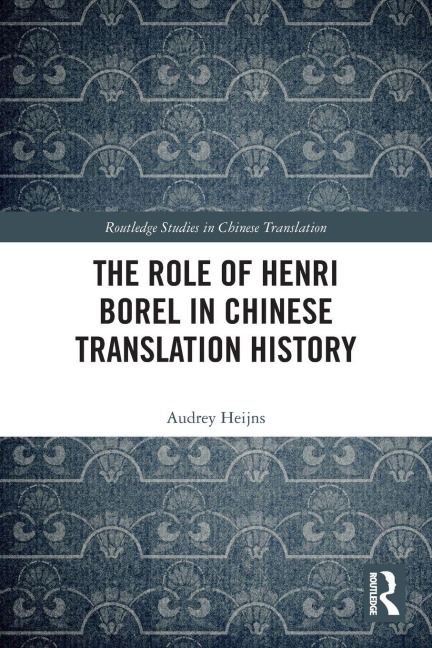
With the focus on Dutch translator Henri Borel (1869-1933), this study investigates different aspects of the role of translator. Advice is offered to those now involved in the promotion and translation of Chinese culture and literature. It will make an important contribution to the burgeoning history of Chinese translation.
Audrey Heijns received her Ph.D. from Leiden University and is currently an Assistant Professor in the School of Foreign Languages, Shenzhen University. Her research interests include the history of early Dutch sinologists and nineteenth-century Chinese bilingual dictionaries. Her articles have been published in academic journals including Perspectives, Translation and Interpreting Studies and International Journal for Lexicography. She also translates Chinese literature into Dutch and English and is the editor of the online database Verretaal Chinese Literature in Dutch Translation.
List of figures vii Acknowledgements ix Conventions xi Introduction 1 Biographical note 5 Biographical timeline 6 PART I Chinese translation history 13 1 Chinese literature in the west 15 1.1 Up to 1700 17 1.2 The eighteenth century 19 1.3 The nineteenth century 20 1.4 Conclusion 25 2 Prominent historical translators in Europe 27 2.1 Missionaries 28 2.2 Merchants and diplomats 29 2.3 Scholars 30 2.4 Conclusion 34 PART II The translator as cultural mediator 37 3 A translator of philosophy 39 3.1 Educative and inspiring: Confucius and Laozi 40 3.2 The Chinese way: The Spirit of China 50 3.3 Undoing old prejudices: the Mencius 59 3.4 Conclusion 64 Contents vi Contents 4 A translator of literature 68 4.1 Foreignizing Wonders Old and New 69 4.2 Sinicizing Strange Stories from the Liaozhai 80 4.3 Conclusion 88 PART III The translator as creator 93 5 The travel writer 94 5.1 Self versus other: Wisdom and Beauty from China 95 5.2 A poetic vision: Daybreak in the East 99 5.3 Idealizing China: The Beautiful Island 112 5.4 Conclusion 117 6 The writer-translator 121 6.1 Negotiating between cultures: "Kwan Yin" and "Chinese Hell" 121 6.2 Rewriting Daoist stories: Of Life and Death 129 6.3 Conclusion 134 PART IV The translator as communicator 137 7 The diplomat 138 7.1 The role of a Chinese interpreter 138 7.2 Issues of belonging: Wisdom and Beauty from the Indies 151 7.3 Conclusion 155 8 The expert 158 8.1 Expertise and research 158 8.2 Expertise and poethood 161 8.3 Expertise and sinology 165 8.4 Conclusion 170 Conclusion 173 Epilogue 179 Bibliography 183 Index 201