Und dann auf "Zum Home-Bildschirm [+]".

Stöbern
genialokal zum Startbildschirm hinzufügen
Installieren Sie die genialokal App auf Ihrem Startbildschirm für einen schnellen Zugriff und eine komfortable Nutzung.
Installieren Sie die genialokal App auf Ihrem Startbildschirm für einen schnellen Zugriff und eine komfortable Nutzung.
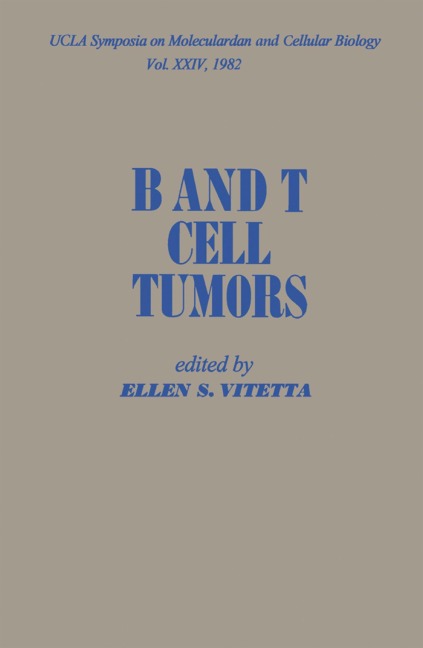
B and T Cell Tumors documents the proceedings of the 1982 International Conference on ""B and T Cell Tumors: Biological and Clinical Aspects"" held in Squaw Valley, California. The meeting was one of the conferences of the 1982 UCLA Symposia on Molecular and Cellular Biology series. This book is organized into six parts encompassing 79 chapters. Considerable chapters tackle the origin and classification of tumors; normal clones of T and B cells; differentiation of T and B cell tumors; regulation of tumor growth and tumor therapy. Each topic is discussed based on the results obtained in human and animal models in the laboratory. Other chapters explore lymphoid neoplasms and the enormous progress made in applying the technologies of monoclonal antibodies, cell cloning/long-term culture, and genetic analysis to questions concerning lymphoid tumors. The remaining chapters consider the malignant lymphoid cell as a model for growth and regulation, and the insights emerging from these studies, which are being applied to the development of new modalities for therapy and diagnosis. This book will be of value to scientists and clinicians who are interested in the mechanism of B and T cell tumorigenesis.
ContributorsPrefaceI. Origin and Classification of Tumors 1. Cell Lineages in Human Myeloproliferative Disorders 2. Morphology, Cytochemistry, and Immunohistology of T-Cell Lymphomas 3. Murine Hematopoietic Cell Tumors: Models for Analysis of Cellular Differentiation 4. The Relative Clinical Value of the Various Classifications of Human Non-Hodgkin's Lymphomas 5. Characterization of Large Granular Lymphocyte (LGL) Tumors in the Rat 6. Differences in the Cell-Surface Phenotype of Normal and Leukemic Pre-B Cells 7. Diversity of Phenotypes of Non-Hodgkin's Malignant Lymphoma 8. On the Complexity of the B-Cell System as Assessed by Studies on Human B-Cell Lymphomas 9. Flow Cytometry: A New Approach toward Characterizing Lymphomas 10. Intermediate Filaments of Normal and Malignant Human Lymphoid Cells as Studied with Human Monoclonal IgM with Antibody Activity ll. A Monoclonal Antibody Directed against a Human  Lymphoid Cell Activation Antigen 12. Hypothesis: Follicular Lymphomas-Are They Benign Tumors of the Lymphoid SystemII. T and B Cell Clones: Characterization and Regulation of Growth 13. Functional Studies of Immune Response Utilizing Murine T Cell Clones 14. Aspects of Alloreactivity: Lymphokine Release from Alloreactive T Cell Clones in Long-Term Culture 15. Cytolytic Hybrids between Murine CTL-Lines and Mouse or Rat Thymomas 16. Differential Activation and Specificity of Individual Human T-Cell Subpopulations 17. A Multipotential Hematopoietic Cell Line 18. Analysis of Helper Requirements for the Differentiation of Cytotoxic T-Cell Precursors 19. Different Effectors and Effector-Mechanisms Are Involved in the Natural Cell-Mediated Lysis of Lymphoid and Fibroblast Targets 20. TRF-Responsive B Cells Constitute a Subpopulation Distinct from the Other B Cell Subpopulation 21. Cloned Murine Cell Lines with NK Cell Characteristics 22. Concanavalin A (Con A) Receptors on the Cytotoxic T Lymphocyte (CTL) Surface are Involved in Cytolytic Activity 23. Plaque Formation by a Cell Colonies Growing in Soft Agar 24. Monoclonal Antibodies Against Human B Cells 25. Is LYB 2, a B-Lymphocyte Surface Antigen, a Target for a T Cell-Derived Factor 26. Identification of Human B Cell Growth Factor 27. Regulation Of B Lymphocyte Growth III. Genetic Studies 28. Biological Properties of Class I MHC Molecules Expressed after DNA-Mediated Gene Transfer 29. The Isolation of B and T Cell-Specific Genes 30. Preliminary Evidence of an Association between an Activated Cellular Transforming Gene and a Tumor-Specific Transplantation Antigen 31. Chromosomal Abnormalities in Non-Hodgkin's Malignant Lymphoma 32. Immunogenetic Properties of Tumor Metastases IV. Regulation of Tumor Growth and Immunity 33. Stimulation of Phagocytosis by a T Cell Lymphoma-Derived Lymphokine 34. A Molecular Complex, Detected by Monoclonal Antibodies on the Surface of Normal T Cells and Lymphoblastic Leukemia Cells, Regulates IL-2 Production and Cell Proliferation 35. Augmentation of Tumor-Specific Immunity by T-T Cell Interaction and its Application to Tumor Metastasis Inhibition 36. Antibody Directed at T Lymphocyte Differentiation Antigens Inhibits T Leukemia Proliferation in Vivo and in Vitro 37. Distinct Populations of SRBC-Immune Suppressor Cells Control B Cell Clone Growth and Secretory Differentiation 38. Reversal by T Cell Growth Factor of Viral Inhibition of Lymphocyte Mitogenesis 39. Lymphoid Immaturity and T Subpopulation Imbalances in Human Disease 40. Purification of a Soluble Immunoregulatory Substance Released by Plasmacytoma Cells 41. Accessory Cell Restrictions on in Vitro Growth of a T Cell Lymphoma: Residual Antigen Recognition Related to the Lymphomagenic Process 42. In Vitro Invasion of Lymphomas with Different Metastatic Capacity 43.