Und dann auf "Zum Home-Bildschirm [+]".

Stöbern
genialokal zum Startbildschirm hinzufügen
Installieren Sie die genialokal App auf Ihrem Startbildschirm für einen schnellen Zugriff und eine komfortable Nutzung.
Installieren Sie die genialokal App auf Ihrem Startbildschirm für einen schnellen Zugriff und eine komfortable Nutzung.
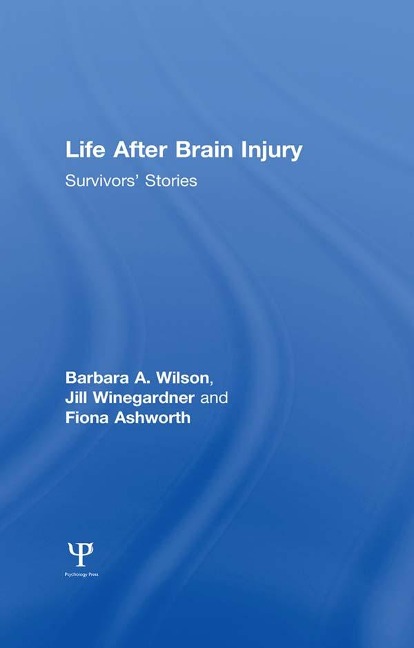
This is the first book of its kind to include the personal accounts of people who have survived injury to the brain, along with professional therapists' reports of their progress through rehabilitation. The paintings and stories of survivors combine with experts' discussions of the theory and practice of brain injury rehabilitation to illustrate the ups and downs that survivors encounter in their journey from pre-injury status to insult and post-injury rehabilitation. Wilson, Winegardner and Ashworth's focus on the survivors' perspective shows how rehabilitation is an interactive process between people with brain injury, health care staff, and others, and gives the survivors the chance to tell their own stories of life before their injury, the nature of the insult, their early treatment, and subsequent rehabilitation. Presenting practical approaches to help survivors of brain injury achieve functionally relevant and meaningful goals, Life After Brain Injury: Survivors' Stories will help all those working in rehabilitation understand the principles involved in holistic brain injury rehabilitation and how these principles, combined with theory and models, translate into clinical practice. This book will be of great interest to anyone who wishes to extend their knowledge of the latest theories and practices involved in making life more manageable for people who have suffered damage to the brain. Life After Brain Injury: Survivors' Stories will also be essential for clinical psychologists, neuropsychologists, and anybody dealing with acquired brain injury whether they be a survivor of a brain injury themselves, a relative, a friend or a carer.
Barbara A. Wilson is a neuropsychologist and founder of the Oliver Zangwill Centre for Neuropsychological Rehabilitation in Ely, UK. She has worked in brain injury rehabilitation for over 35 years and has published 18 books, 270 journal articles and chapters and 8 neuropsychological tests. Among her many awards she has an OBE and two lifetime achievement awards. She is the editor of the journal Neuropsychological Rehabilitation and has a rehabilitation centre in Ecuador named after her. Jill Winegardner is a clinical neuropsychologist with 30 years' experience in brain injury assessment and rehabilitation. She has worked in a range of settings including acute inpatient, acute and post-acute rehabilitation, residential rehabilitation and outpatient care. She is currently lead clinical psychologist at the Oliver Zangwill Centre for Neuropsychological Rehabilitation. Her clinical and research interests include neuropsychological assessment and rehabilitation and programme design and evaluation. Fiona Ashworth is a clinical psychologist with over ten years' experience in working with people with acquired brain injury. Since completing her doctorate in clinical psychology at the University of Oxford, she has worked for five years at the Oliver Zangwill Centre for neuropsychological rehabilitation. She is currently a senior lecturer in psychology at Anglia Ruskin University. Fiona also continues to work as a clinical psychologist at the Evelyn Community Head Injury Service, a project developed by the Oliver Zangwill Centre.
Foreword. Preface. Acknowledgements. Introduction Tim's Story: A seemingly mild injury just waiting to be understood. Natalie's Story: The phoenix rising from the ashes. Eliot's Story: Rehabilitation through golf and family. Kate's Story: Recovery takes time, so don't give up. Jose David's Story: From medical student to medical anthropologist. Tracey's Story: Quality of life with Locked-In Syndrome. James's Story: Returning from the 'dark side'. Claire's Story: A face is not a person. Jason's Story: Putting a spanner in the works. Christine's Story: One day I woke up and there I was! Adrian's Story: Dealing with potholes on the road to recovery. Lorraine's Story: I just want to be able to look after the bairns. Mark's Story: The 1000 foot fall guy. Vicky's Story: Lifting the stone eggs from my heart. Robert's Story: Understanding is key to invisible injuries. Alex's Story: Calming the drama and sticking with life. Karen's Story: Putting the pieces back together again. Concluding Remarks. References.
Dieses eBook wird im PDF-Format geliefert und ist mit einem Adobe Kopierschutz (DRM) versehen. Sie können dieses eBook mit allen Geräten lesen, die das PDF-Format und den Adobe Kopierschutz (DRM) unterstützen.
Zum Beispiel mit den folgenden Geräten:
• tolino Reader
Laden Sie das eBook direkt über den Reader-Shop auf dem tolino herunter oder übertragen Sie das eBook auf Ihren tolino mit einer kostenlosen Software wie beispielsweise Adobe Digital Editions.
• Sony Reader & andere eBook Reader
Laden Sie das eBook direkt über den Reader-Shop herunter oder übertragen Sie das eBook mit der kostenlosen Software Sony READER FOR PC/Mac oder Adobe Digital Editions auf ein Standard-Lesegeräte mit epub- und Adobe DRM-Unterstützung.
• Tablets & Smartphones
Möchten Sie dieses eBook auf Ihrem Smartphone oder Tablet lesen, finden Sie hier unsere kostenlose Lese-App für iPhone/iPad und Android Smartphone/Tablets.
• PC & Mac
Lesen Sie das eBook direkt nach dem Herunterladen mit einer kostenlosen Lesesoftware, beispielsweise Adobe Digital Editions, Sony READER FOR PC/Mac oder direkt über Ihre eBook-Bibliothek in Ihrem Konto unter „Meine eBooks“ - „online lesen“.
Schalten Sie das eBook mit Ihrer persönlichen Adobe ID auf bis zu sechs Geräten gleichzeitig frei.
Bitte beachten Sie, dass die Kindle-Geräte das Format nicht unterstützen und dieses eBook somit nicht auf Kindle-Geräten lesbar ist.