Und dann auf "Zum Home-Bildschirm [+]".

Stöbern
genialokal zum Startbildschirm hinzufügen
Installieren Sie die genialokal App auf Ihrem Startbildschirm für einen schnellen Zugriff und eine komfortable Nutzung.
Installieren Sie die genialokal App auf Ihrem Startbildschirm für einen schnellen Zugriff und eine komfortable Nutzung.


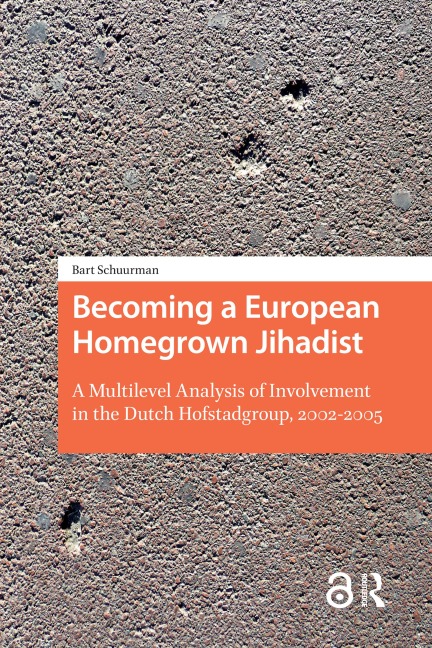
How and why do people become involved in European homegrown jihadism? This book addresses this question through an in-depth study of the Dutch Hofstadgroup, infamous for containing the murderer of filmmaker Theo van Gogh, who was killed in November 2004 in Amsterdam, and for plotting numerous other terrorist attacks. The Hofstadgroup offers a window into the broader phenomenon of homegrown jihadism that arose in Europe in 2004 and is still with us today. Utilizing interviews with former Hofstadgroup participants and the extensive police files on the group, Becoming a European Homegrown Jihadist overcomes the scarcity of high-quality data that has hampered the study of terrorism for decades. The book advances a multicausal and multilevel understanding of involvement in European homegrown jihadism that is critical of the currently prevalent 'radicalization'-based explanatory frameworks. It stresses that the factors that initiate involvement are separate from those that sustain it, which in turn are again likely to differ from those that bring some individuals to actual acts of terrorism. This is a key resource for scholars of terrorism and all those interested in understanding the pathways that can lead to involvement in European homegrown jihadism.
Dr. Bart Schuurman is an Assistant Professor at Leiden University's Institute of Security and Global Affairs (ISGA), based in The Hague.
Acknowledgments, Abbreviations 1. Introduction 1.1 The Hofstadgroup - Islamist terrorism in the Netherlands 1.2 Studying involvement in European homegrown jihadism 1.3 Existing literature on the Hofstadgroup 1.3.1 Journalistic accounts of the Hofstadgroup 1.3.2 Primary-sources based academic research on the Hofstadgroup 1.3.3 Secondary-sources based academic research on the Hofstadgroup 1.3.4 Insights by proxy 1.3.5 Research on the Hofstadgroup by government agencies 1.4 Claim to originality 1.5 Research questions 1.6 Research method 1.7 Sources of information 1.7.1 Using police files to study terrorism 1.7.2 Using interviews to study terrorism 1.8 Ethical guidelines 1.9 A note on terminology 1.10 Outline 2. Studying involvement in terrorism 2.1 Introduction 2.2 Issues in terrorism research 2.2.1 An overreliance on secondary sources 2.3 Making sense of involvement in terrorism 2.3.1 Structural-level explanations for involvement in terrorism 2.3.2 Group-level explanations for involvement in terrorism 2.3.3 Individual-level explanations for involvement in terrorism 2.3.4 Interrelated perspectives 2.4 Limitations 2.5 A definitional debate 2.5.1 Terrorism 2.5.2 Radicalism and extremism 2.5.3 Jihad & homegrown jihadism 2.6 Conclusion 3. A history of the Hofstadgroup 3.1 Introduction 3.2 The emergence of homegrown jihadism in the Netherlands 3.3 2002: The Hofstadgroup's initial formation 3.4 2003: Would-be foreign fighters and international connections 3.5 2004: Individualistic plots and the murder of Theo van Gogh 3.5.1 Towards the murder of Theo van Gogh 3.5.2 Violent resistance to arrest 3.6 2005: From 'Hofstad' to 'Piranha' 3.6.1 Spring and summer 2005: renewed signs of terrorist intentions 3.6.2 The second and third potential plots come to light 3.7 An overview of the court cases 3.8 Conclusion 4. The ideological and organizational nature of the Hofstadgroup 4.1 Introduction 4.1.1 Drawing the Hofstadgroup's boundaries 4.2 Homegrown jihadism 4.2.1 The Hofstadgroup's homegrown aspects 4.3 Ideology and terrorism 4.3.1 The Hofstadgroup's ideology 4.4 Defining terrorist organizations 4.4.1 The Hofstadgroup's organizational structure 4.5 Group involvement in terrorism? 4.6 Conclusion 5. Structural-level factors: facilitating and motivating involvement 5.1 Introduction 5.1.1 Structural-level factors influencing involvement in terrorism 5.2 Preconditions: providing opportunities for terrorism 5.2.1 The Internet 5.2.2.1 The Internet and the Hofstadgroup 5.2.2 Popular support for terrorism 5.2.2.1 Popular support for the Hofstadgroup 5.2.3 External assistance 5.2.3.1 The Hofstadgroup's external connections 5.2.4 Social or cultural facilitation of violence 5.2.4.1 Social facilitation for violence and the Hofstadgroup 5.2.5 Ineffective counterterrorism 5.2.5.1 Counterterrorism lapses as enablers of the Hofstadgroup 5.2.6 Political opportunity structure 5.2.6.1 Political opportunity structure and the Hofstadgroup 5.3 Preconditions: providing motives for terrorism 5.3.1 (Relative) deprivation and intergroup inequality 5.3.1.1 Relative deprivation and the Hofstadgroup 5.3.2 Political grievances 5.3.2.1 Political grievances among Hofstadgroup participants 5.3.3 A clash of value systems? 5.3.3.1 The Hofstadgroup as a clash of value systems 5.4 Structural-level precipitants: Submission, part 1 5.5 Conclusion
Dieses eBook wird im PDF-Format geliefert und ist mit einem Adobe Kopierschutz (DRM) versehen. Sie können dieses eBook mit allen Geräten lesen, die das PDF-Format und den Adobe Kopierschutz (DRM) unterstützen.
Zum Beispiel mit den folgenden Geräten:
• tolino Reader
Laden Sie das eBook direkt über den Reader-Shop auf dem tolino herunter oder übertragen Sie das eBook auf Ihren tolino mit einer kostenlosen Software wie beispielsweise Adobe Digital Editions.
• Sony Reader & andere eBook Reader
Laden Sie das eBook direkt über den Reader-Shop herunter oder übertragen Sie das eBook mit der kostenlosen Software Sony READER FOR PC/Mac oder Adobe Digital Editions auf ein Standard-Lesegeräte mit epub- und Adobe DRM-Unterstützung.
• Tablets & Smartphones
Möchten Sie dieses eBook auf Ihrem Smartphone oder Tablet lesen, finden Sie hier unsere kostenlose Lese-App für iPhone/iPad und Android Smartphone/Tablets.
• PC & Mac
Lesen Sie das eBook direkt nach dem Herunterladen mit einer kostenlosen Lesesoftware, beispielsweise Adobe Digital Editions, Sony READER FOR PC/Mac oder direkt über Ihre eBook-Bibliothek in Ihrem Konto unter „Meine eBooks“ - „online lesen“.
Schalten Sie das eBook mit Ihrer persönlichen Adobe ID auf bis zu sechs Geräten gleichzeitig frei.
Bitte beachten Sie, dass die Kindle-Geräte das Format nicht unterstützen und dieses eBook somit nicht auf Kindle-Geräten lesbar ist.