Und dann auf "Zum Home-Bildschirm [+]".

Stöbern
genialokal zum Startbildschirm hinzufügen
Installieren Sie die genialokal App auf Ihrem Startbildschirm für einen schnellen Zugriff und eine komfortable Nutzung.
Installieren Sie die genialokal App auf Ihrem Startbildschirm für einen schnellen Zugriff und eine komfortable Nutzung.
Ihr gewünschter Artikel ist in 0 Buchhandlungen vorrätig - wählen Sie hier eine Buchhandlung in Ihrer Nähe aus:

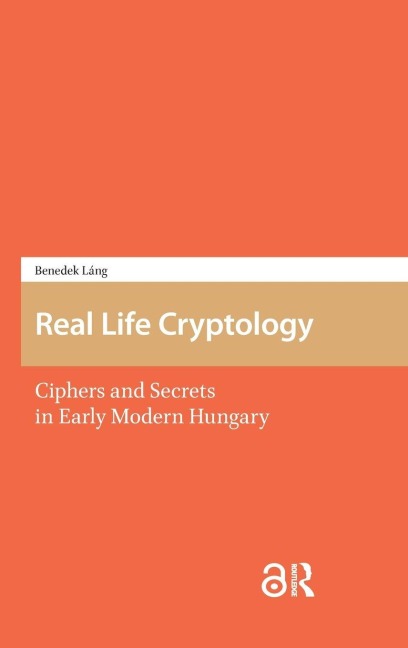
This book reconstructs the main reasons and goals why historical actors chose to create and use enciphered documents, what they decided to encrypt, and how they perceived the dangers threatening their messages.
A historian of science, Benedek Láng is a professor at the Budapest University of Technology and Economics. He specializes in late medieval manuscripts of learned magic and early modern secret communication (artificial languages and cipher systems).
Abbreviations, Note on terminology, Note on names, 1. Introduction 2. Uncovered fields in the research literature 2.1. Neglected secret writings in secrecy studies 2.2. Secrecy in the history of science 2.3. The need for social history in cryptography studies 2.4. Cryptography in Hungary 3. Secret writings and attitudes - research questions 4. Theory and practice of cryptography in early modern Europe 4.1 Vulnerable ciphers: the monoalphabetic way 4.2. An Arabic contribution: the cryptanalysis 4.3. New methods in the literature: the polyalphabetic cipher 4.4. Practice in diplomacy: the homophonic cipher 5. Ciphers in Hungary: the source material 5.1. Frameworks of data collection 5.2. General description of the sources 5.3. Cipher keys 5.3.1 The structure of the tables 5.3.2. Letters of the alphabet 5.3.3. Nomenclatures 5.3.4. Nullities 5.3.5. Grammatical elements 5.4. Ciphered letters 6. Ciphers in action 6.1. Sharing the key 6.2. Replacing the cipher keys 6.3. The tiresome work of enciphering 6.4. The cryptologist 6.5. Cautious and reckless encryption 6.6. Sand in the machine 6.7. Breaking the code 6.8. Advanced or outdated? 7. Ways of knowledge transfer 7.1. Handbooks of cryptography 7.2. Artificial languages 7.3. Stenography 7.4. The Turkish factor 7.5. Distance from diplomacy 8. Scenes of secrecy 8.1. Dissimulation and the secret 8.2. Communication in politics 8.3. Military operations and espionage 8.4. Love, politics and male bonding 8.5. Family secrets and privacy: ladies and ciphers 8.6. Private sins-public morals: secrets of a diary and shame 8.7. Science, chemistry and alchemy 8.8. Secret characters and magic 8.9. Encrypting in religion 9. Summary 10. Appendix 10.1 List of cipher tables from early modern Hungary 10.2 List of ciphertexts from early modern Hungary, Acknowledgements, Earlier publications, Bibliography, INDEX