Und dann auf "Zum Home-Bildschirm [+]".

Stöbern
genialokal zum Startbildschirm hinzufügen
Installieren Sie die genialokal App auf Ihrem Startbildschirm für einen schnellen Zugriff und eine komfortable Nutzung.
Installieren Sie die genialokal App auf Ihrem Startbildschirm für einen schnellen Zugriff und eine komfortable Nutzung.
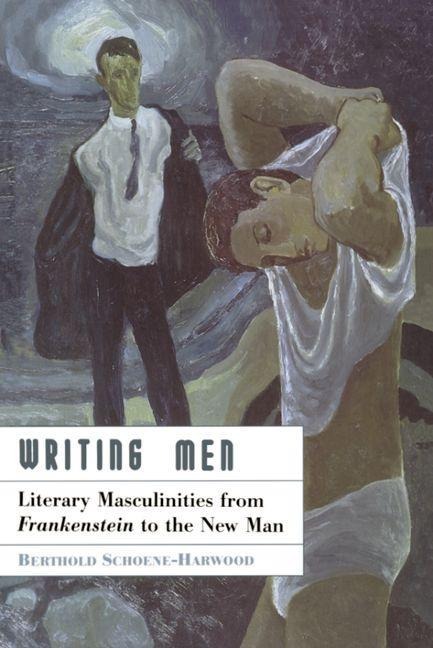

In Writing Men, Berthold Schoene-Harwood develops a trajectory of masculine emancipation from the monstrous imagery of nineteenth-century fiction to contemporary men writers' experimental new discourse of ecriture masculine. Looking at 13 individual case studies, Schoene-Harwood outlines the historical development of literary representations of masculinity from Mary Shelley's Frankenstein to Ian McEwan's The Child in Time. Subdivided into four parts, the study's first section takes a journey into the nineteenth-century pre-history of post-war and contemporary British men's writing, introducing readers to literature's capacity to both consolidate and unsettle traditional conceptions of femininity and masculinity. In Part II, detailed readings of modern classics such as Lord of the Flies, A Clockwork Orange, Look Back in Anger and Room at the Top reveal the persistence of patriarchal gender hierarchies in the 1950s and early 1960s. The third and central section explores the influence feminist thought has had on some men's contemporary re-imaging of themselves beyond the confines of traditional gender formations. The final section discusses Neil Bartlett's Ready to Catch Him Should He Fall as an attempt to subvert patriarchal masculinity from a gay male perspective. Inspired by feminist theory and the new academic discipline of Men's Studies, Schoene-Harwood analyses men's writing both in relation to women's writing and as a literary genre in its own right. Arguing for a new discourse of ecriture masculine, Writing Men makes a challenging and theoretically ambitious contribution to current critical debates on the literary representation of gender.Key Features:* The study comprises detailed, innovative and original readings of 13 works of literature* It historicises the literary representation of masculinity by outlining its development from the nineteenth century to the immediate present* Its introductory
Dieses eBook wird im PDF-Format geliefert und ist mit einem Adobe Kopierschutz (DRM) versehen. Sie können dieses eBook mit allen Geräten lesen, die das PDF-Format und den Adobe Kopierschutz (DRM) unterstützen.
Zum Beispiel mit den folgenden Geräten:
• tolino Reader
Laden Sie das eBook direkt über den Reader-Shop auf dem tolino herunter oder übertragen Sie das eBook auf Ihren tolino mit einer kostenlosen Software wie beispielsweise Adobe Digital Editions.
• Sony Reader & andere eBook Reader
Laden Sie das eBook direkt über den Reader-Shop herunter oder übertragen Sie das eBook mit der kostenlosen Software Sony READER FOR PC/Mac oder Adobe Digital Editions auf ein Standard-Lesegeräte mit epub- und Adobe DRM-Unterstützung.
• Tablets & Smartphones
Möchten Sie dieses eBook auf Ihrem Smartphone oder Tablet lesen, finden Sie hier unsere kostenlose Lese-App für iPhone/iPad und Android Smartphone/Tablets.
• PC & Mac
Lesen Sie das eBook direkt nach dem Herunterladen mit einer kostenlosen Lesesoftware, beispielsweise Adobe Digital Editions, Sony READER FOR PC/Mac oder direkt über Ihre eBook-Bibliothek in Ihrem Konto unter „Meine eBooks“ - „online lesen“.
Schalten Sie das eBook mit Ihrer persönlichen Adobe ID auf bis zu sechs Geräten gleichzeitig frei.
Bitte beachten Sie, dass die Kindle-Geräte das Format nicht unterstützen und dieses eBook somit nicht auf Kindle-Geräten lesbar ist.